
Domus · Alvelda · 976
The Codex
Albeldensis
The book made at Albelda — Codex Vigilanus
429 leaves45.5 × 32.5 cmVisigothic scriptEl Escorial, d.I.2
I976Codex Vigilanus
What it is
It is a single enormous book: 429 leaves of parchment, each 45.5 by 32.5 centimetres, written in Visigothic script in two columns. Its makers called it a book of councils and laws. Scholars call it the Codex Vigilanus, after its chief scribe, or the Codex Albeldensis (in Spanish the Códice Albeldense), after the place it was made. It was finished in 976 (era 1014 in the Spanish reckoning) and is now in the Real Biblioteca of El Escorial, shelfmark d.I.2.

Two other names are easy to confuse with it. The Chronica Albeldensia is a short 9th-century chronicle that the codex contains. The Codex Aemilianensis (El Escorial d.I.1) is a copy made from it at San Millán de la Cogolla, usually dated 994. Both appear below and are labelled.
DOCUMENTED
II924 – 976San Martín de Albelda
The scribes and the monastery
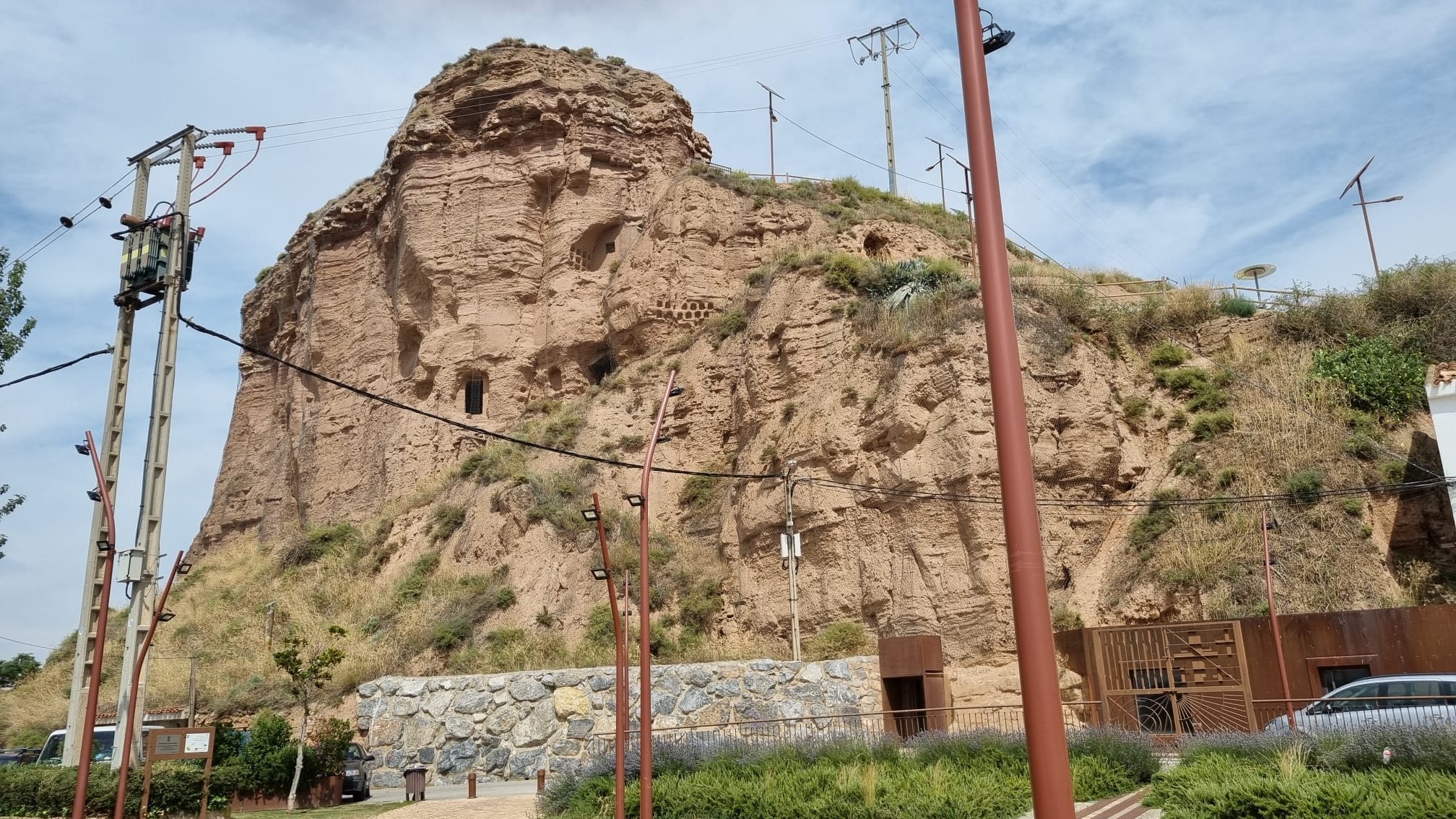
After they took Nájera and Viguera in 923, King Sancho Garcés I of Pamplona and Queen Toda founded a monastery at Albelda, dedicated to St Martin of Tours, in 924. Its first cells were cut into the rock above the town. By 950 it was said to hold two hundred monks. That year Godescalc, bishop of Le Puy, stopped there on his way to Compostela and had a book copied, the earliest recorded pilgrim to Santiago from beyond the Pyrenees.

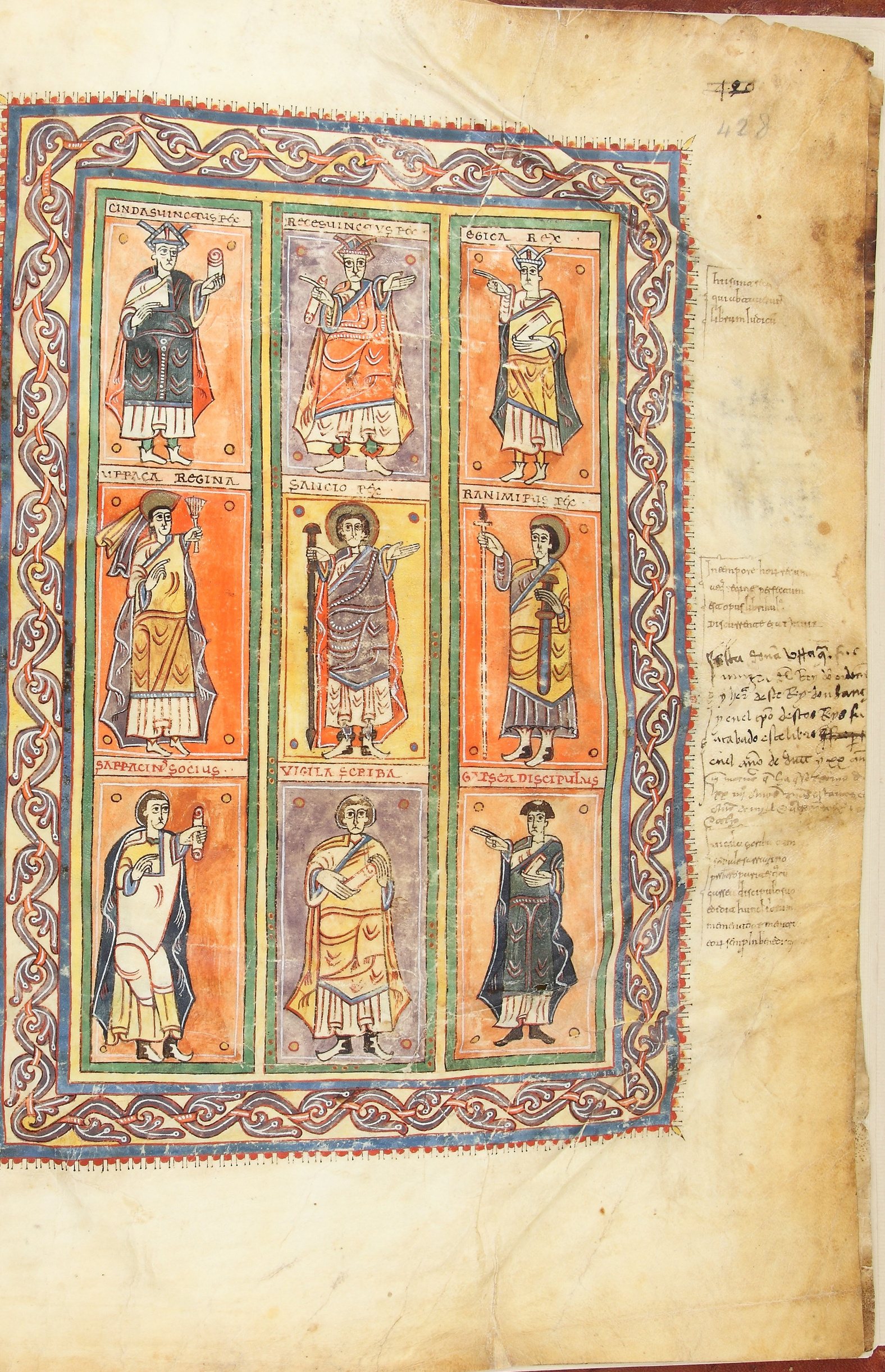
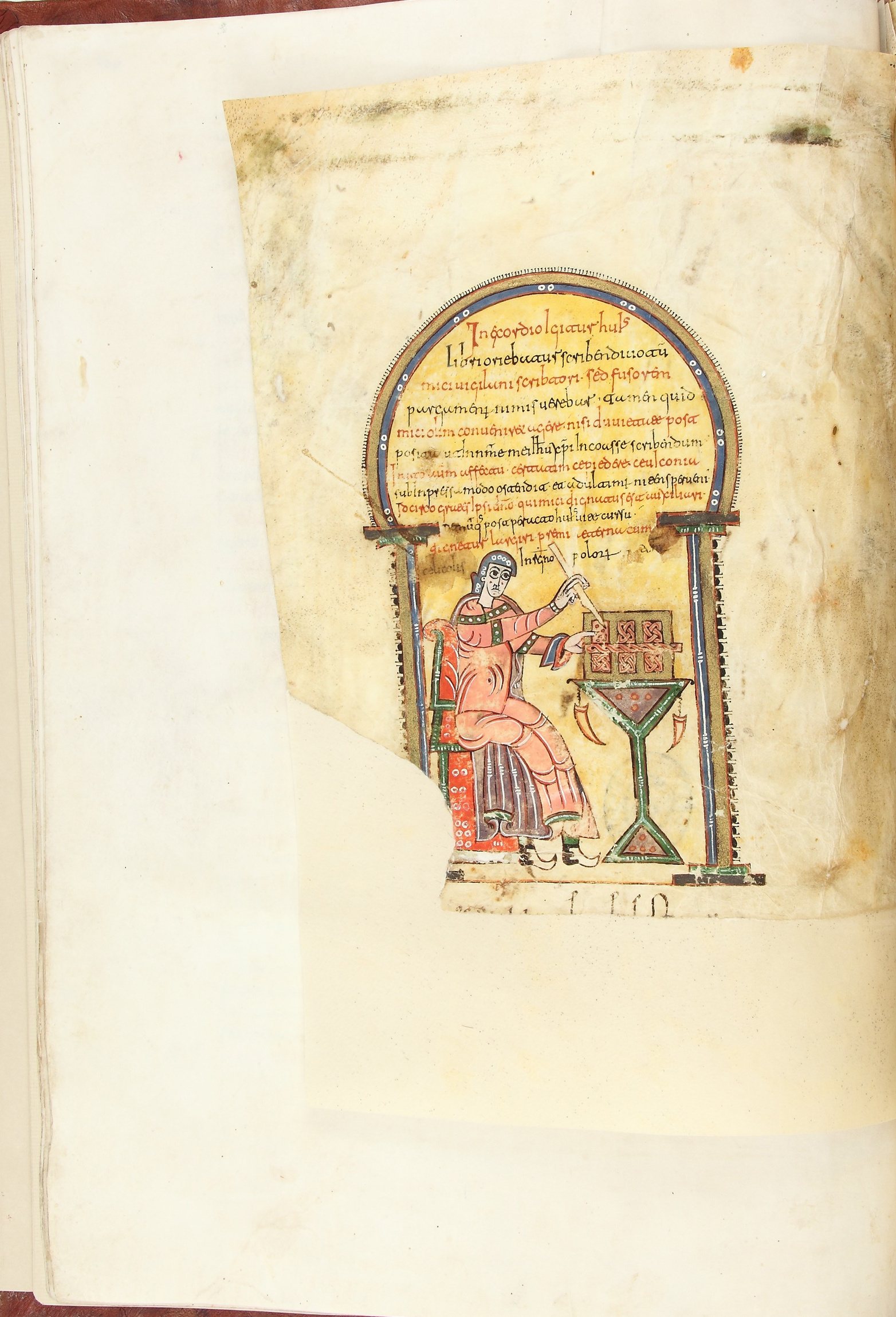
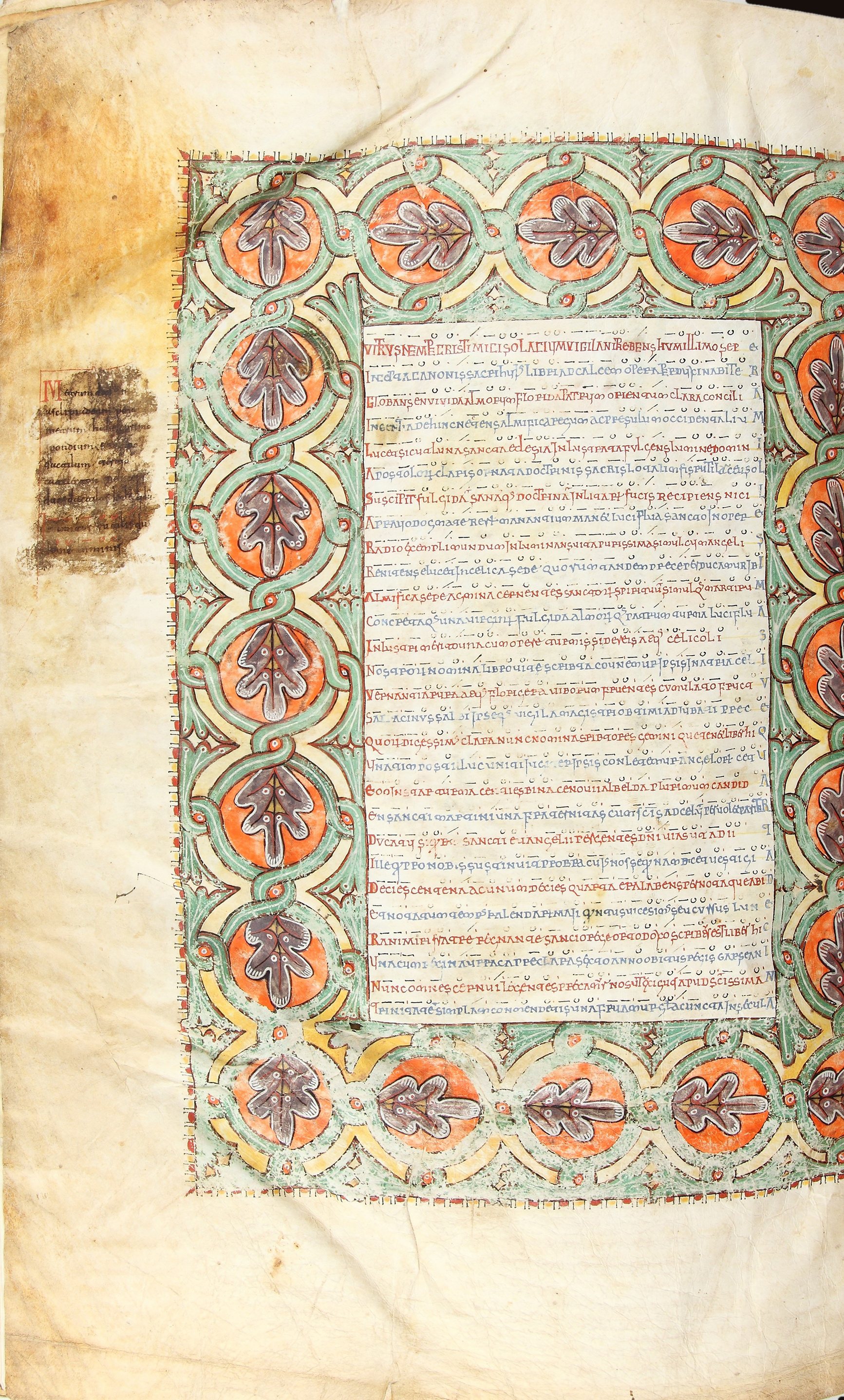
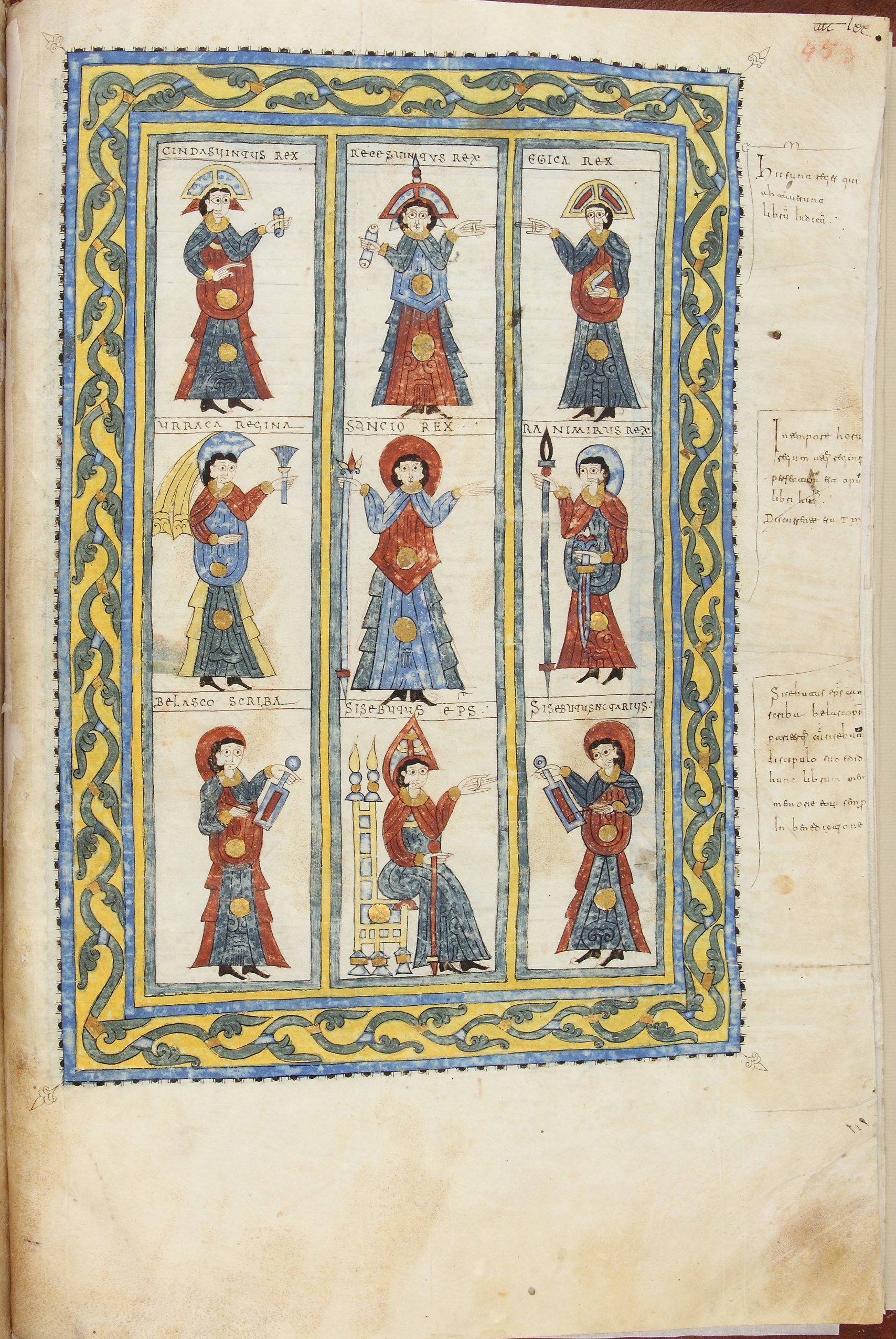
The codex names its makers. Vigila was the scribe and painter; Sarracino was his companion; García was his pupil. All three appear on folio 428r, beneath the kings, and Vigila seems to have painted himself at his desk on the opening leaf.
DOCUMENTED
IIIff. 1 – 429Contents
What is inside
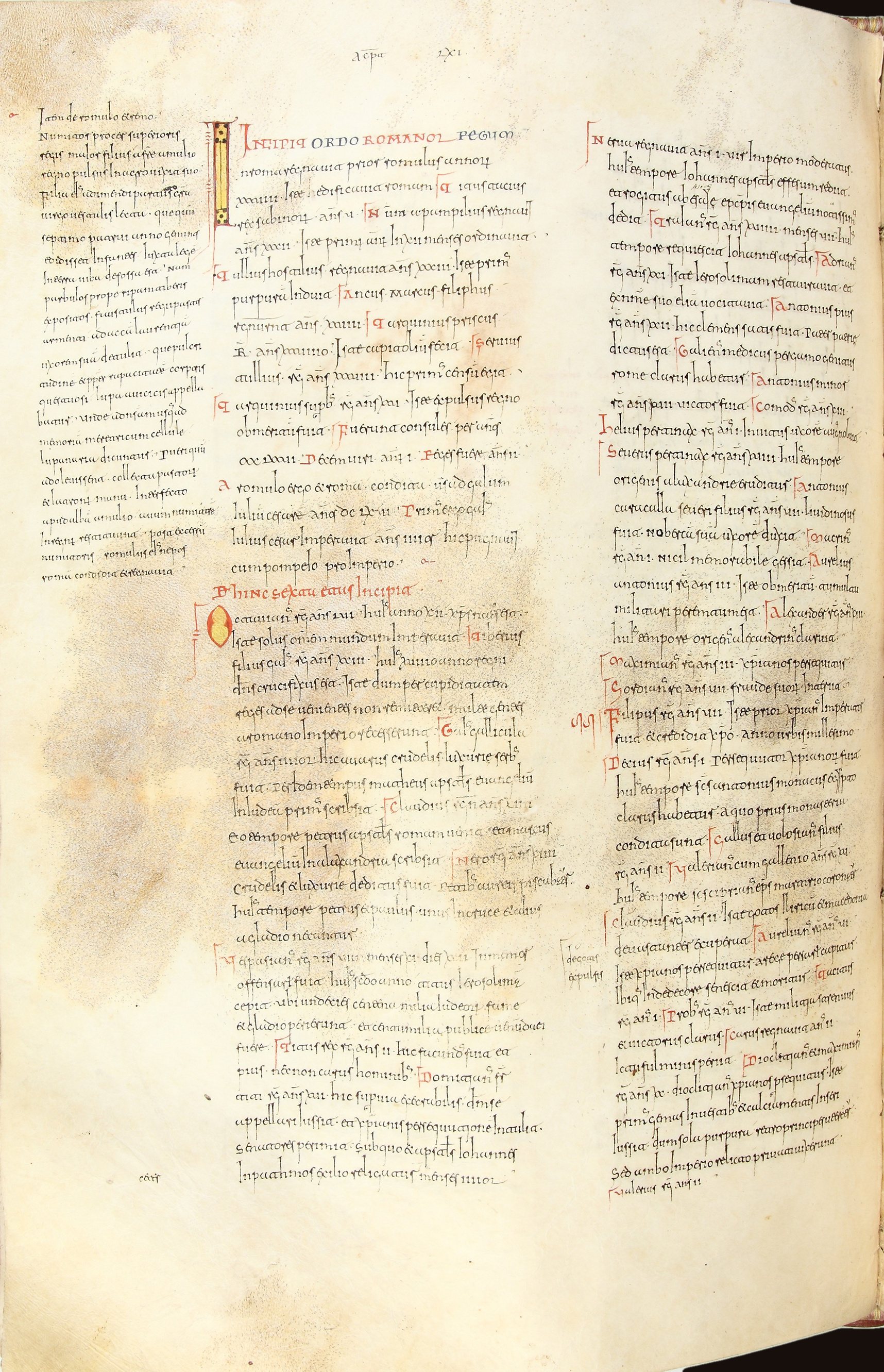
Opening the book, you meet figured poems, letter labyrinths, calendars and wheels for reckoning time, Christ in majesty, Adam and Eve, Noah and a small map of the world, and a tree of the degrees of kinship. Then comes the main work: the canons of the church councils of Spain and beyond, with the Councils of Toledo illustrated, and the letters of the popes.

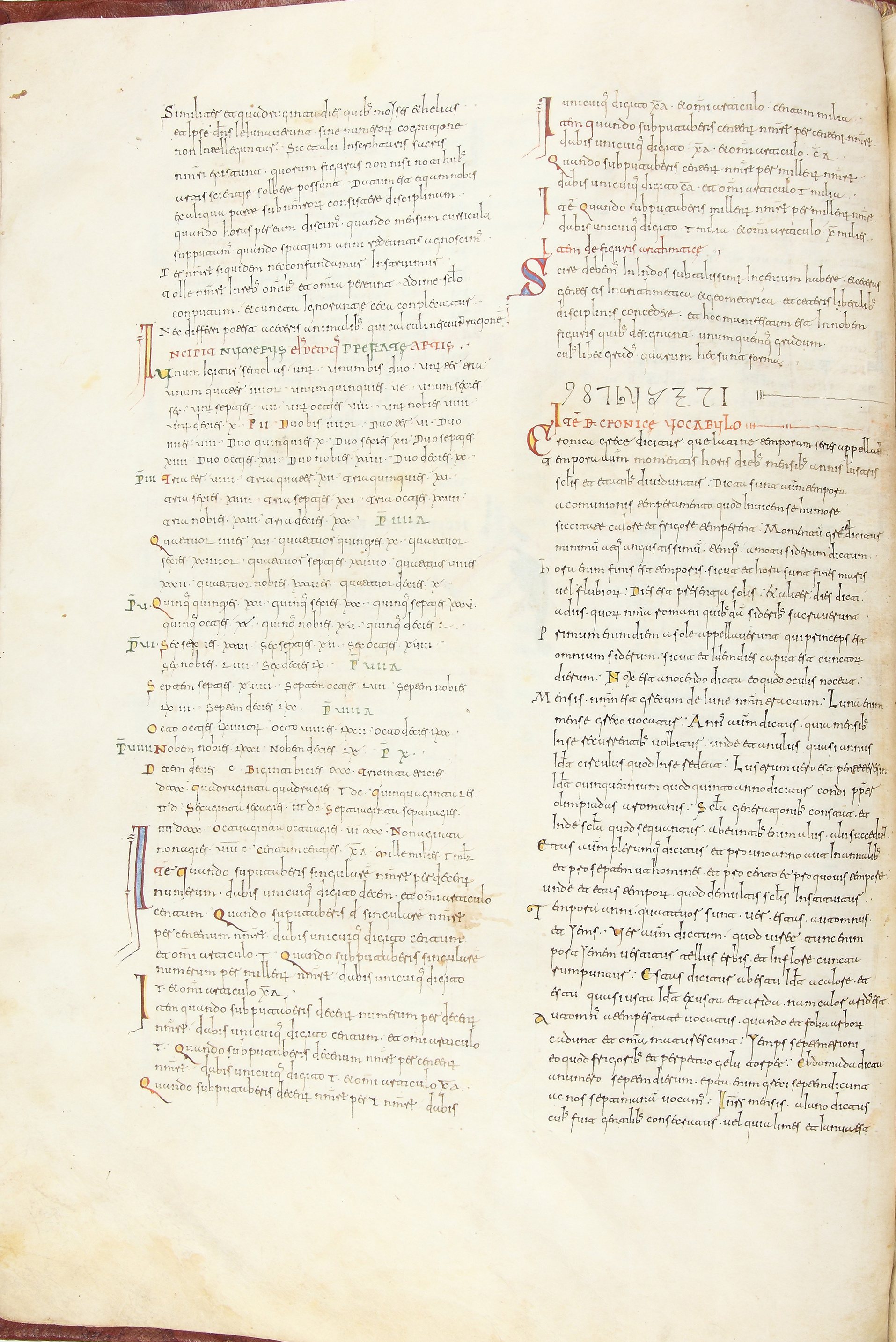
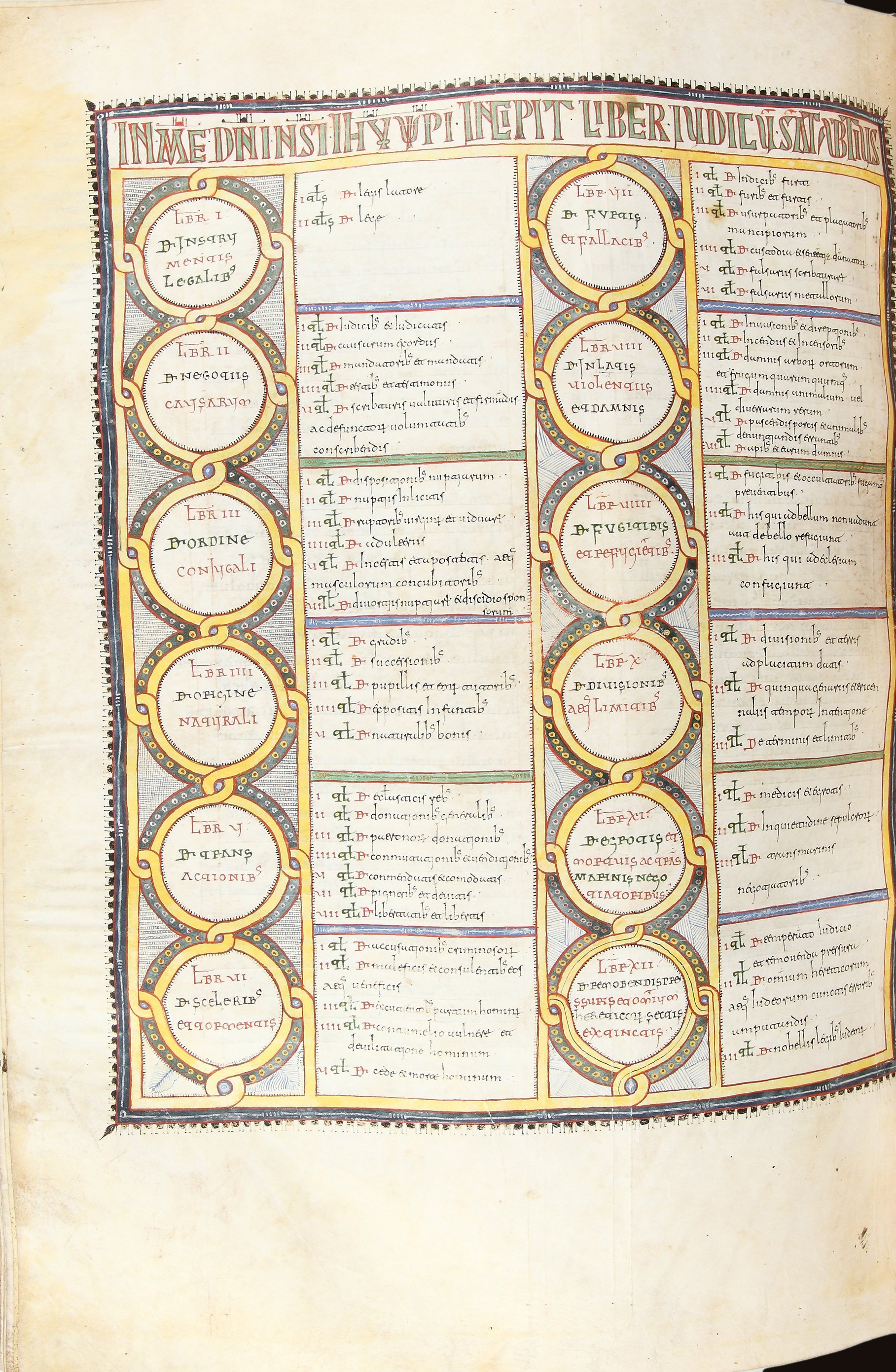
After them come the Chronica Albeldensia (ff. 238v–242v), lives of famous men, and the Liber Iudicum, the Visigothic law code later called the Fuero Juzgo. On folio 12v, in a passage on arithmetic, the scribe wrote out the nine Hindu-Arabic numerals, 9 down to 1, with no zero. It is the earliest dated appearance of these numerals in a Western book.
DOCUMENTED
Codex Vigilanus · El Escorial d.I.2 · in book order
The folios
18 more folios, with the opening leaf and the binding, in the order of the book. Scroll sideways, or use the arrows; click any page to see it large and zoom to full resolution. It is a small selection: all 429 leaves are online at the Escorial’s digital library (part 1, part 2).
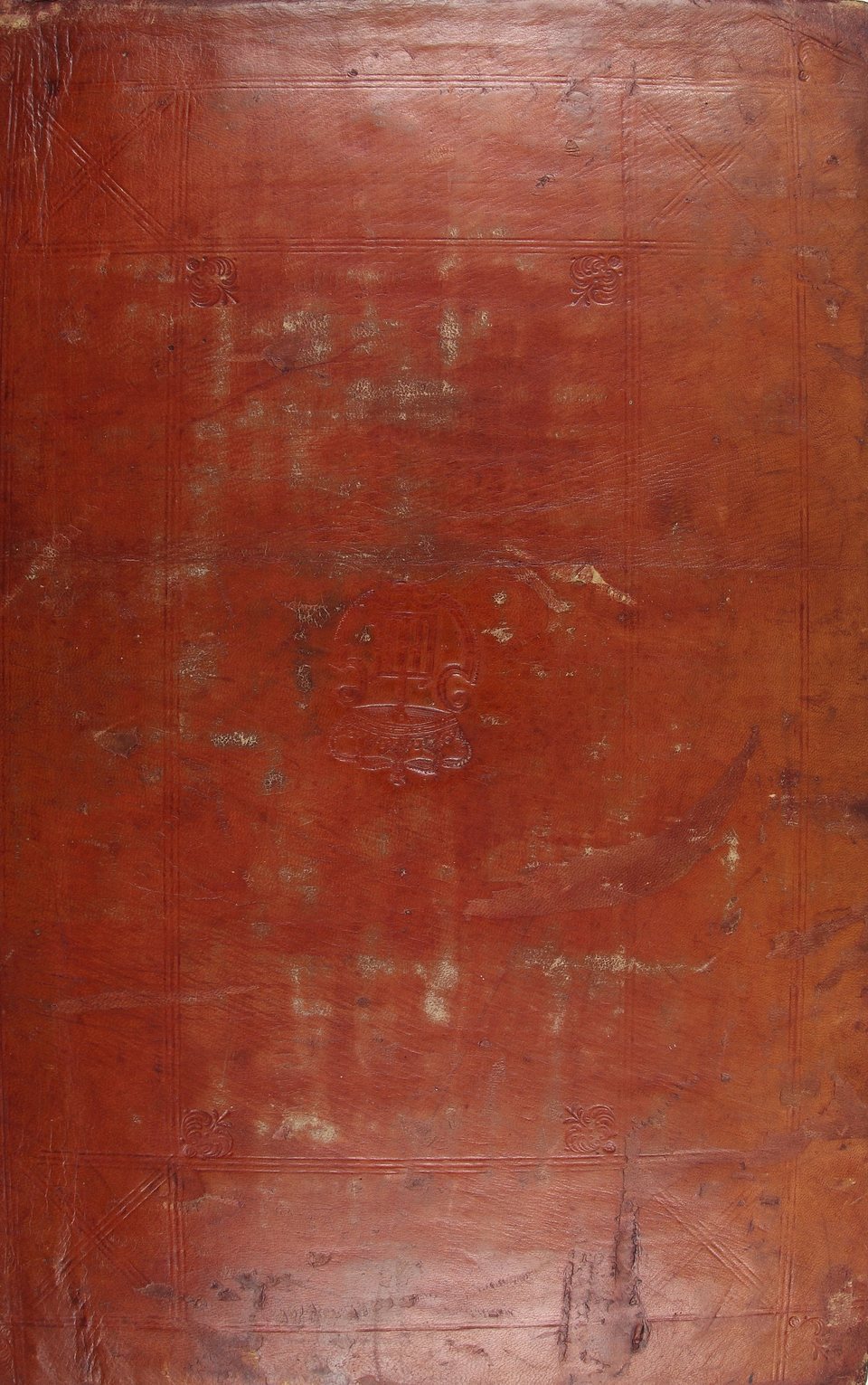
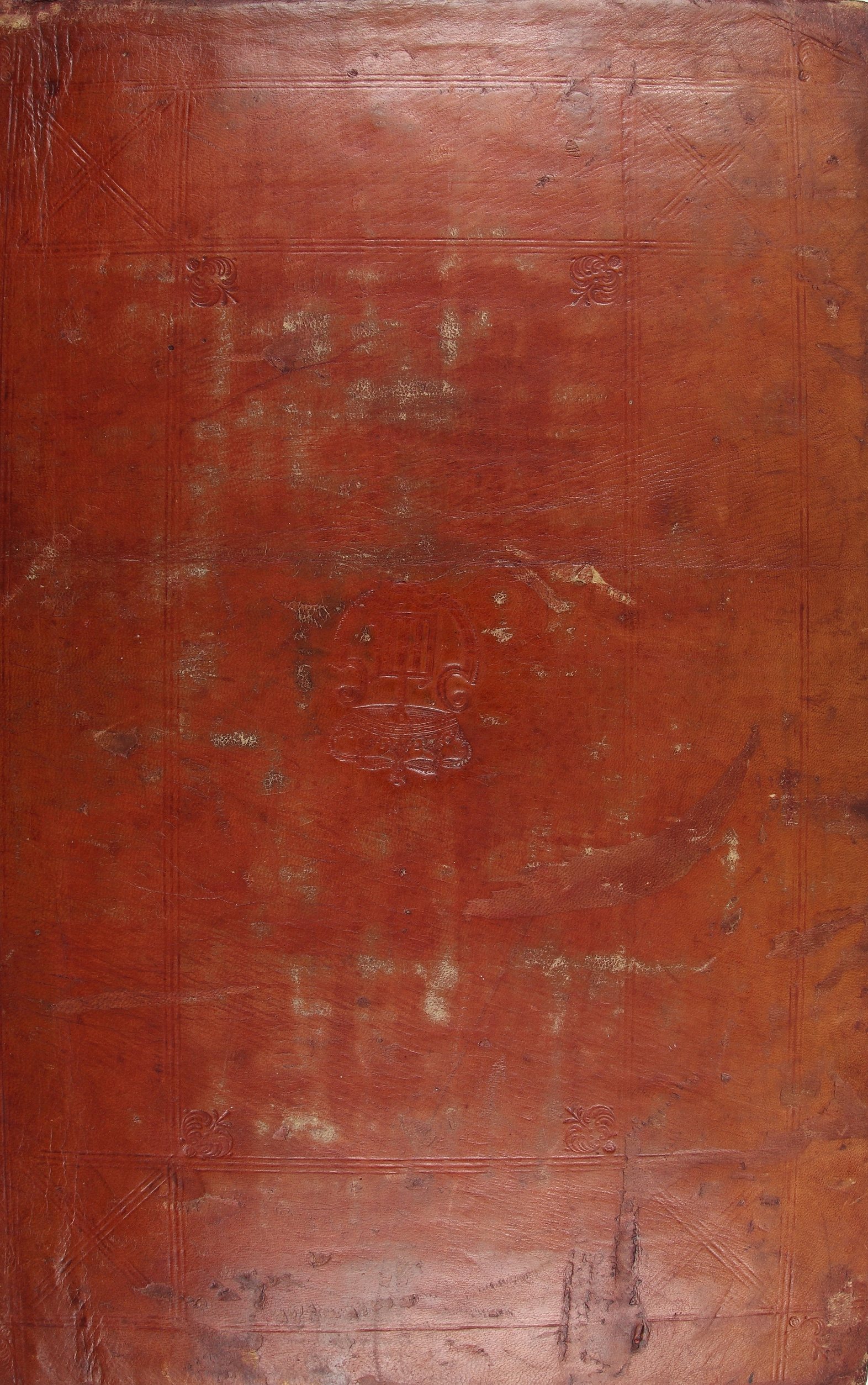
Binding The codex today, in a later leather binding with a blind-stamped centre device. The binding is not the original of 976.Patrimonio Nacional. Real Biblioteca del Monasterio de El Escorial, d-I-2, binding. Photograph: RBME Digital (free use under its terms of use); whole page; the photographer’s backdrop trimmed to the edge of the leaf, resized only. 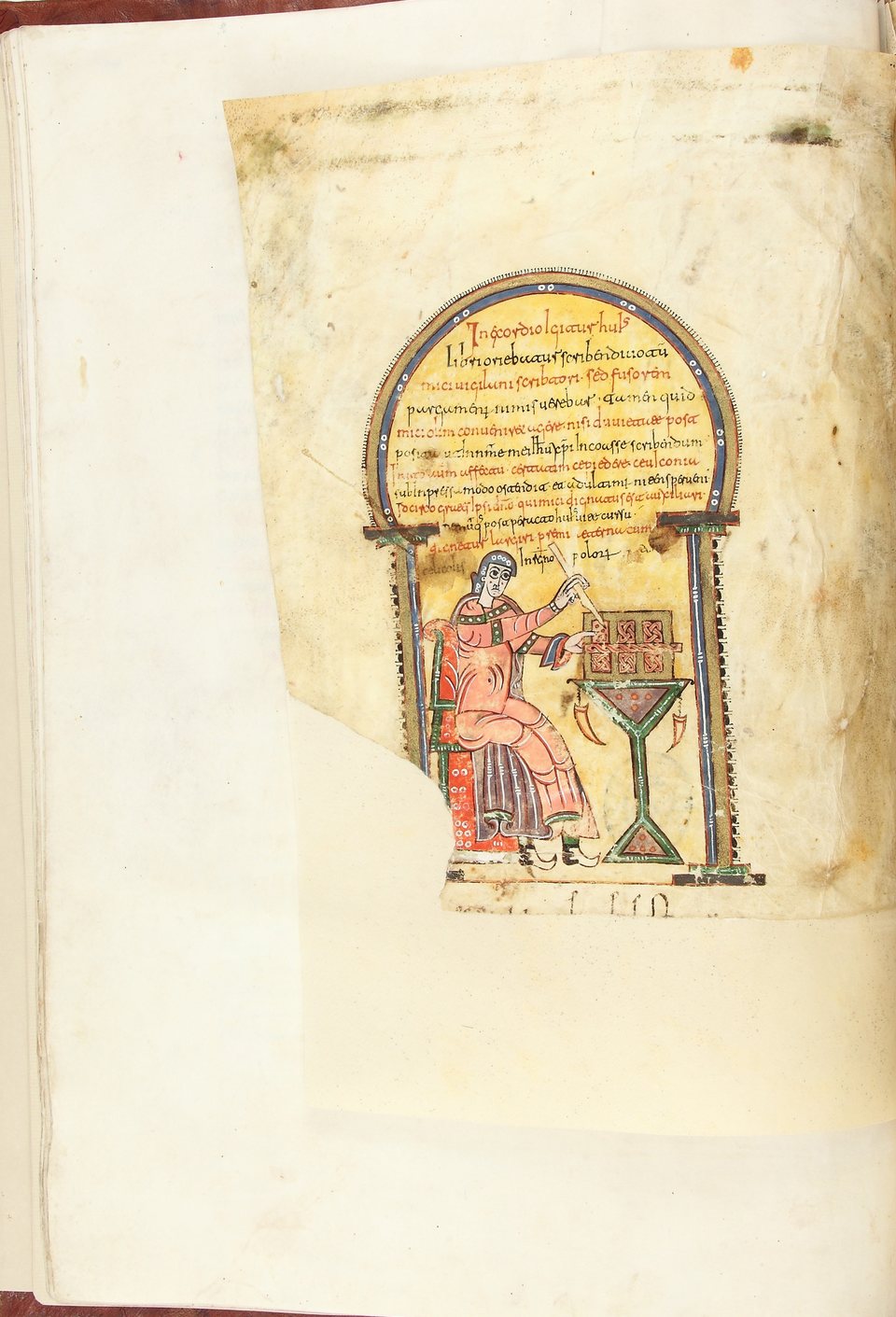
Opening leaf The damaged opening leaf. Under an arch, a monk sits at a slanted desk and writes, with a verse above him. It is usually read as Vigila’s portrait of himself at the start of his book (facsimile literature numbers it f. XXIIv).Patrimonio Nacional. Real Biblioteca del Monasterio de El Escorial, d-I-2, opening leaf (verso). Photograph: RBME Digital (free use under its terms of use); whole page; the photographer’s backdrop trimmed to the edge of the leaf, resized only. 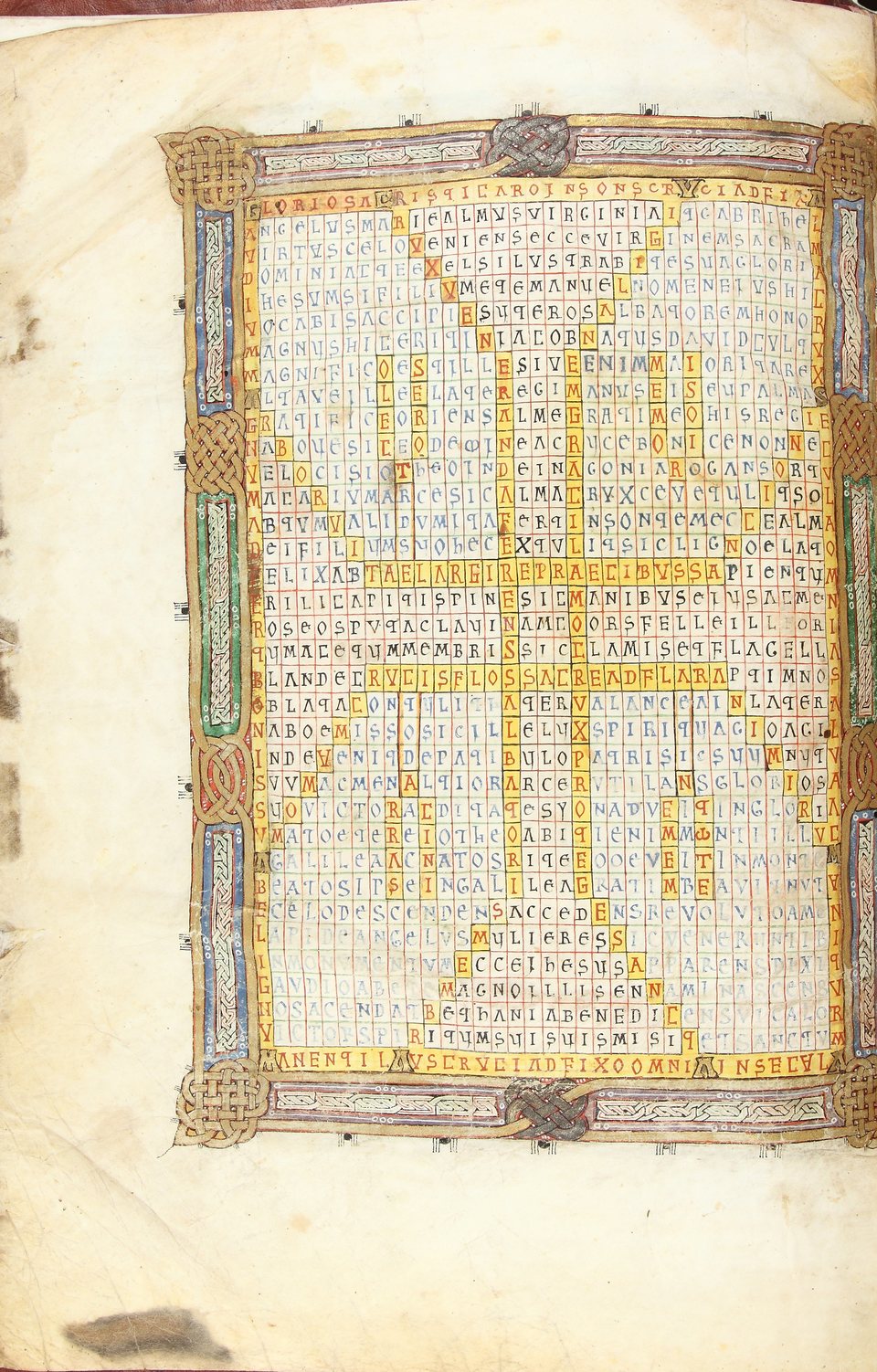
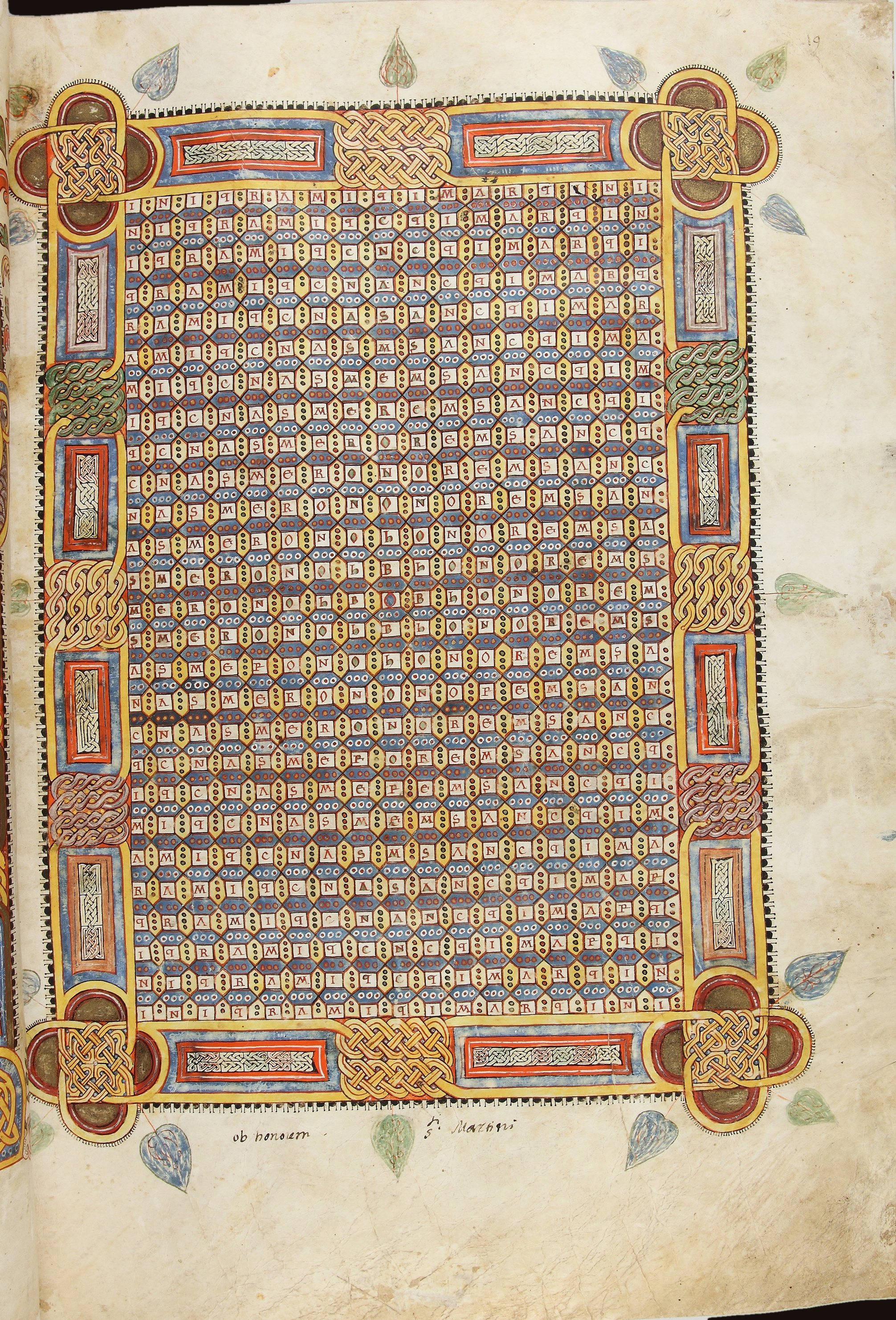
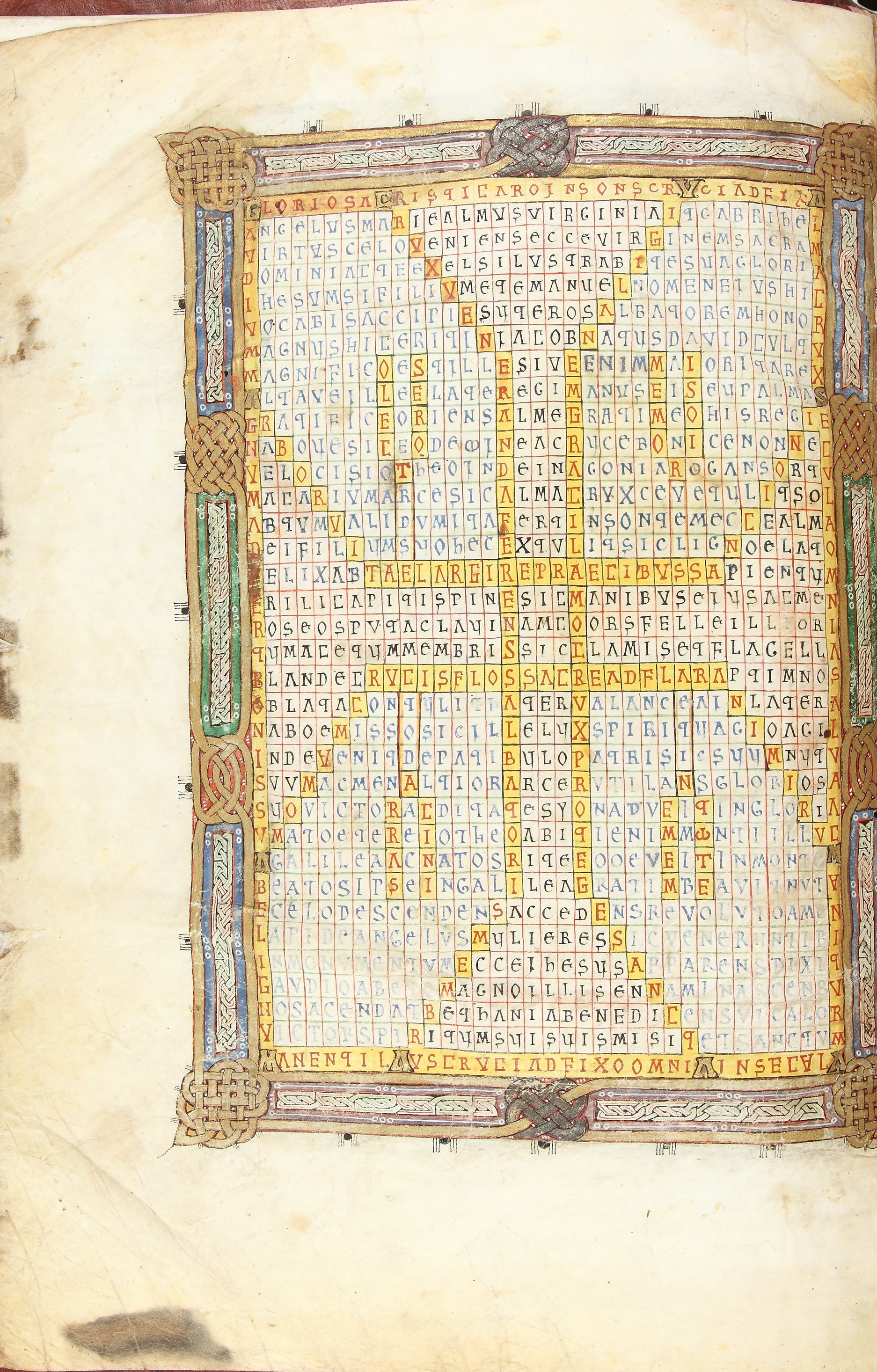
f. 1v A figured poem (carmen figuratum). Every square of the grid holds a letter, and the letters picked out in colour form a figure that carries a second set of verses.Patrimonio Nacional. Real Biblioteca del Monasterio de El Escorial, d-I-2, f. 1v. Photograph: RBME Digital (free use under its terms of use); whole page; the photographer’s backdrop trimmed to the edge of the leaf, resized only. 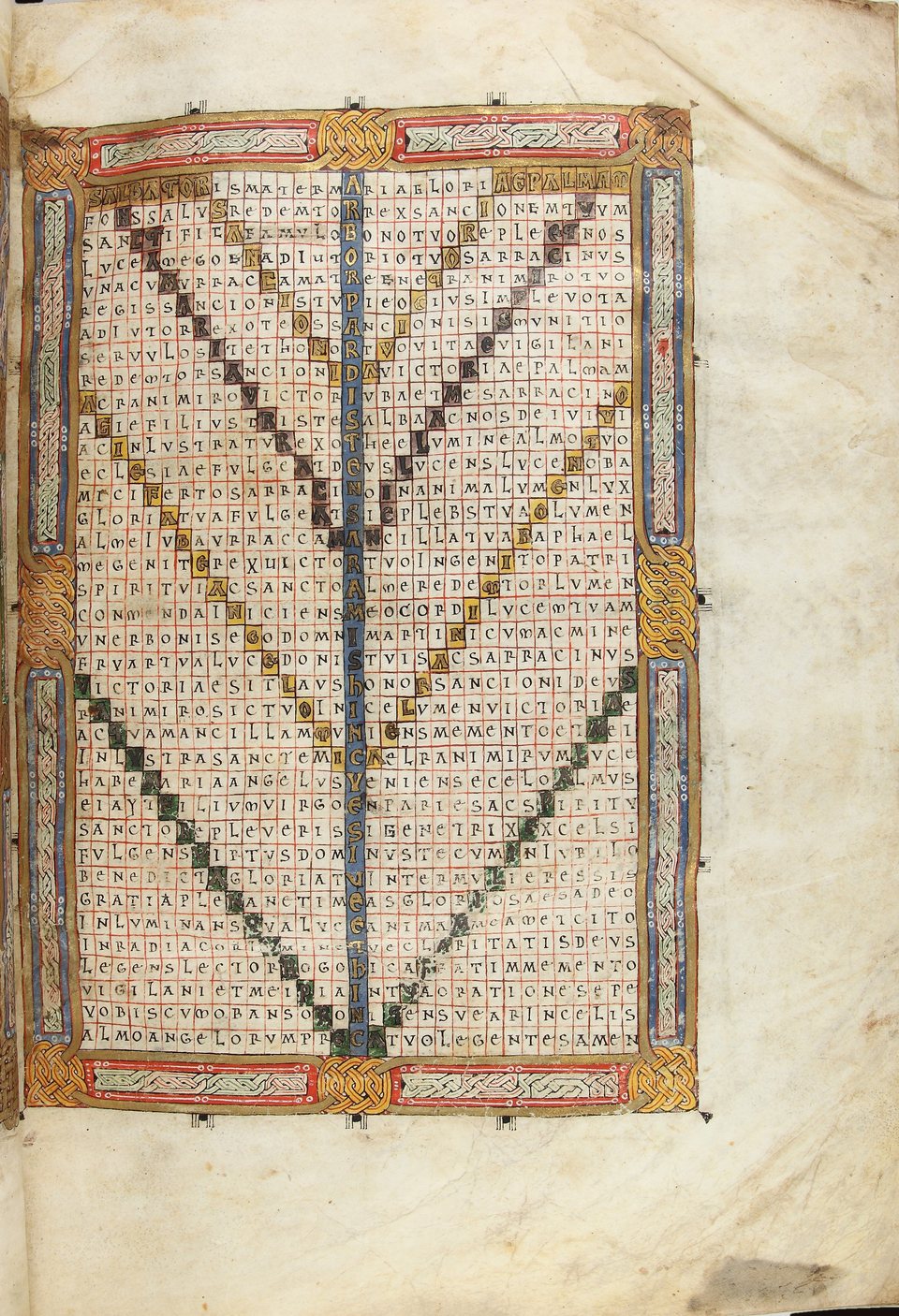
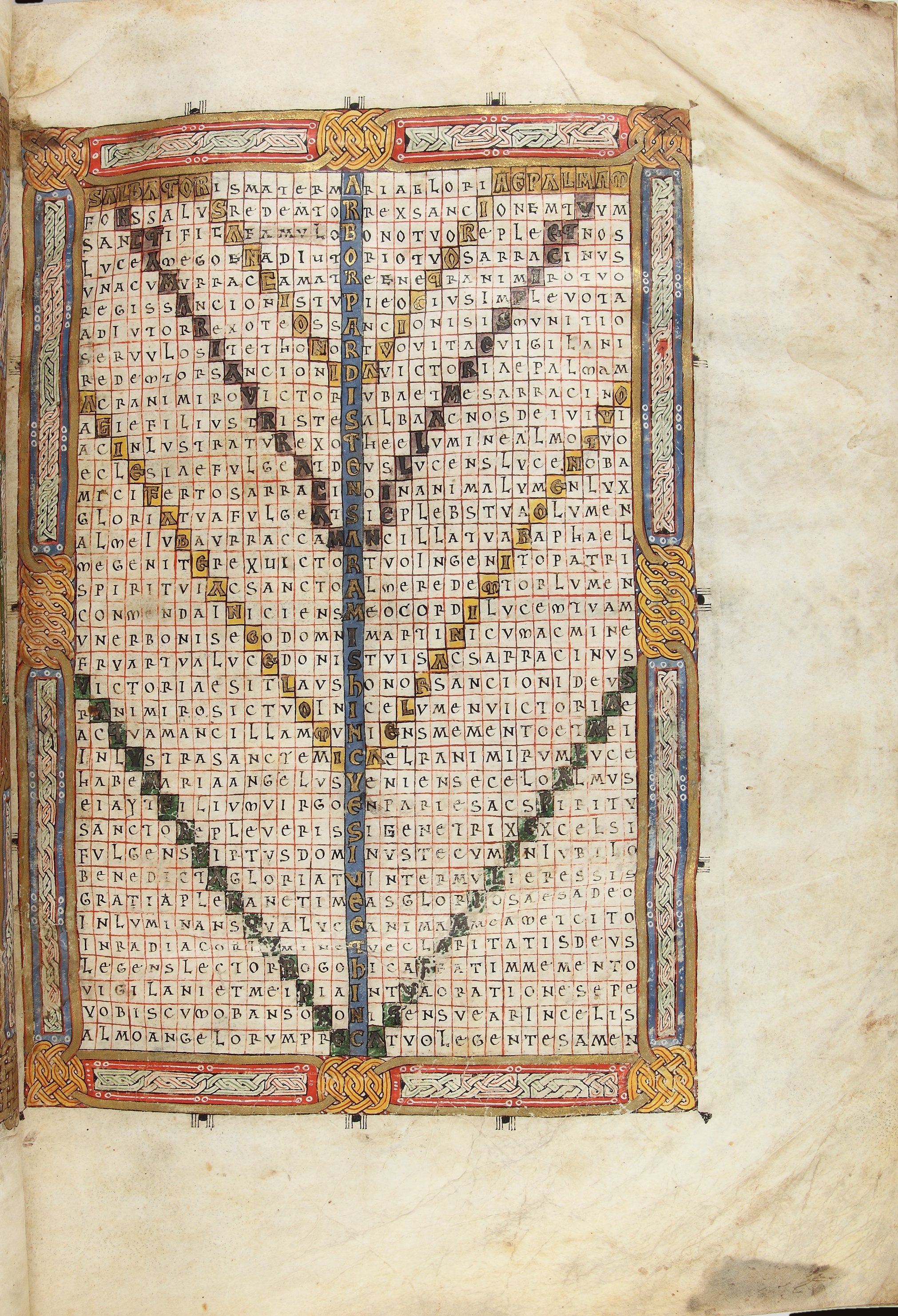
f. 2r Another figured poem. Here the coloured letters trace a branching figure through the grid.Patrimonio Nacional. Real Biblioteca del Monasterio de El Escorial, d-I-2, f. 2r. Photograph: RBME Digital (free use under its terms of use); whole page; the photographer’s backdrop trimmed to the edge of the leaf, resized only. 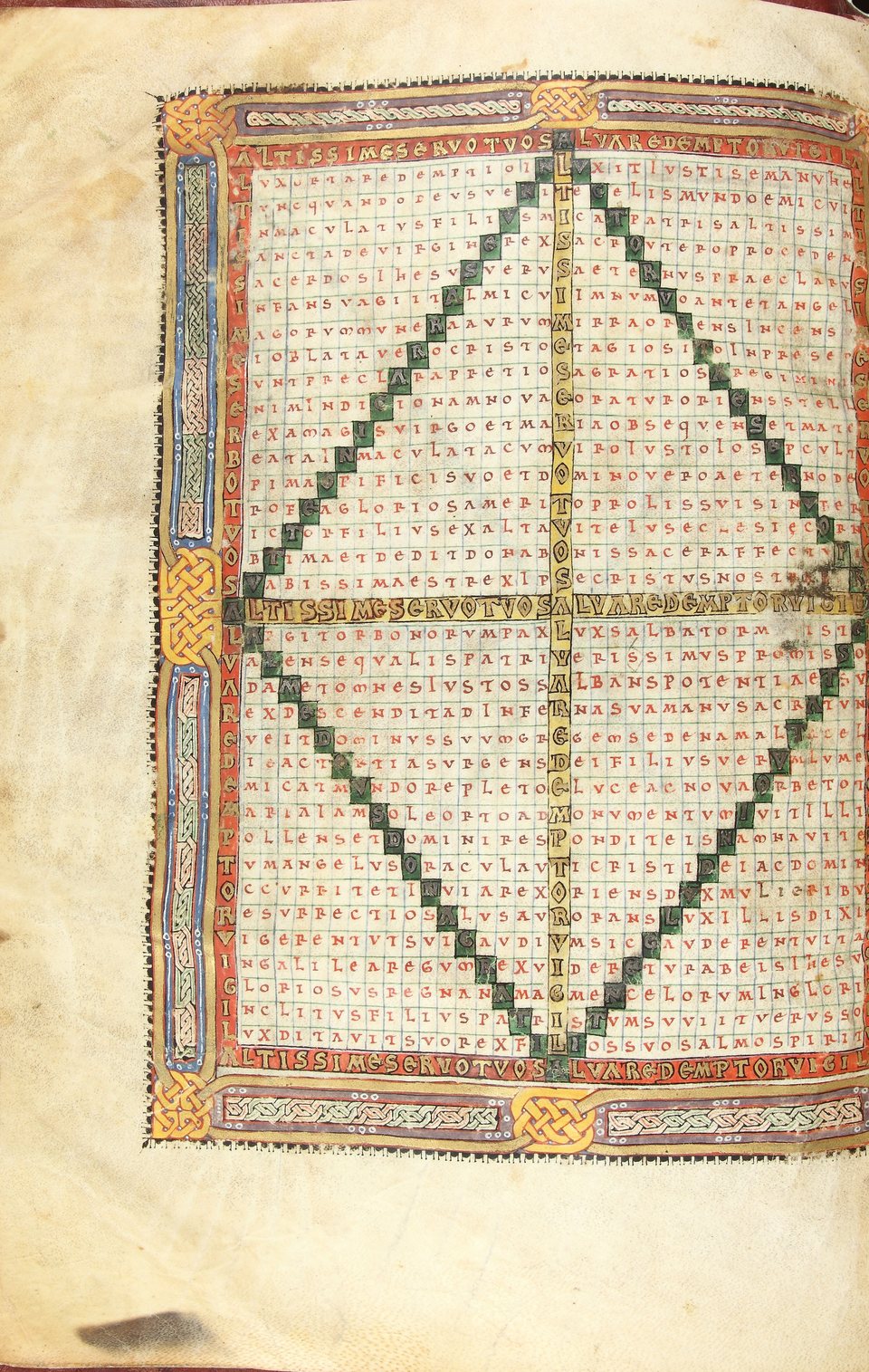
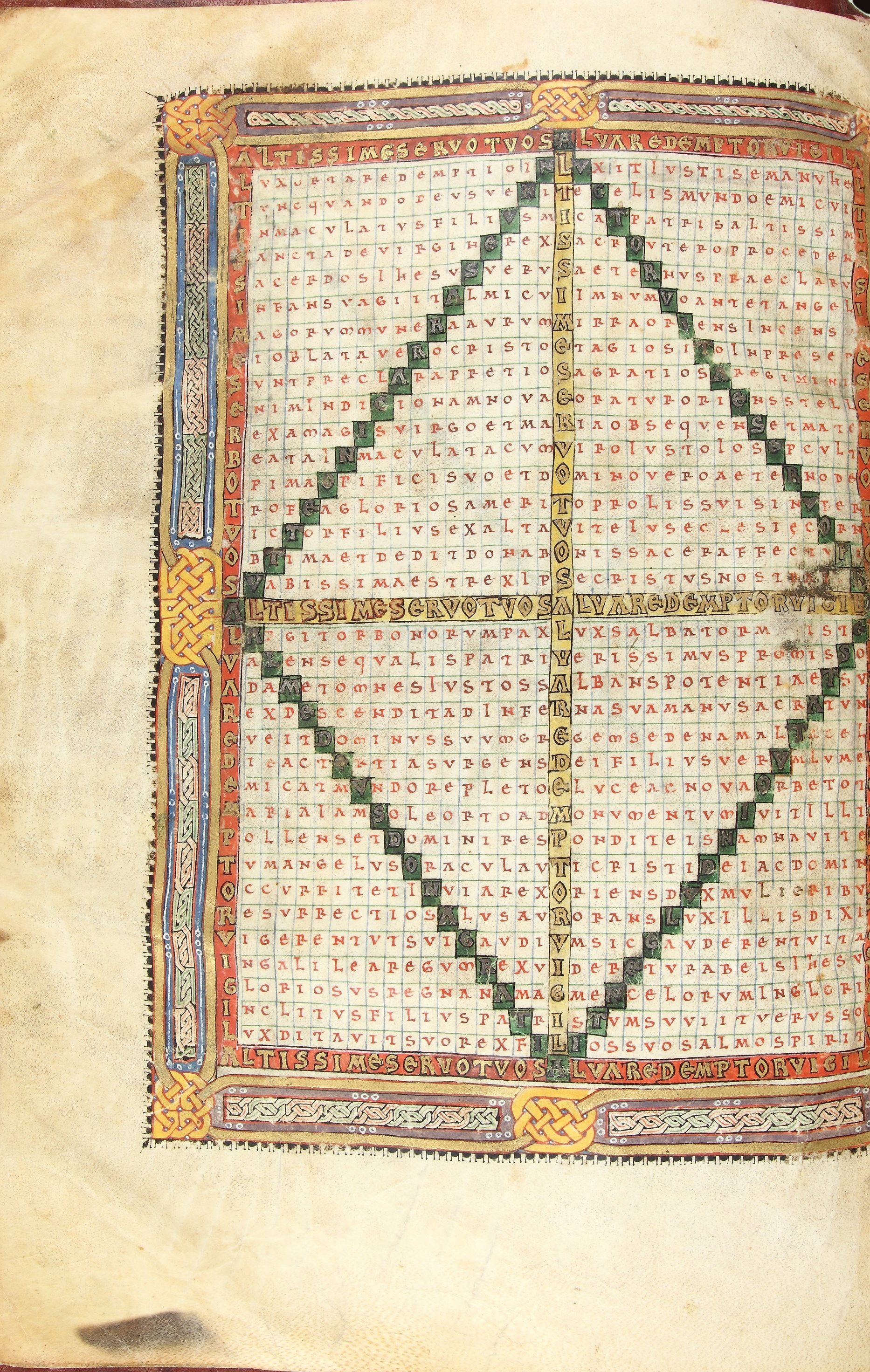
f. 3v A third figured poem, its hidden verses set out as a lozenge and a cross.Patrimonio Nacional. Real Biblioteca del Monasterio de El Escorial, d-I-2, f. 3v. Photograph: RBME Digital (free use under its terms of use); whole page; the photographer’s backdrop trimmed to the edge of the leaf, resized only. 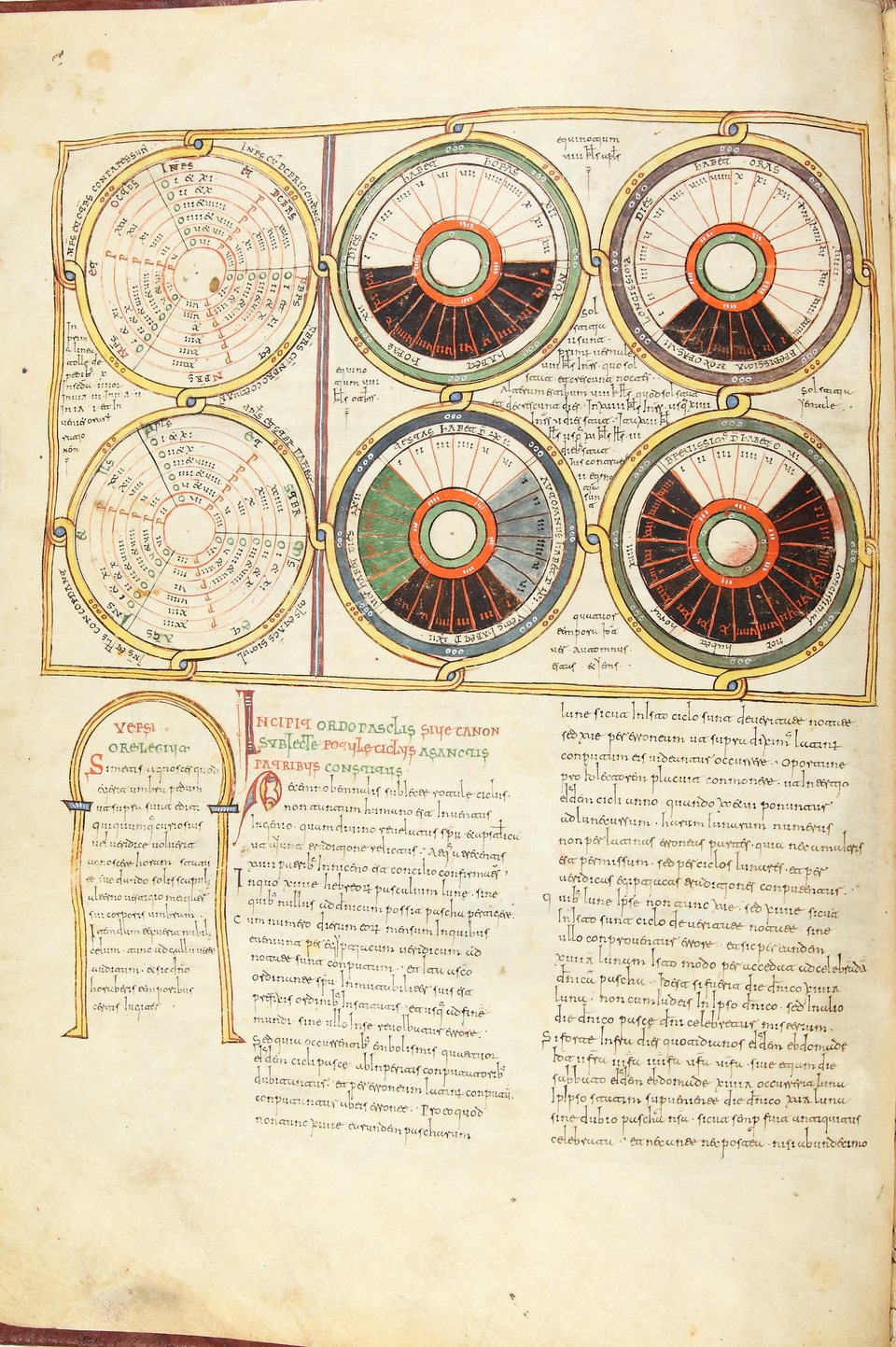
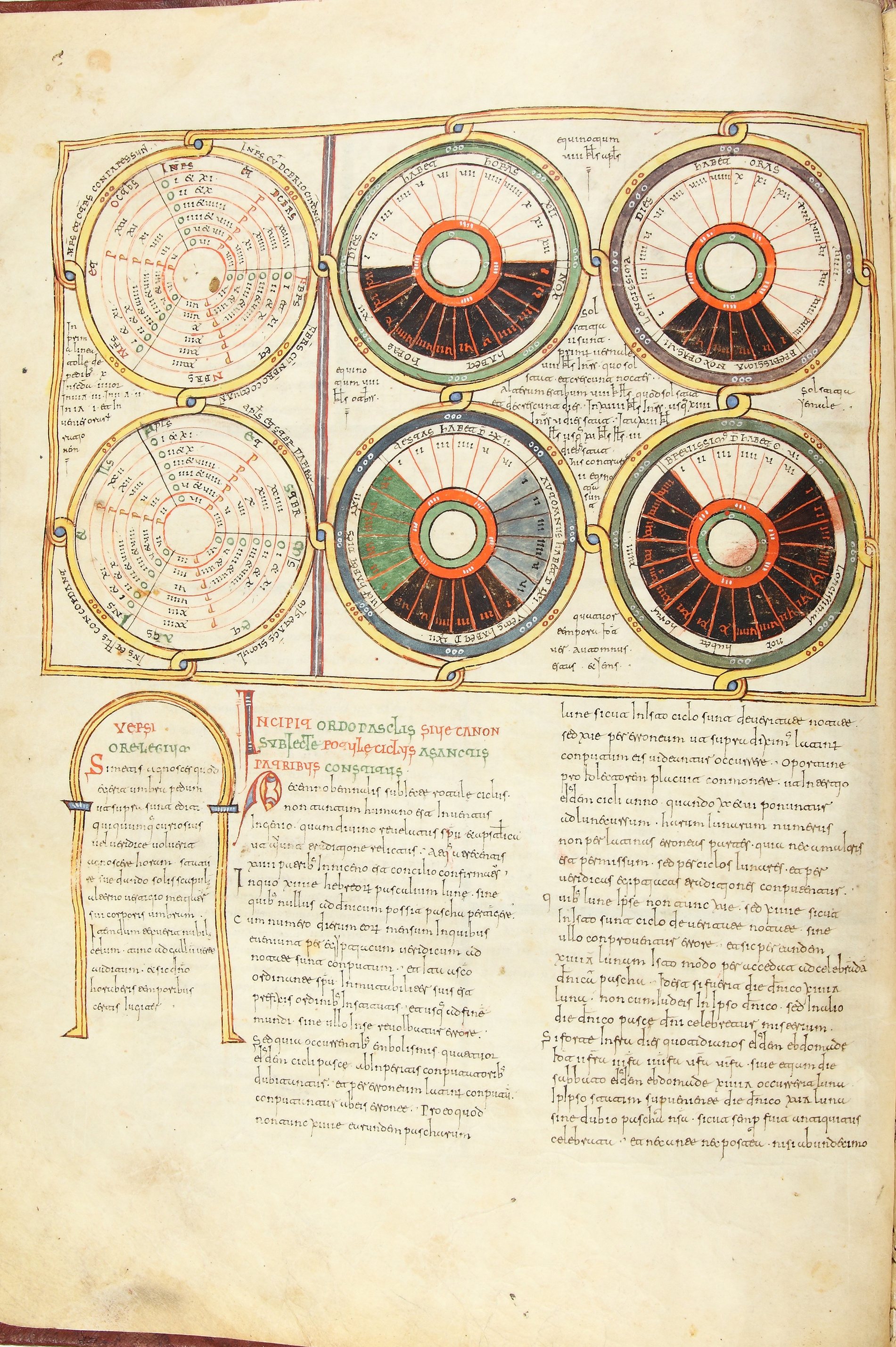
f. 7v Wheels for reckoning time (computus): circular tables for the cycles of the moon and the calendar.Patrimonio Nacional. Real Biblioteca del Monasterio de El Escorial, d-I-2, f. 7v. Photograph: RBME Digital (free use under its terms of use); whole page; the photographer’s backdrop trimmed to the edge of the leaf, resized only. 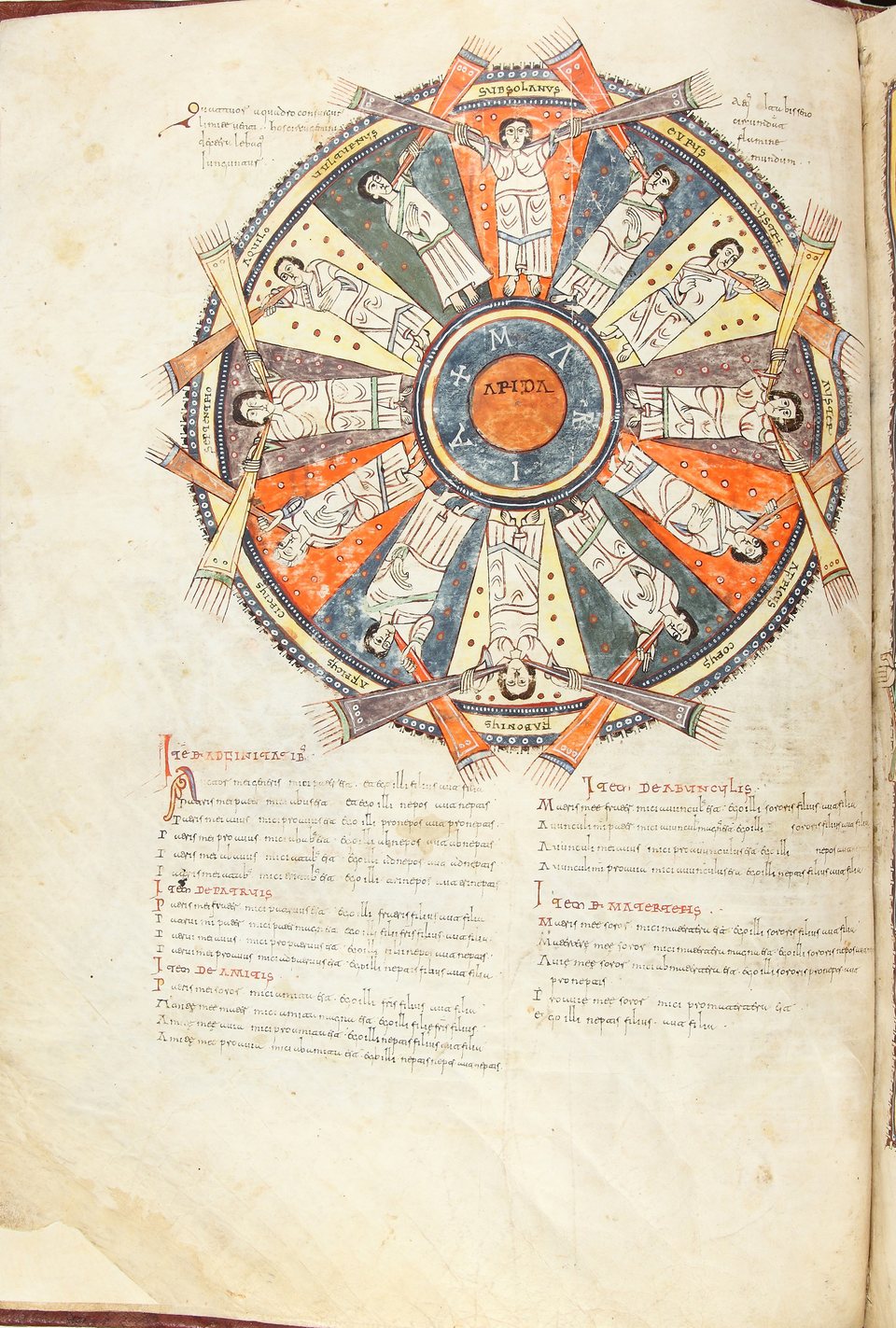
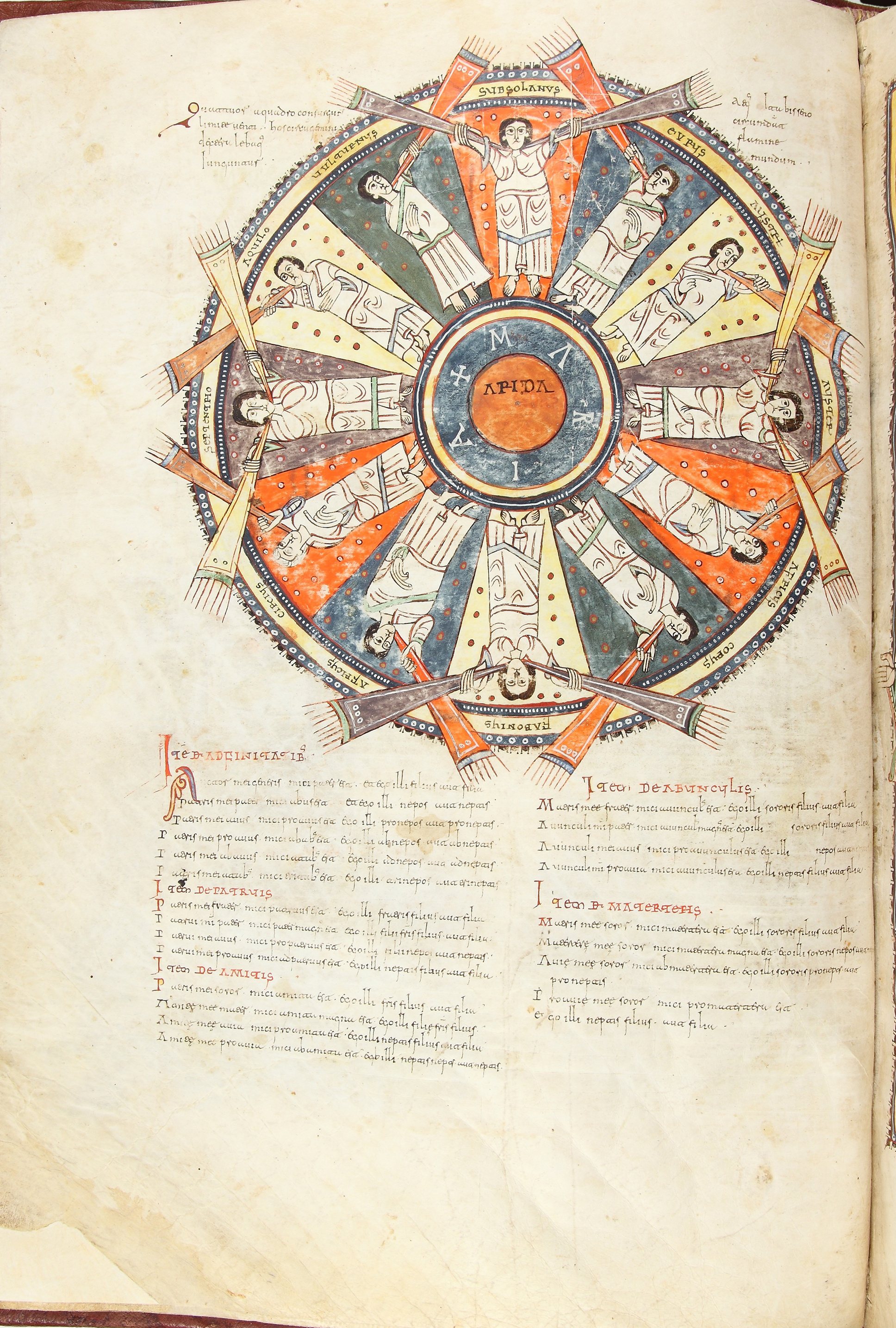
f. 14v A wheel of the winds: winged figures around a central disc.Patrimonio Nacional. Real Biblioteca del Monasterio de El Escorial, d-I-2, f. 14v. Photograph: RBME Digital (free use under its terms of use); whole page; the photographer’s backdrop trimmed to the edge of the leaf, resized only. 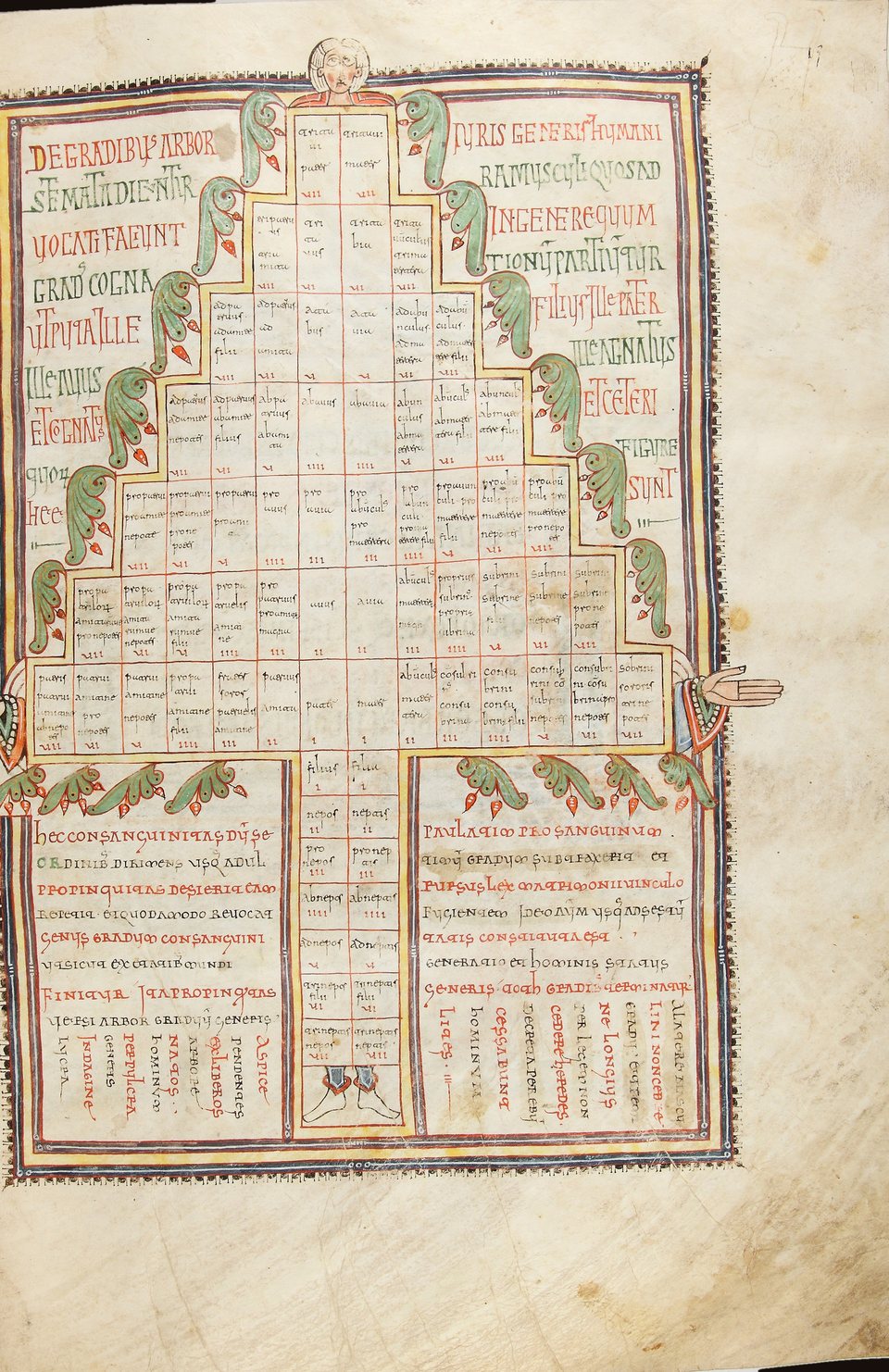
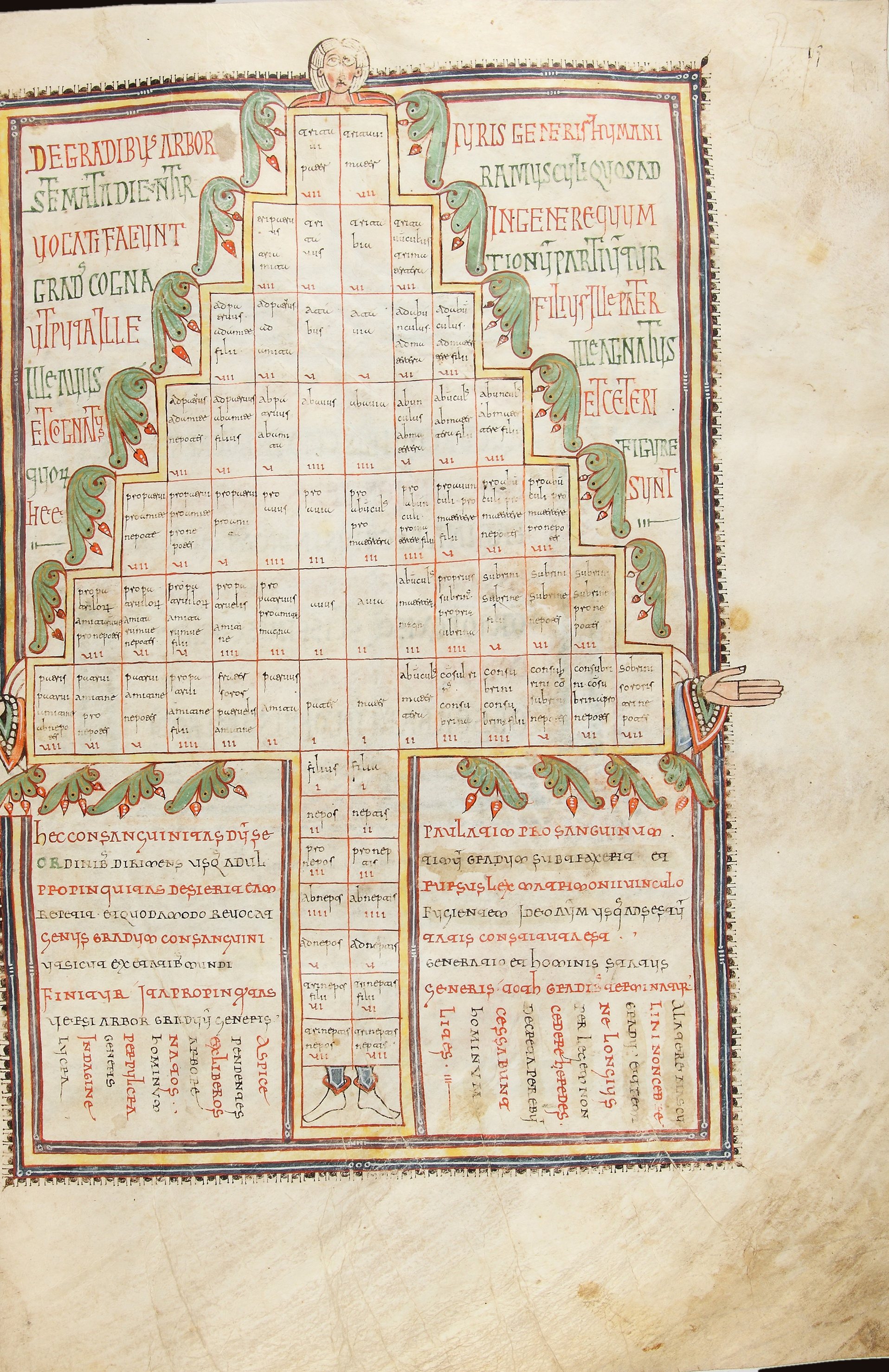
f. 15r A tree of kinship (arbor): a stepped table of the degrees of relationship, from Isidore of Seville, used to decide which marriages the Church allowed. A head looks out from the top. Any genealogist will recognise it.Patrimonio Nacional. Real Biblioteca del Monasterio de El Escorial, d-I-2, f. 15r. Photograph: RBME Digital (free use under its terms of use); whole page; the photographer’s backdrop trimmed to the edge of the leaf, resized only. 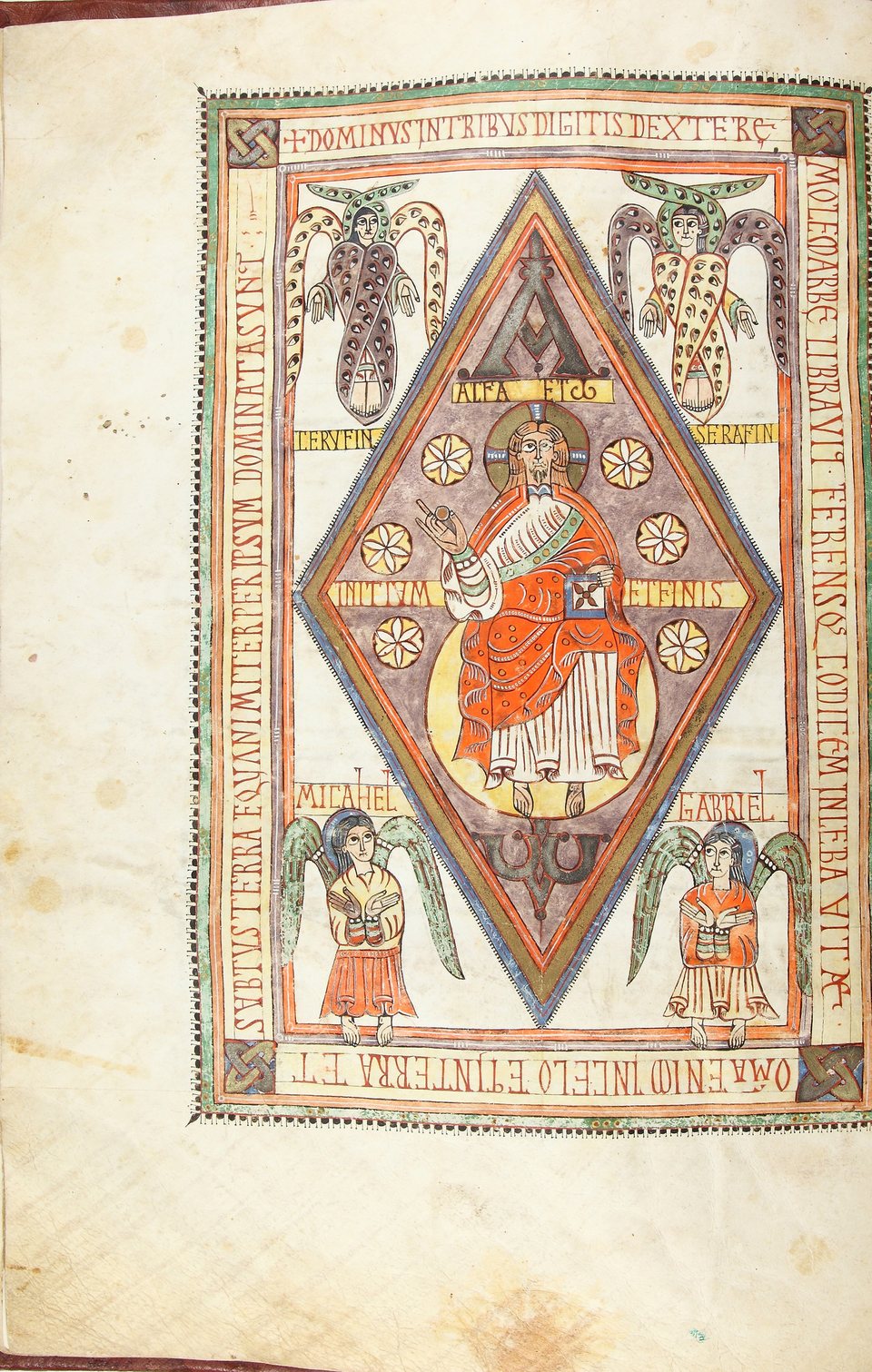
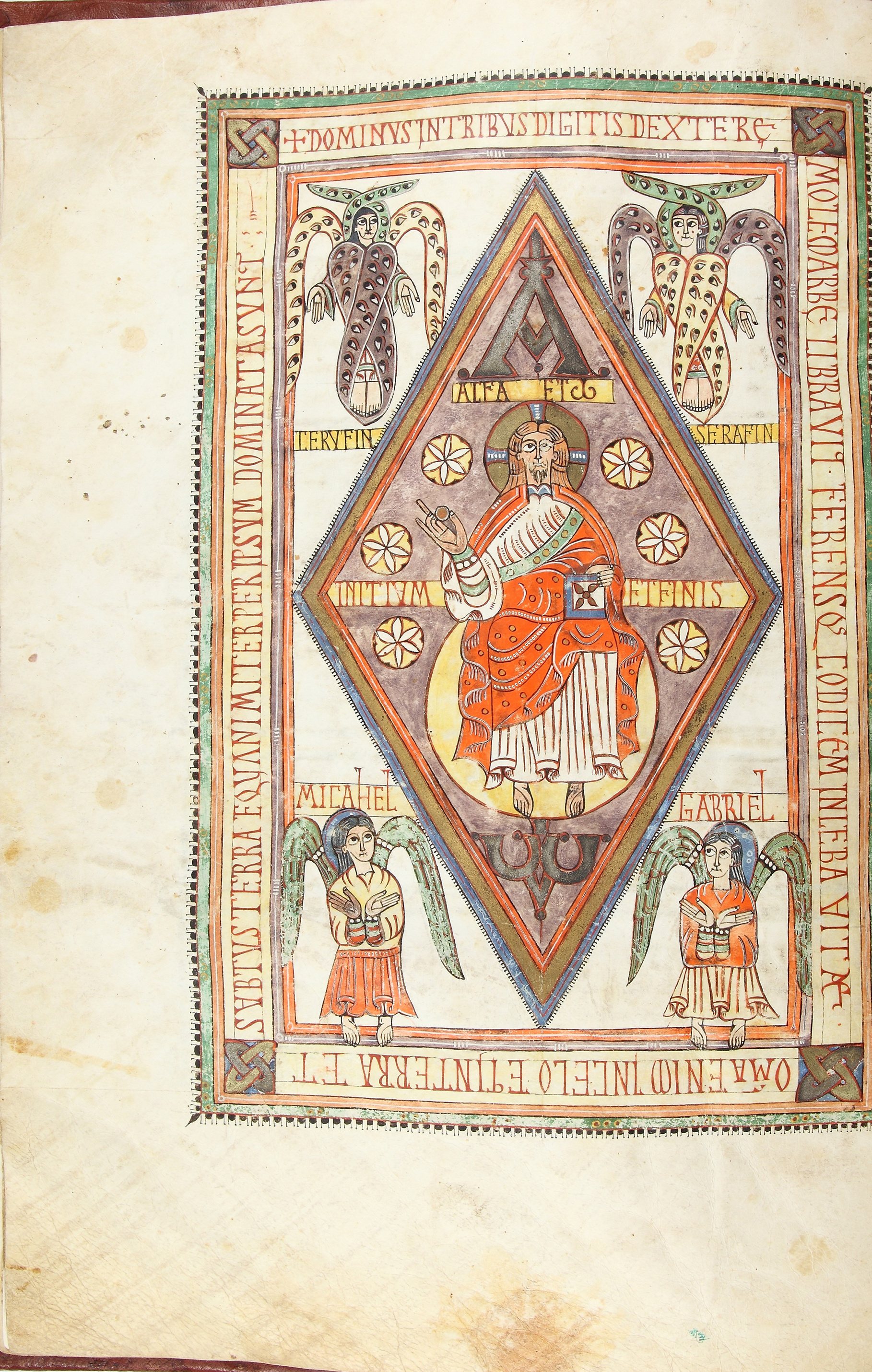
f. 16v Christ in majesty in a lozenge-shaped glory, with angels.Patrimonio Nacional. Real Biblioteca del Monasterio de El Escorial, d-I-2, f. 16v. Photograph: RBME Digital (free use under its terms of use); whole page; the photographer’s backdrop trimmed to the edge of the leaf, resized only. 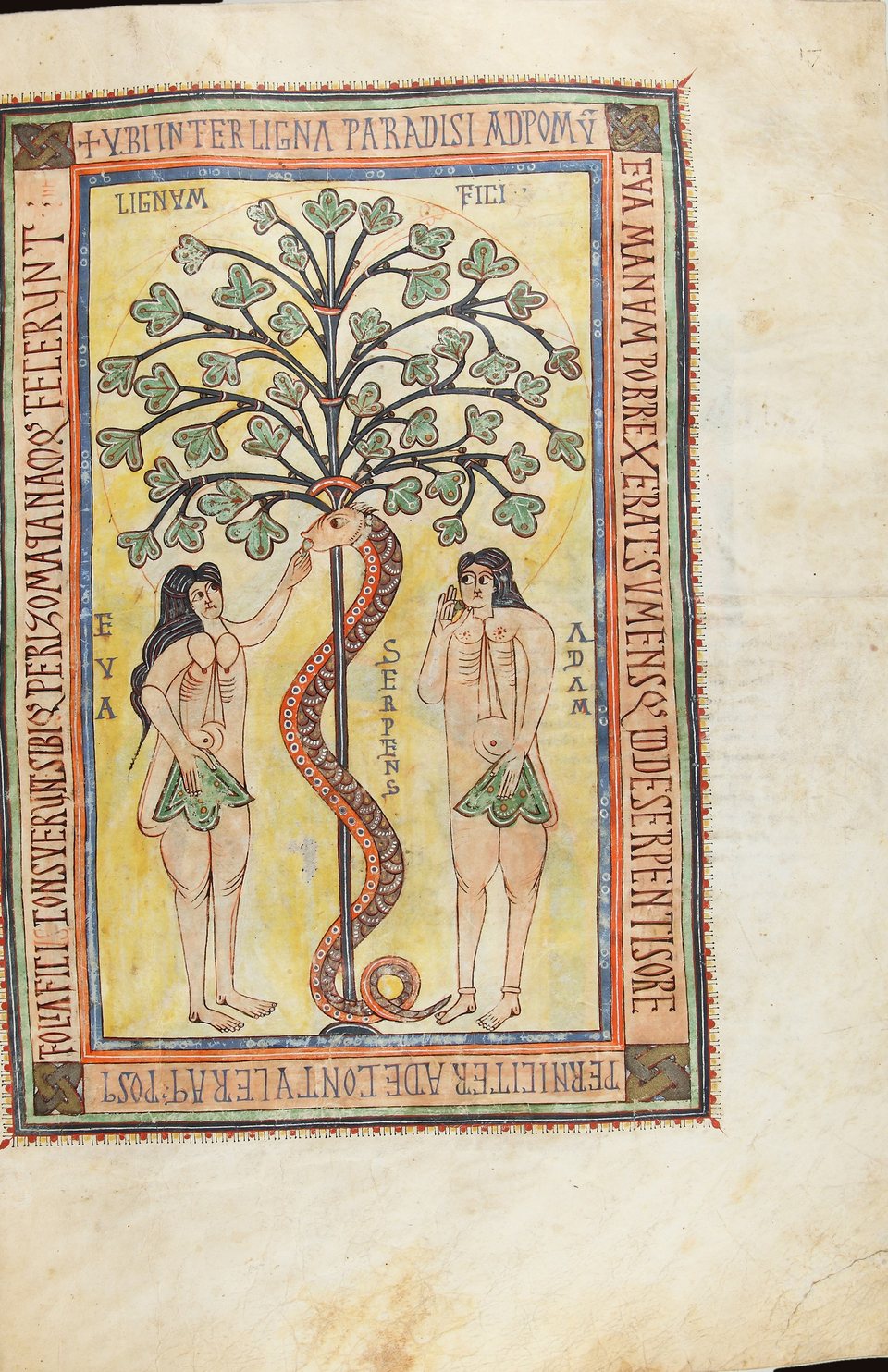
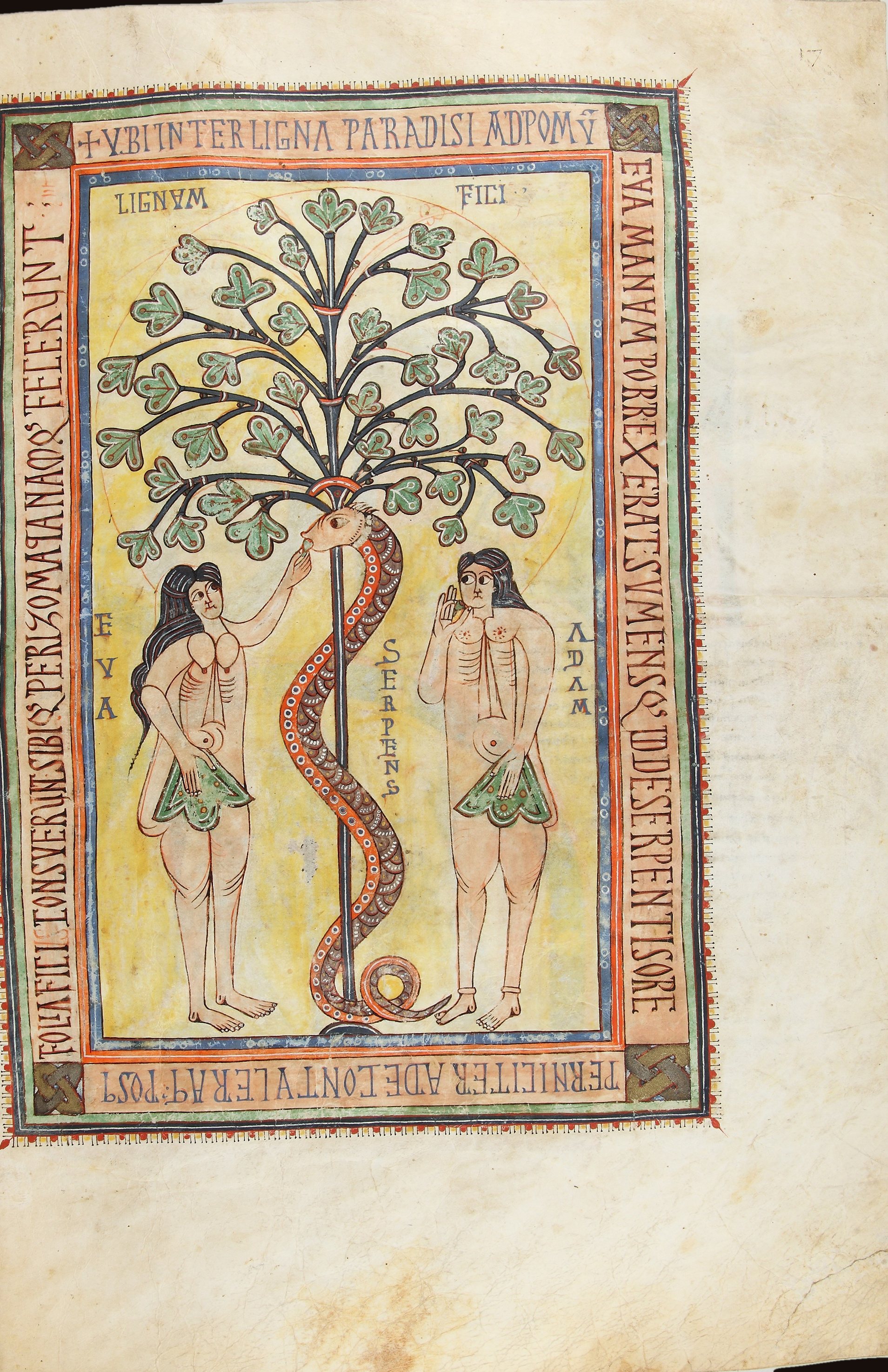
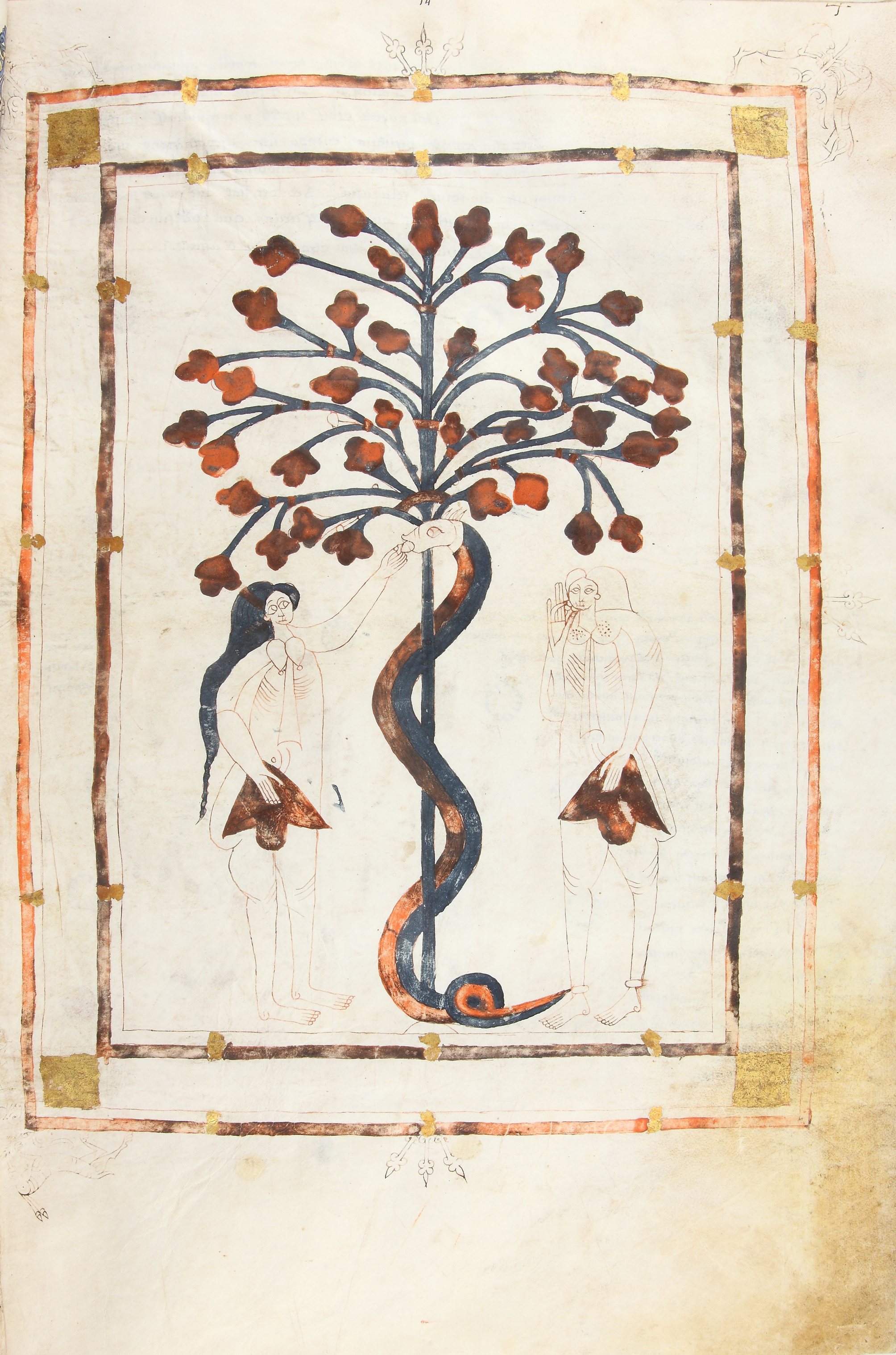
f. 17r Adam and Eve with the serpent and the tree.Patrimonio Nacional. Real Biblioteca del Monasterio de El Escorial, d-I-2, f. 17r. Photograph: RBME Digital (free use under its terms of use); whole page; the photographer’s backdrop trimmed to the edge of the leaf, resized only. 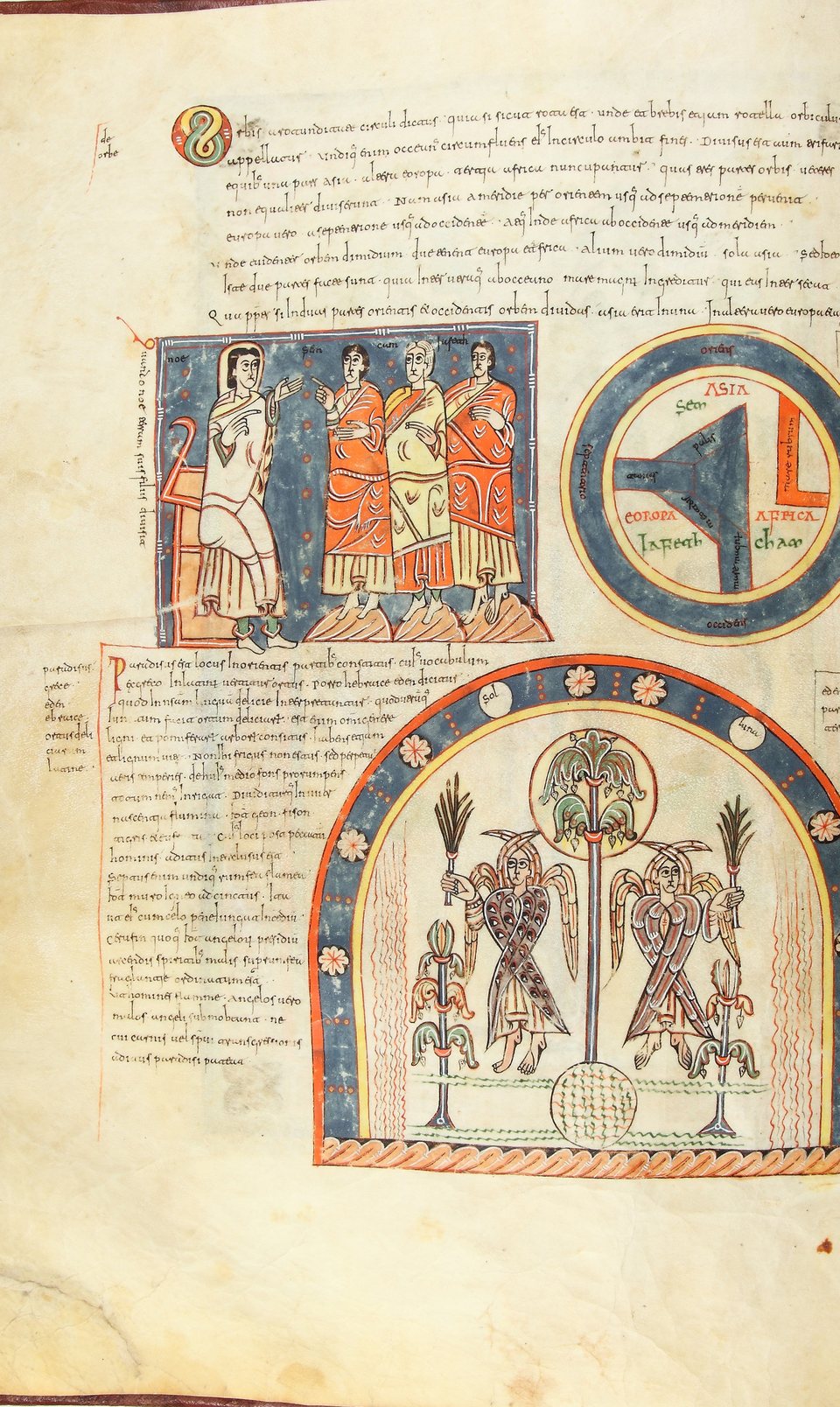
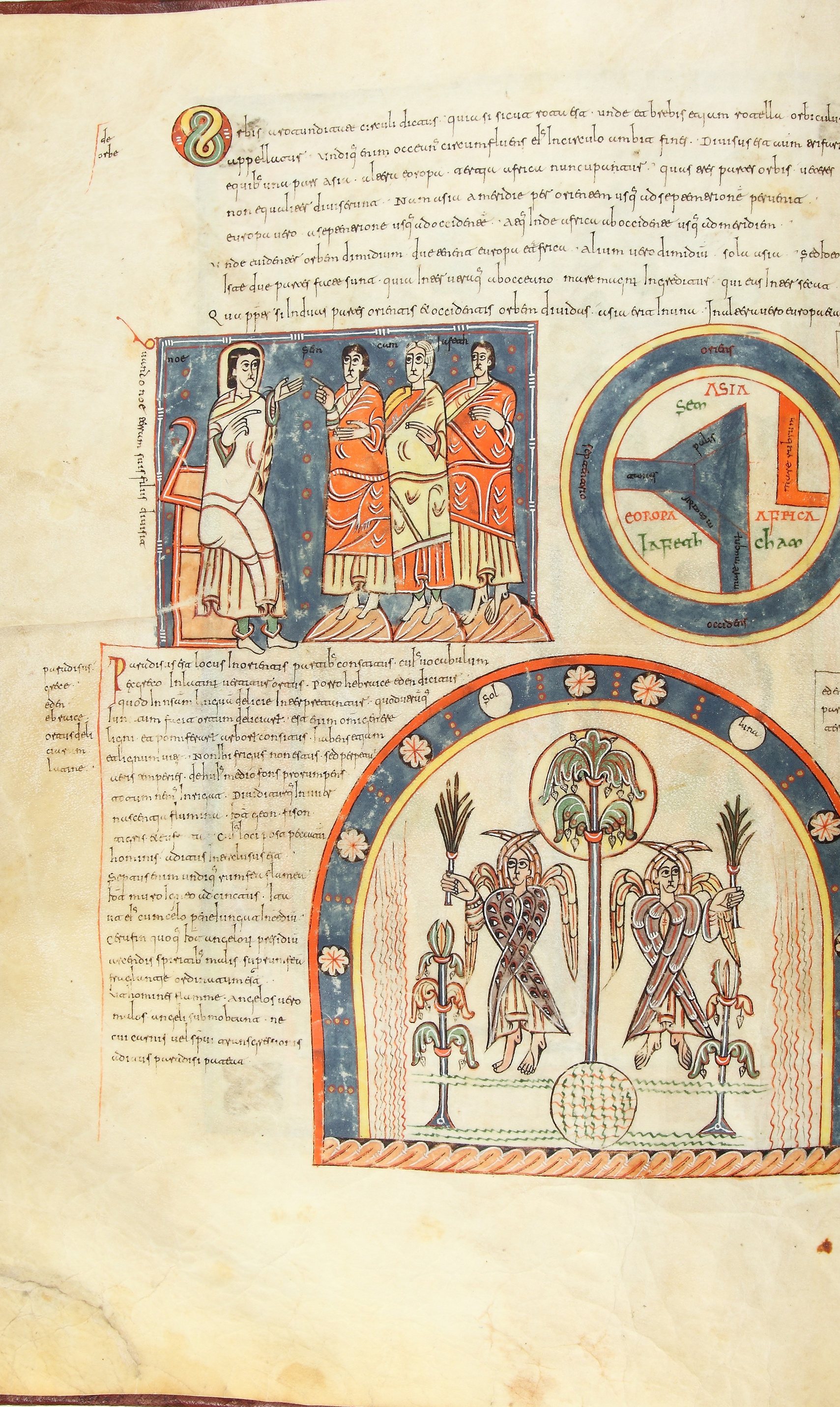
f. 17v Noah and his sons, a small round map of the world, and Paradise.Patrimonio Nacional. Real Biblioteca del Monasterio de El Escorial, d-I-2, f. 17v. Photograph: RBME Digital (free use under its terms of use); whole page; the photographer’s backdrop trimmed to the edge of the leaf, resized only. 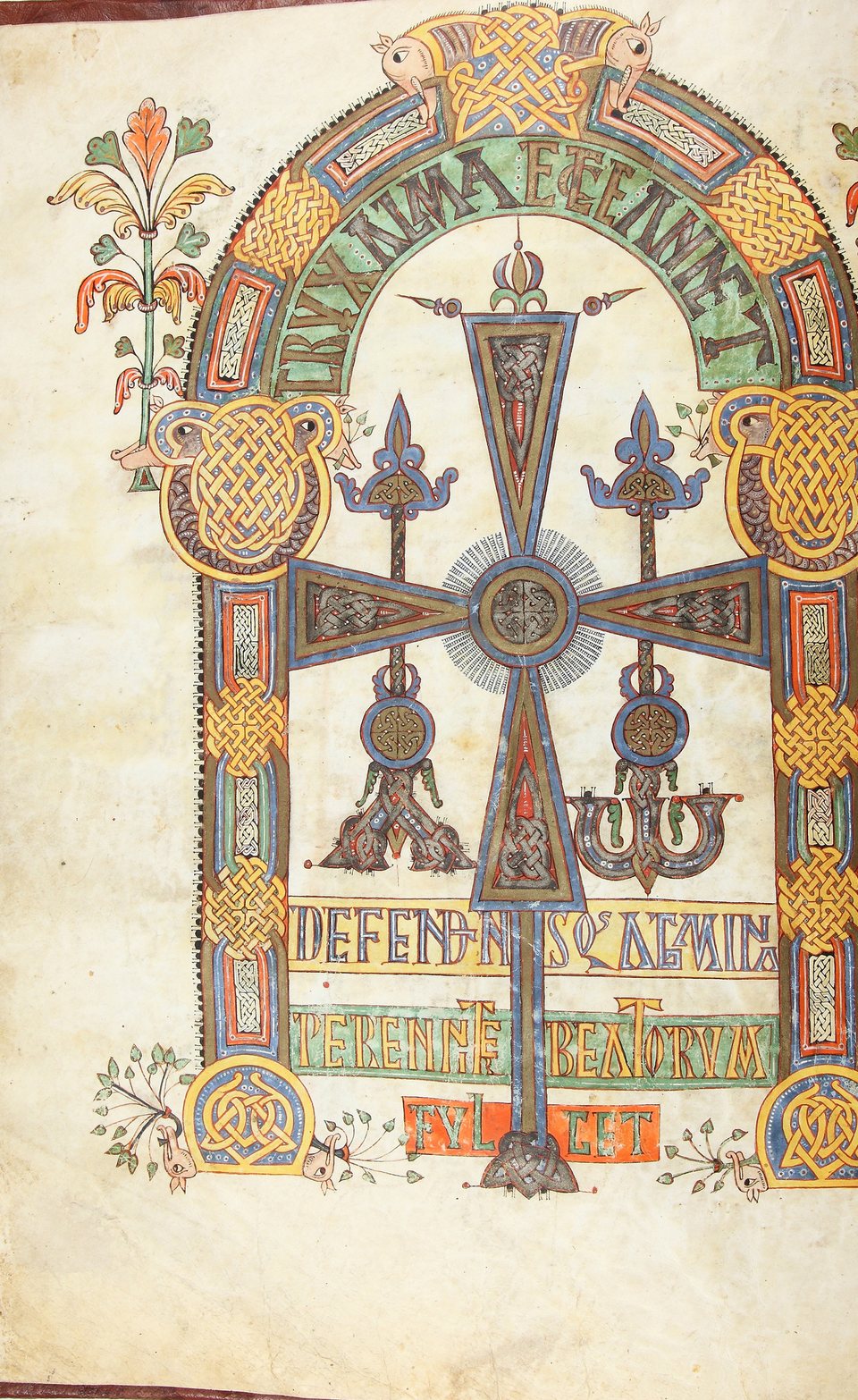
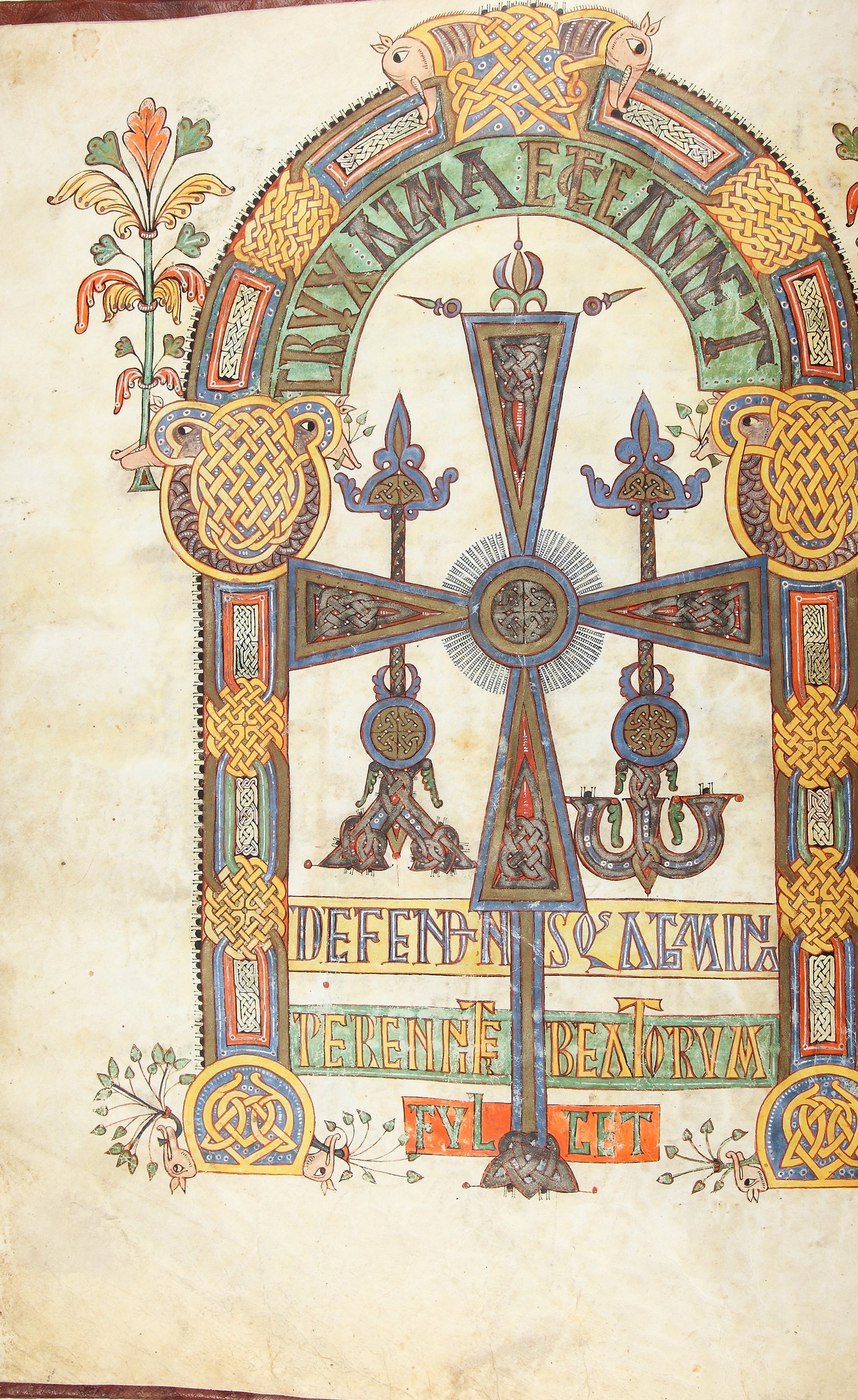
f. 18v A great jewelled cross under an arch, with pendants hanging from its arms.Patrimonio Nacional. Real Biblioteca del Monasterio de El Escorial, d-I-2, f. 18v. Photograph: RBME Digital (free use under its terms of use); whole page; the photographer’s backdrop trimmed to the edge of the leaf, resized only. 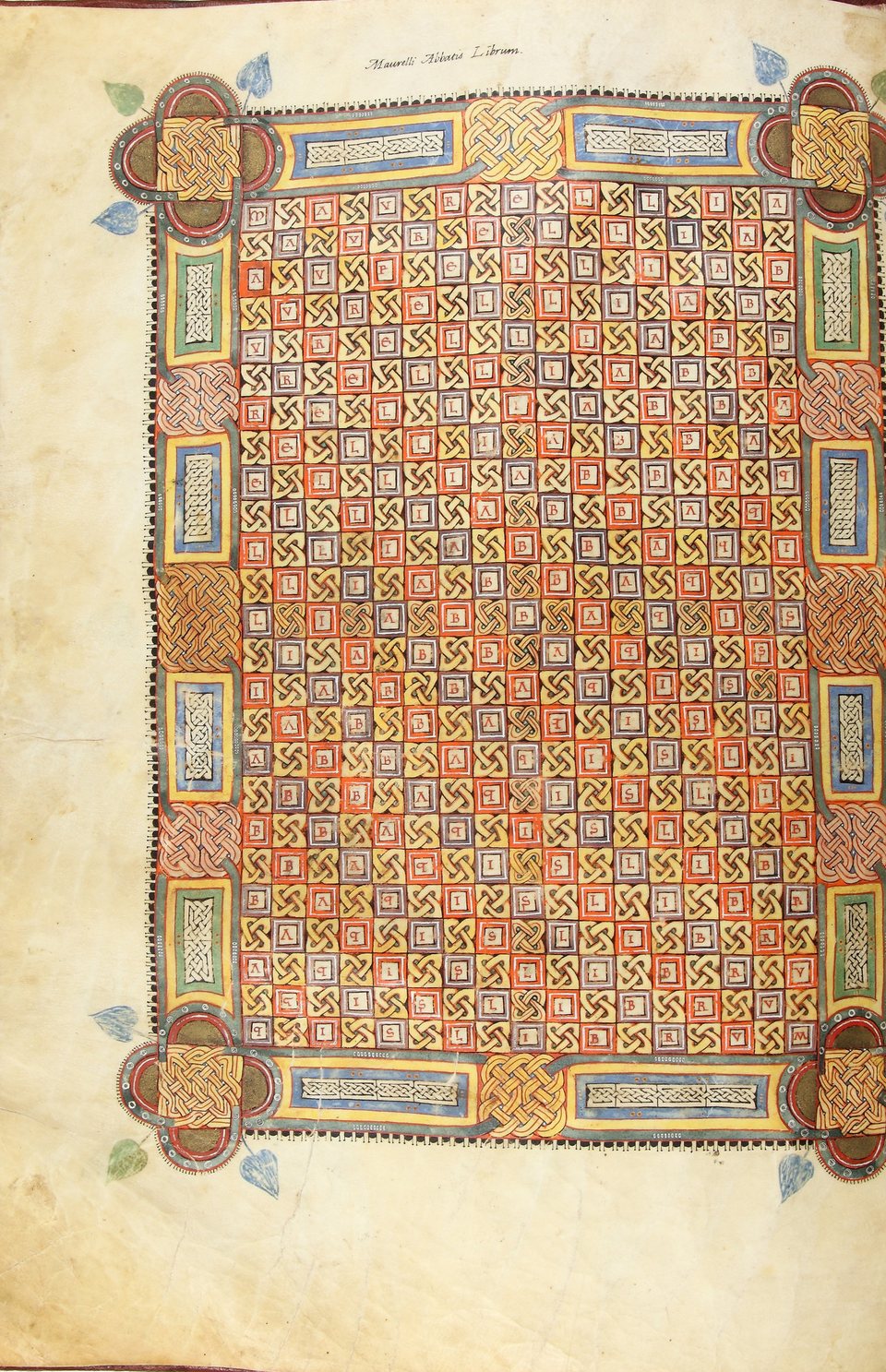
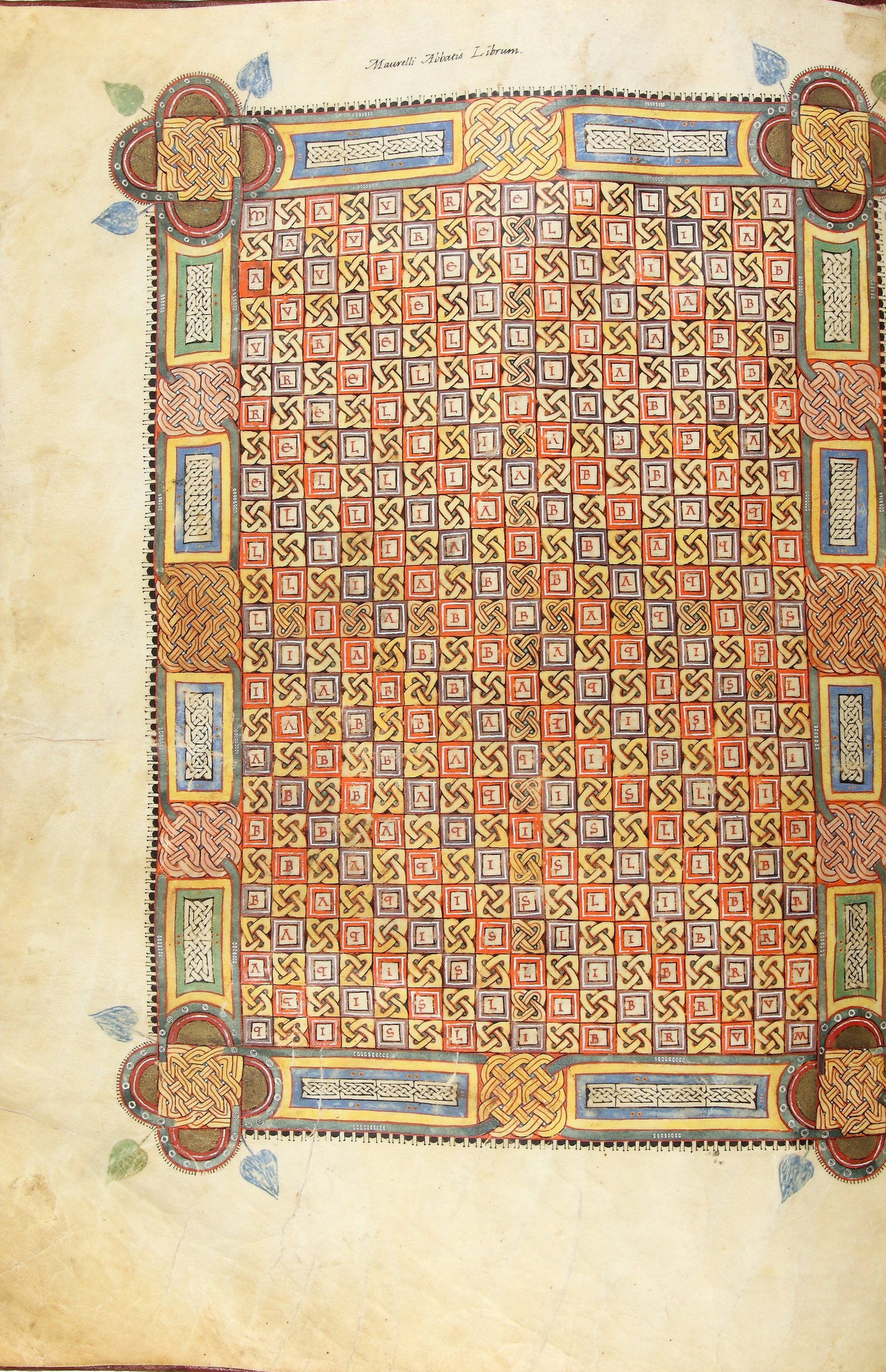
f. 19v A second grid page, worked as a diagonal lattice in red, blue and gold.Patrimonio Nacional. Real Biblioteca del Monasterio de El Escorial, d-I-2, f. 19v. Photograph: RBME Digital (free use under its terms of use); whole page; the photographer’s backdrop trimmed to the edge of the leaf, resized only. 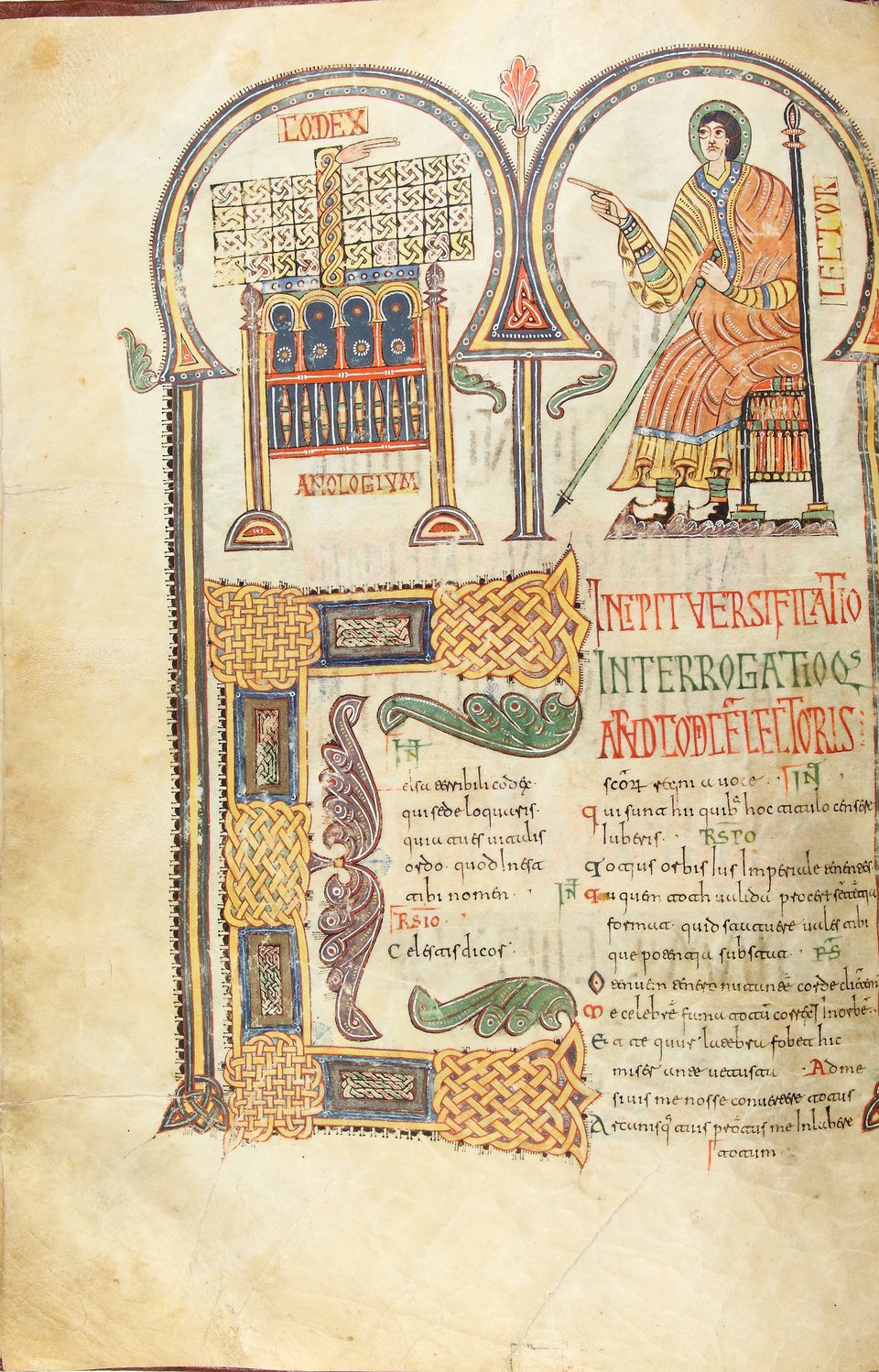
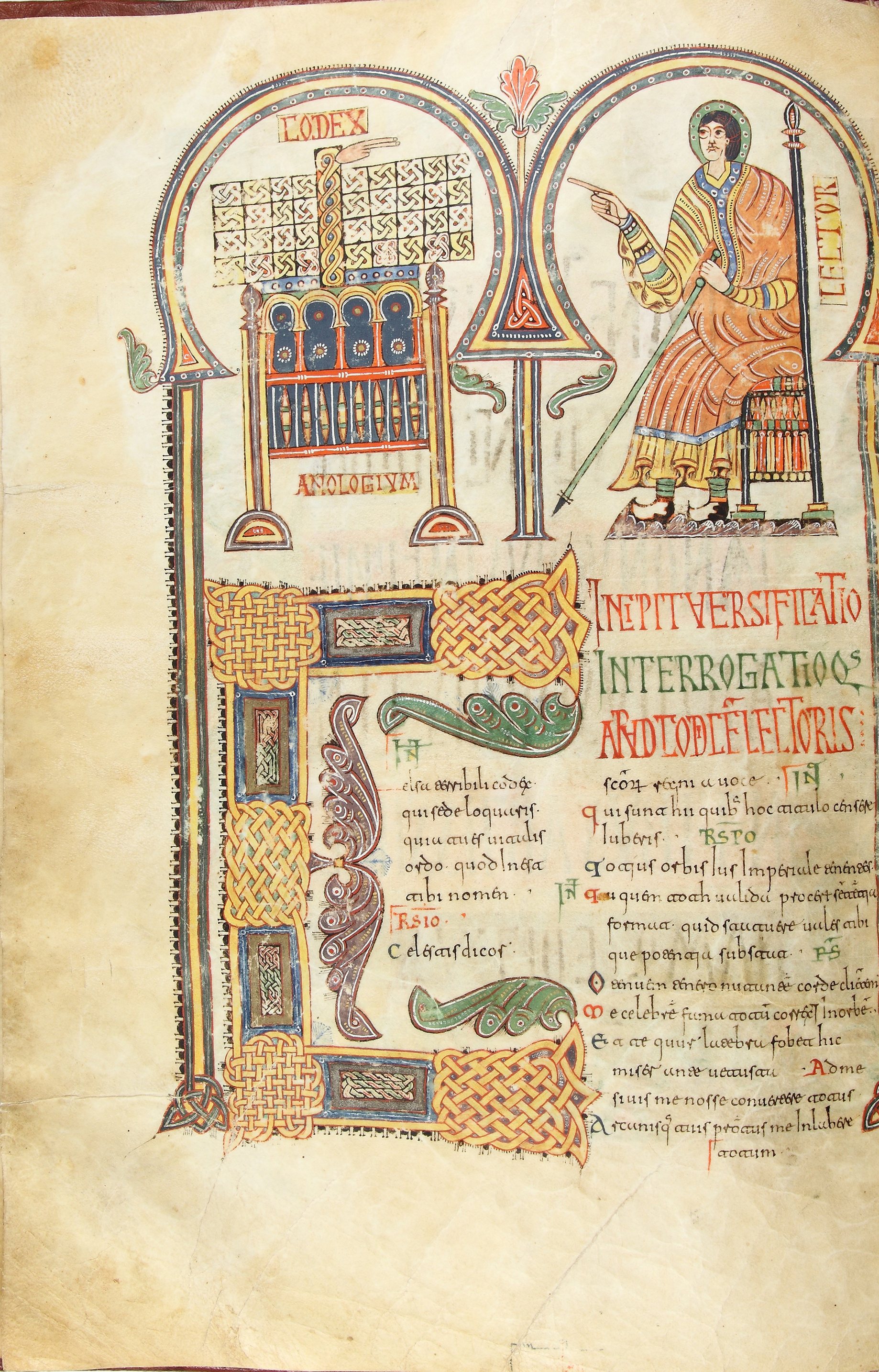
f. 20v The book and its reader. On the left the codex lies on its lectern (labelled CODEX and ANALOGIUM); on the right the reader (LECTOR) points to it. Below begins a verse dialogue between the book and the reader.Patrimonio Nacional. Real Biblioteca del Monasterio de El Escorial, d-I-2, f. 20v. Photograph: RBME Digital (free use under its terms of use); whole page; the photographer’s backdrop trimmed to the edge of the leaf, resized only. 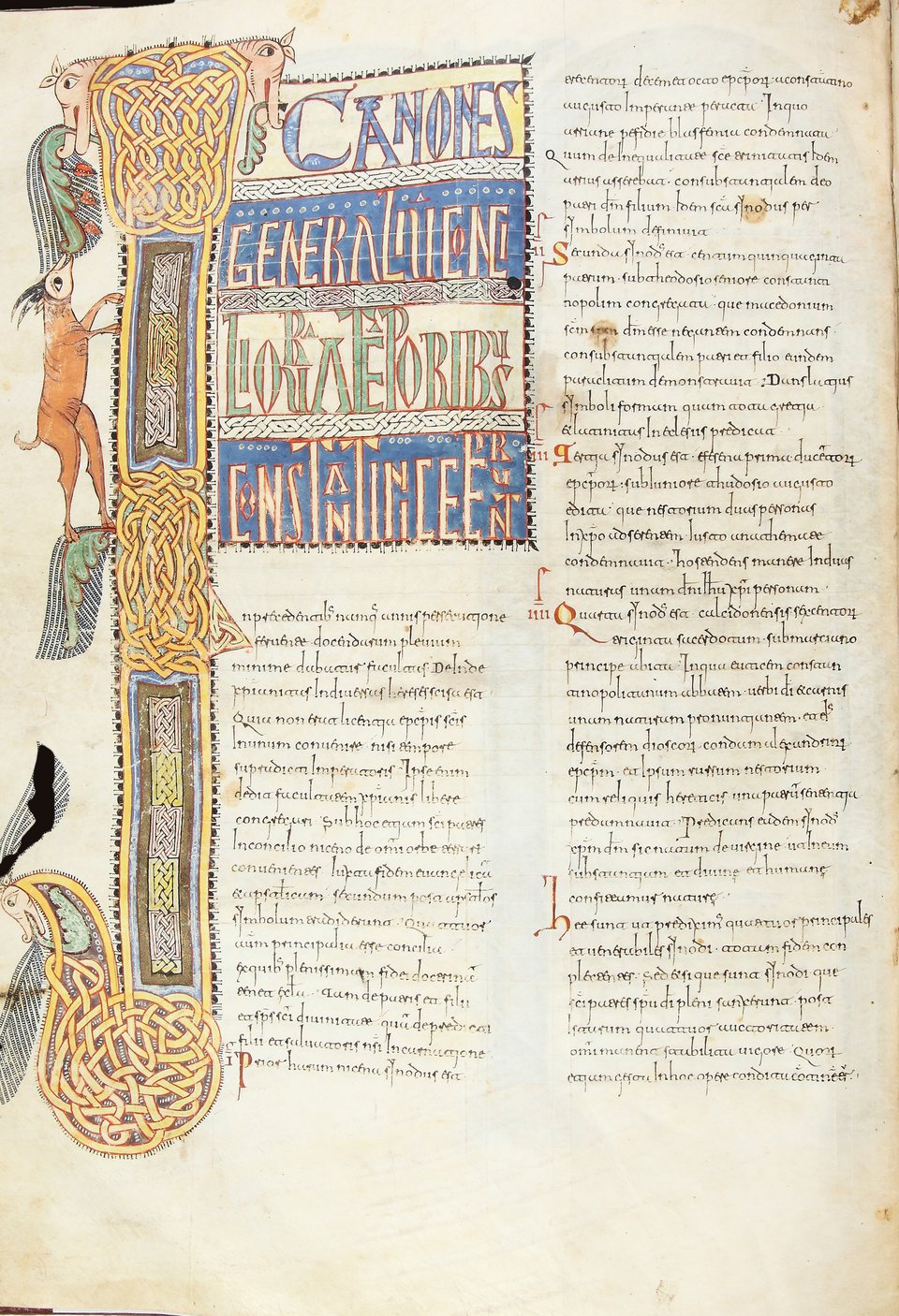
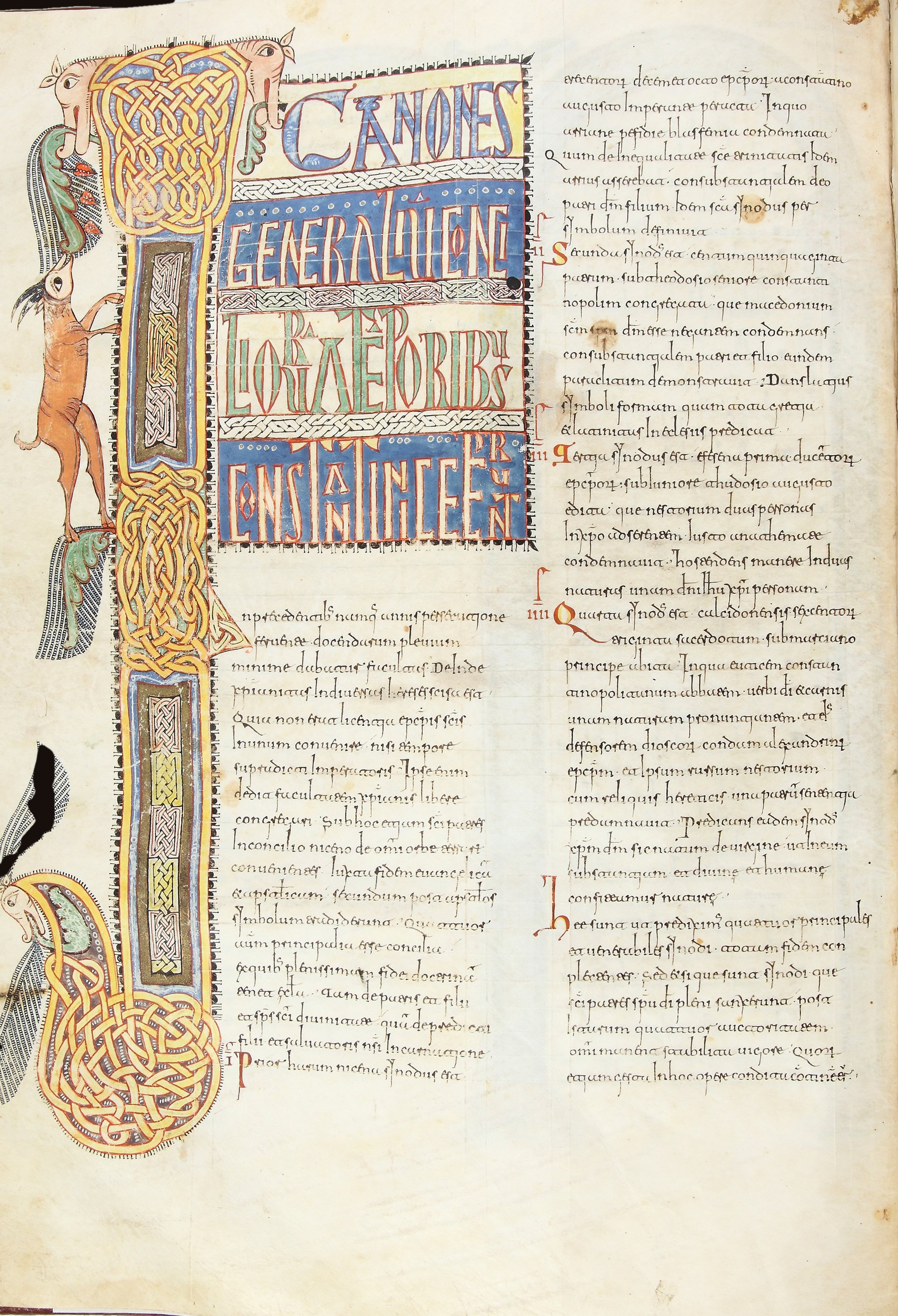
f. 70v The canons begin: CANONES in display capitals beside a tall interlace initial.Patrimonio Nacional. Real Biblioteca del Monasterio de El Escorial, d-I-2, f. 70v. Photograph: RBME Digital (free use under its terms of use); whole page; the photographer’s backdrop trimmed to the edge of the leaf, resized only. 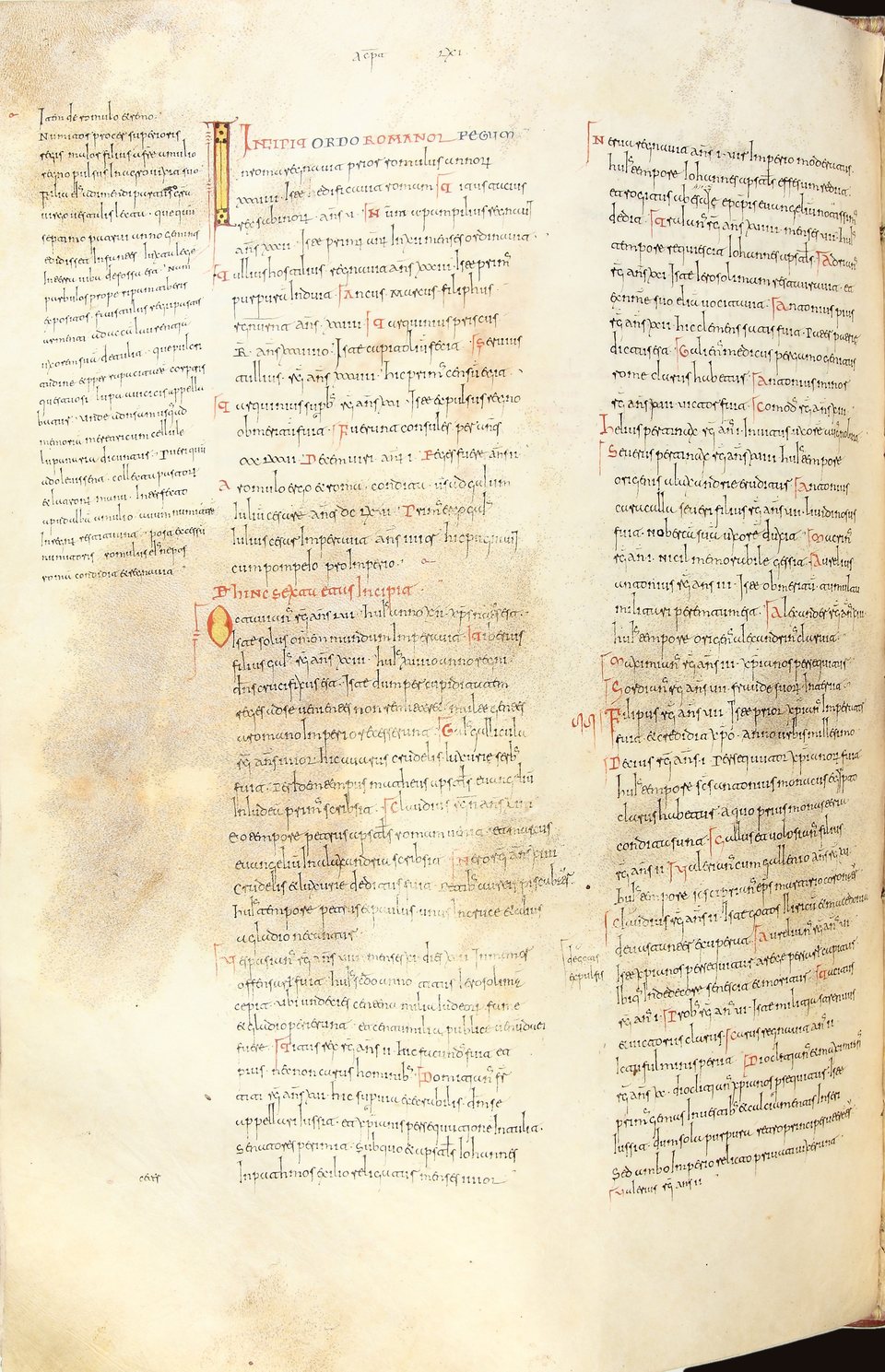
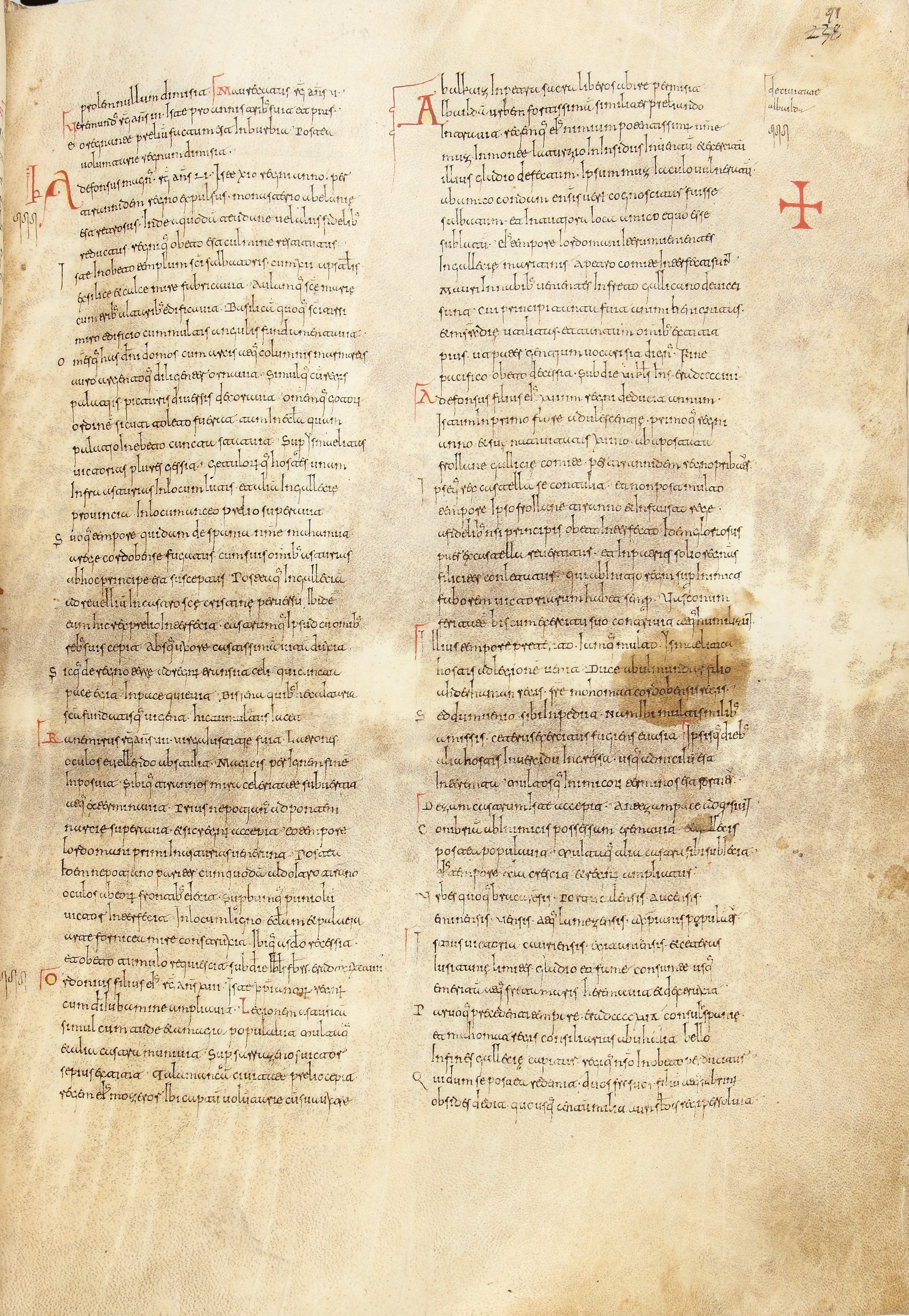
f. 238v The Chronica Albeldensia begins here. The chronicle was written at the Asturian court in 881 and continued to 883; this codex holds its oldest copy.Patrimonio Nacional. Real Biblioteca del Monasterio de El Escorial, d-I-2, f. 238v. Photograph: RBME Digital (free use under its terms of use); whole page; the photographer’s backdrop trimmed to the edge of the leaf, resized only. 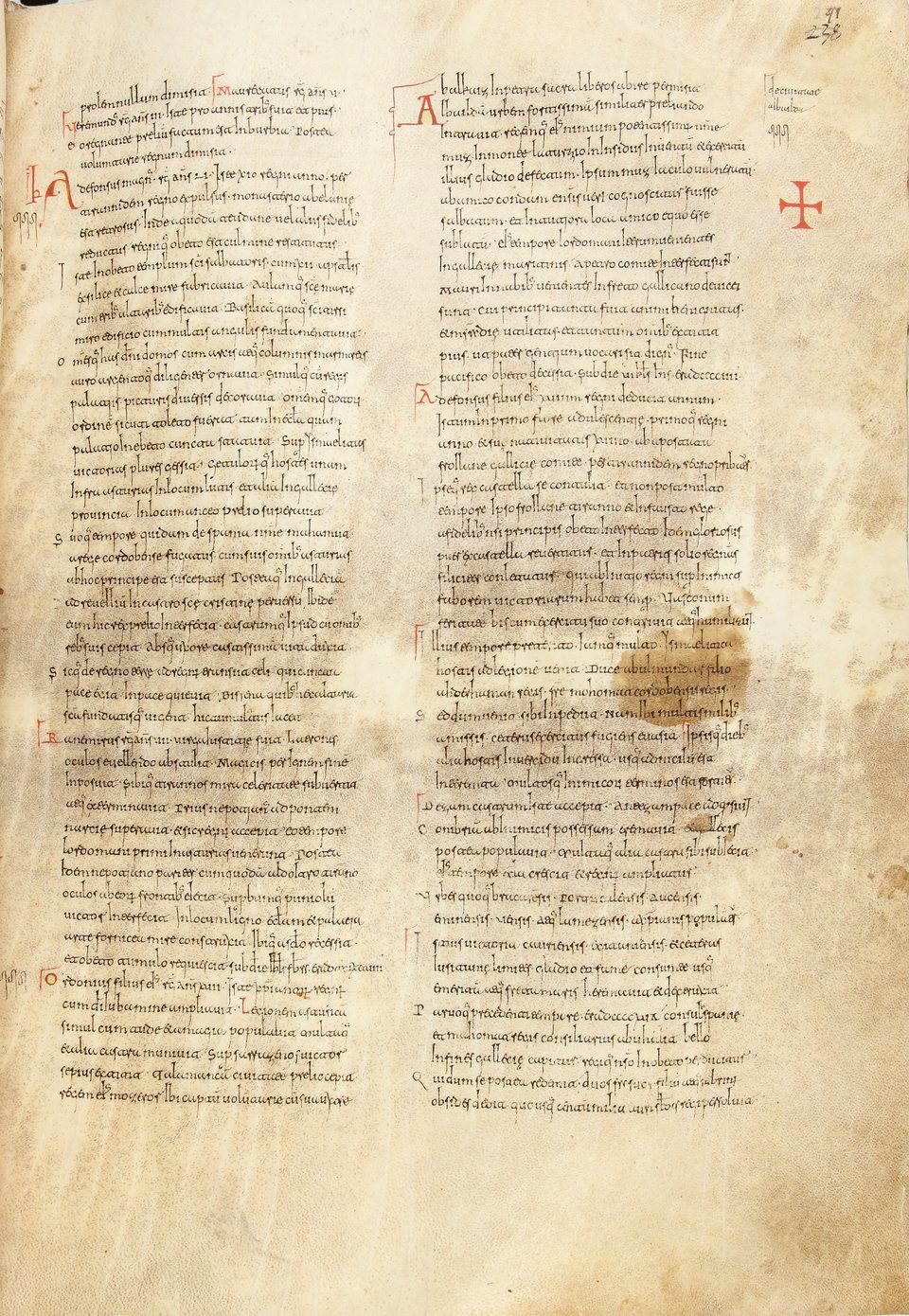
f. 241r The chronicle names Albelda: Albaidam urbem fortissimam, “Albelda, a very strong city”, which Ordoño I took after the battle on Monte Laturce in 859. A later reader marked the passage with a red cross in the margin.Patrimonio Nacional. Real Biblioteca del Monasterio de El Escorial, d-I-2, f. 241r. Photograph: RBME Digital (free use under its terms of use); whole page; the photographer’s backdrop trimmed to the edge of the leaf, resized only. 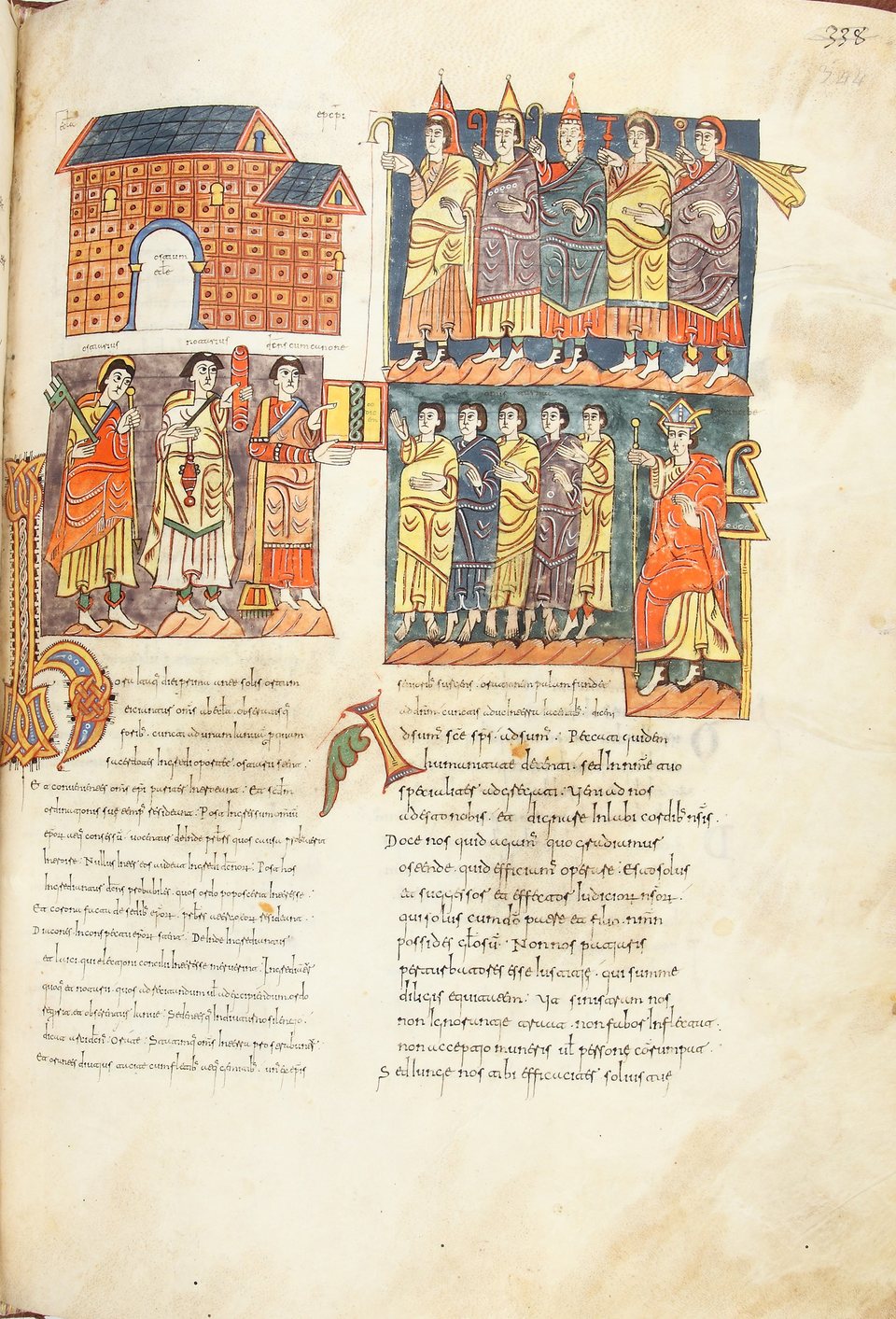
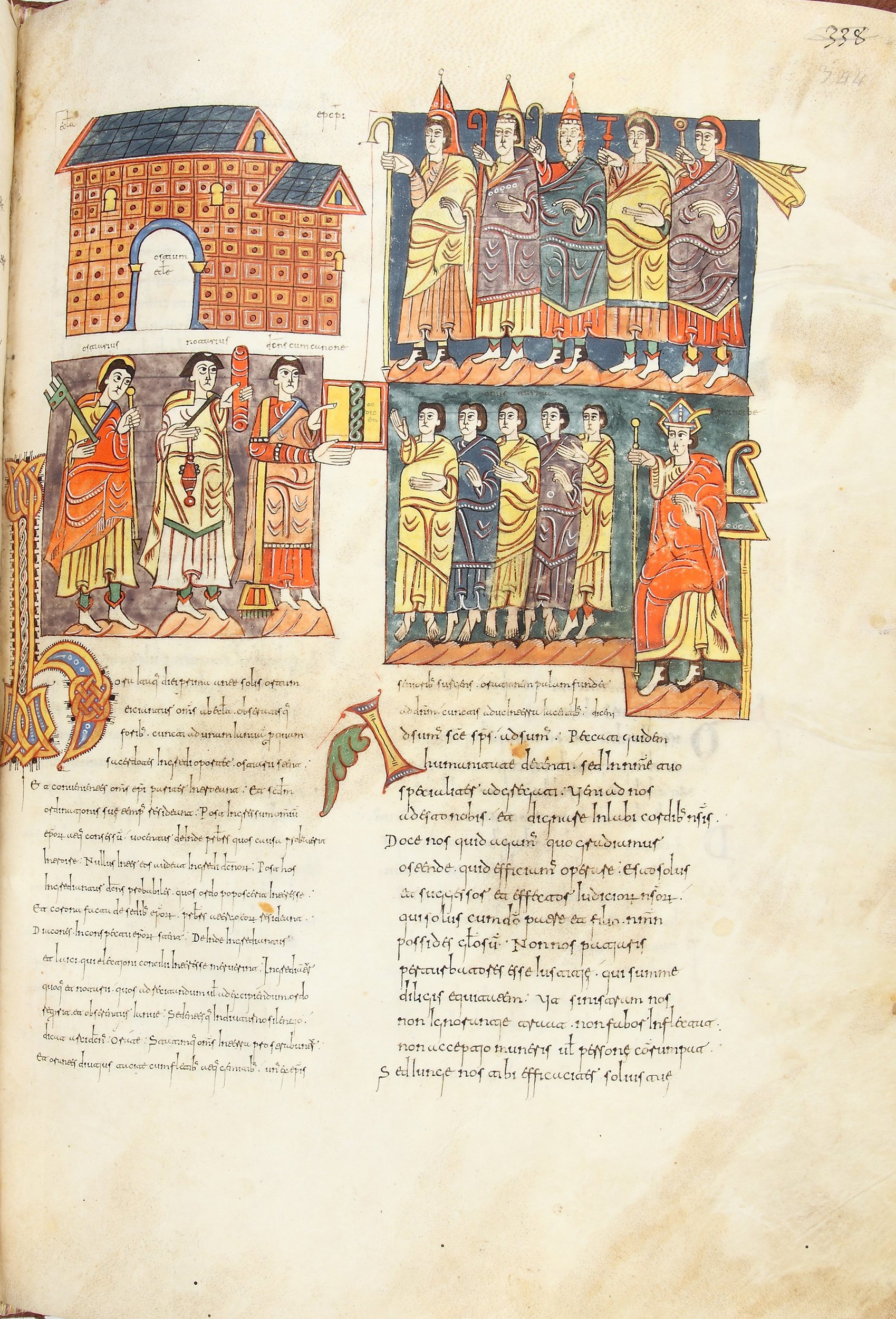
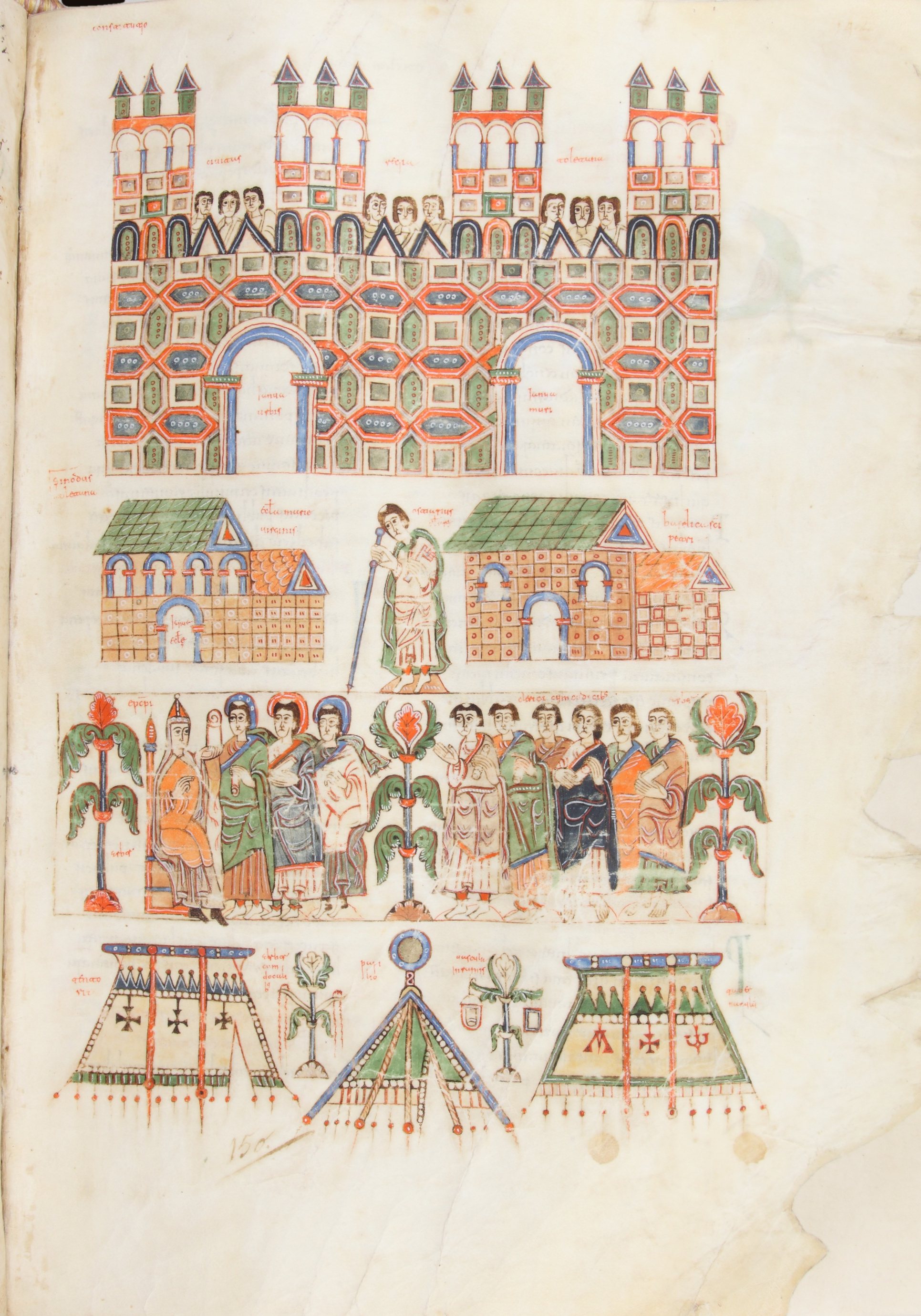
f. 344r How a council is held (Ordo de celebrando concilio): the city, and the bishops seated in council.Patrimonio Nacional. Real Biblioteca del Monasterio de El Escorial, d-I-2, f. 344r. Photograph: RBME Digital (free use under its terms of use); whole page; the photographer’s backdrop trimmed to the edge of the leaf, resized only. 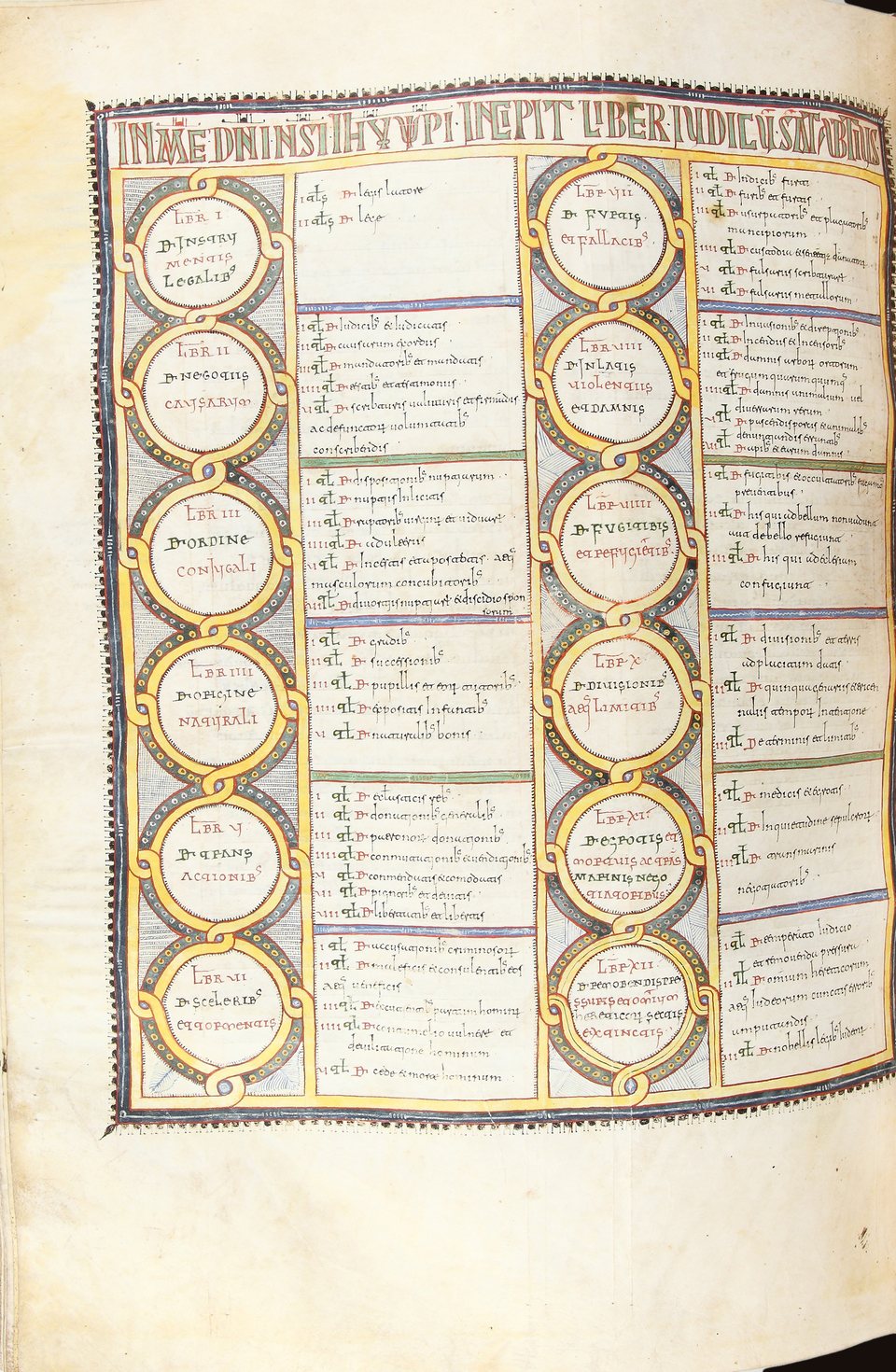
f. 358v The contents of the Liber Iudicum, the Visigothic law code later known as the Fuero Juzgo, set in roundels.Patrimonio Nacional. Real Biblioteca del Monasterio de El Escorial, d-I-2, f. 358v. Photograph: RBME Digital (free use under its terms of use); whole page; the photographer’s backdrop trimmed to the edge of the leaf, resized only. 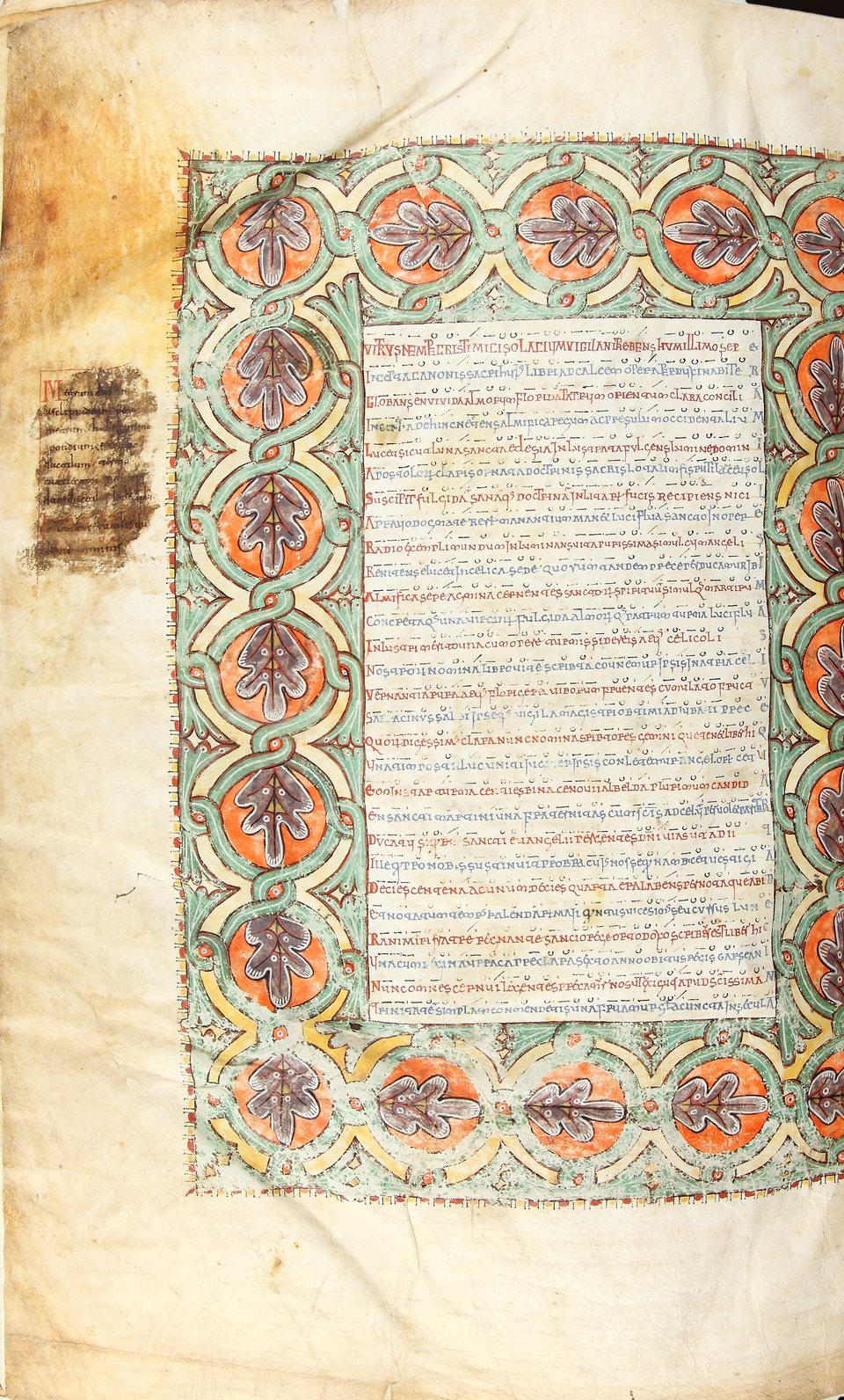
f. 428v A closing poem in a garland frame. Its first line names Vigila (…solacium Vigilanti…).Patrimonio Nacional. Real Biblioteca del Monasterio de El Escorial, d-I-2, f. 428v. Photograph: RBME Digital (free use under its terms of use); whole page; the photographer’s backdrop trimmed to the edge of the leaf, resized only.
IV1435 → 16th c.To El Escorial
The journey to El Escorial
In the 12th century the monastery became a collegiate church of canons. In 1435 a papal bull joined it to Santa María la Redonda in Logroño, and the books went with it. In the 16th century the codex was in the hands of the Count of Buendía, who gave it to King Philip II. Philip placed it in his new library at San Lorenzo de El Escorial, where it has stayed ever since.
The Escorial catalogue names the 16th-century scholars who worked on it there, among them Ambrosio de Morales and Juan Bautista Pérez. Today the library has photographed every leaf and put the whole book online.
DOCUMENTED · PATH IN LOCAL SOURCES
VAlbelda → AlveldaThe name
Why it matters to the Alvelda name
The family name comes from the place. Albelda, written Alvelda because b and v sound alike in Spanish, is the village in the Iregua valley where this book was made. The chronicle inside it even names the town, on folio 241r, as Albaidam urbem fortissimam, “a very strong city”.

To be clear: nothing connects our family to the making of the codex. No Alvelda is named in it, and no one in the family owned it. It is here because it is the most famous thing ever to come out of the place our name is from.
CONTEXT · NOT A FAMILY RECORD
El Escorial d.I.1 · San Millán de la Cogolla · c. 994
Its copy: the Codex Aemilianensis
Made at San Millán de la Cogolla from the Vigilanus, by a different painter. Shown for comparison; these pages are not from the Albelda book. Read the Aemilianensis at RBME Digital.
VI1769 · 1867The place
Albelda and its valley
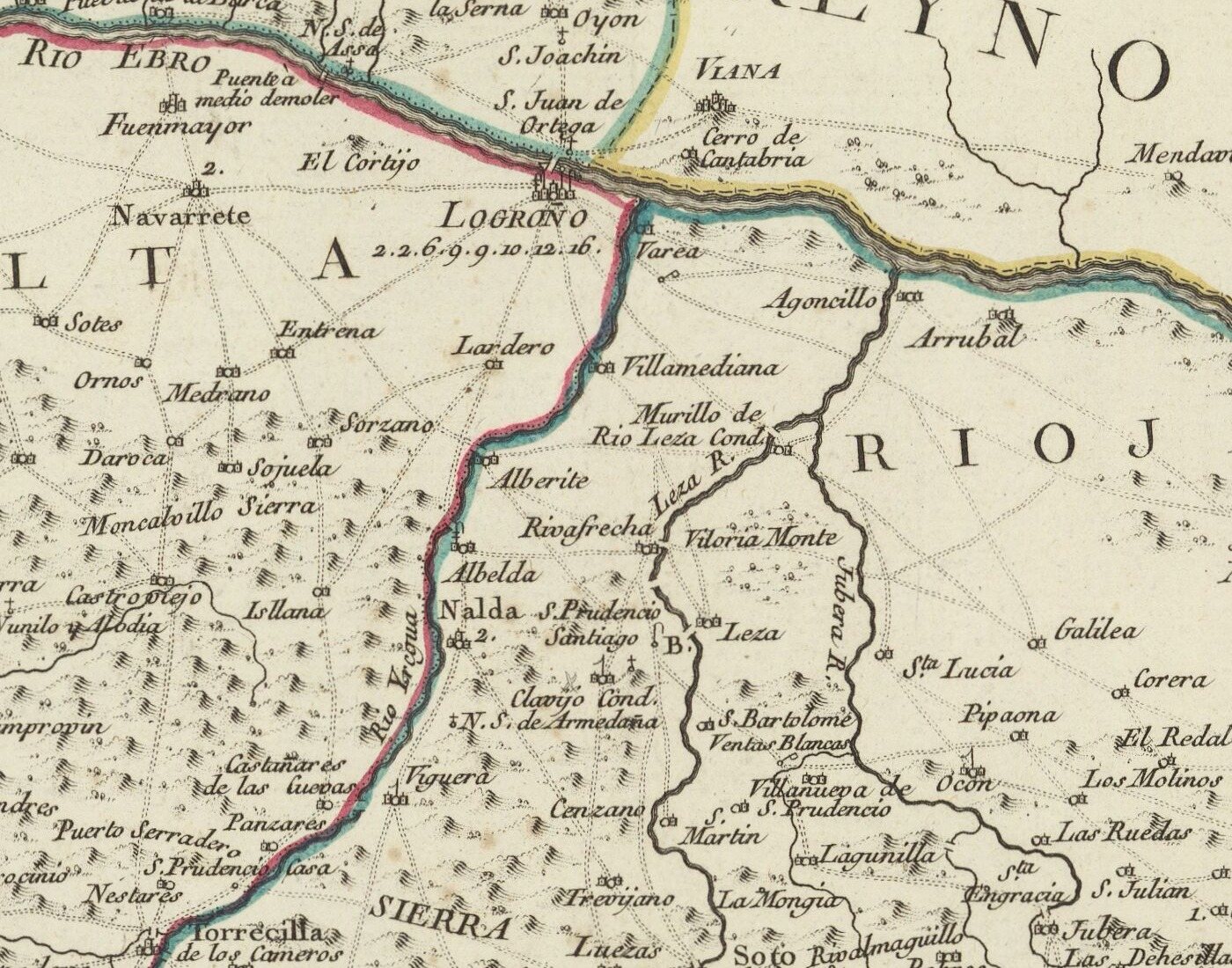
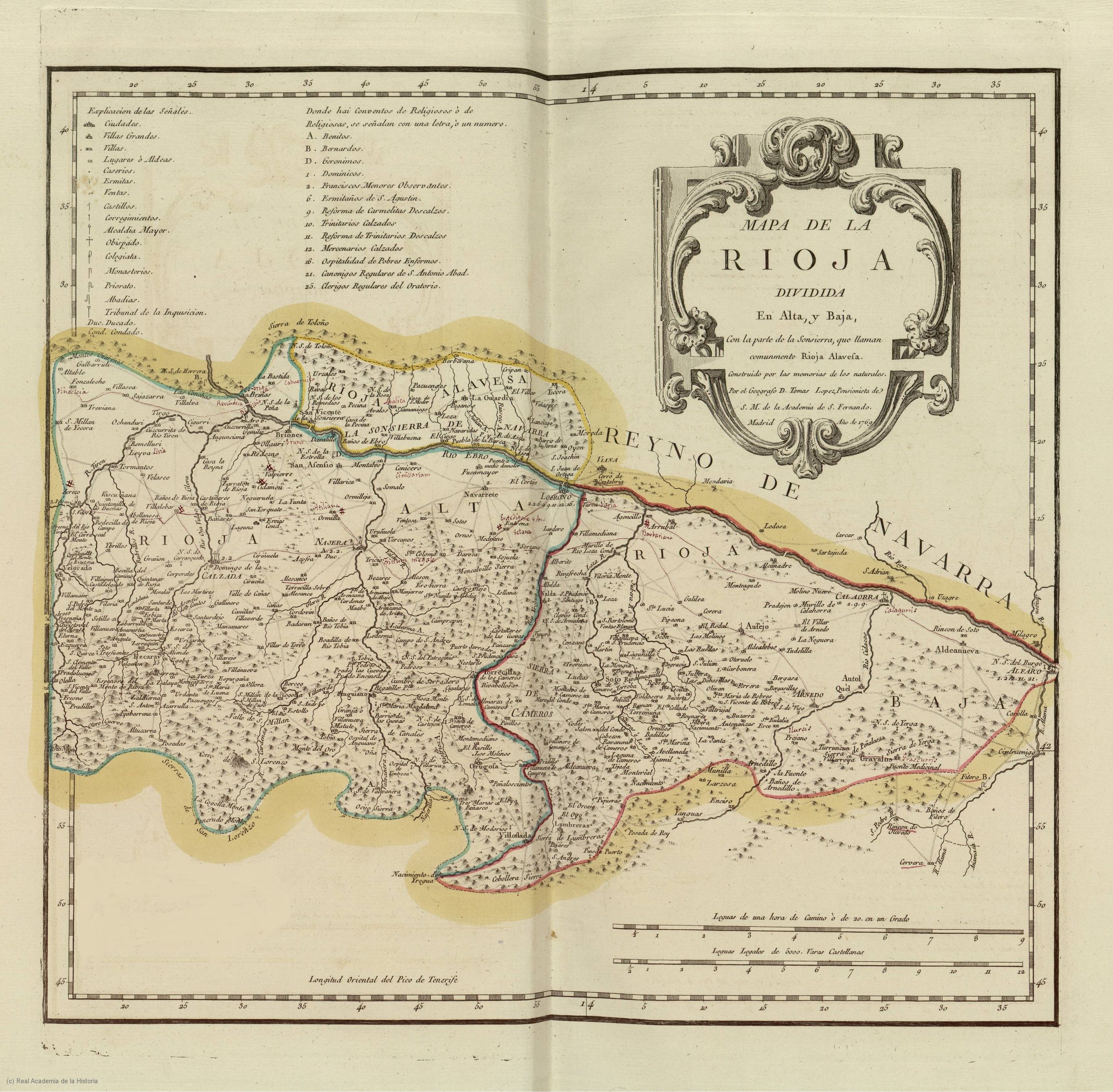
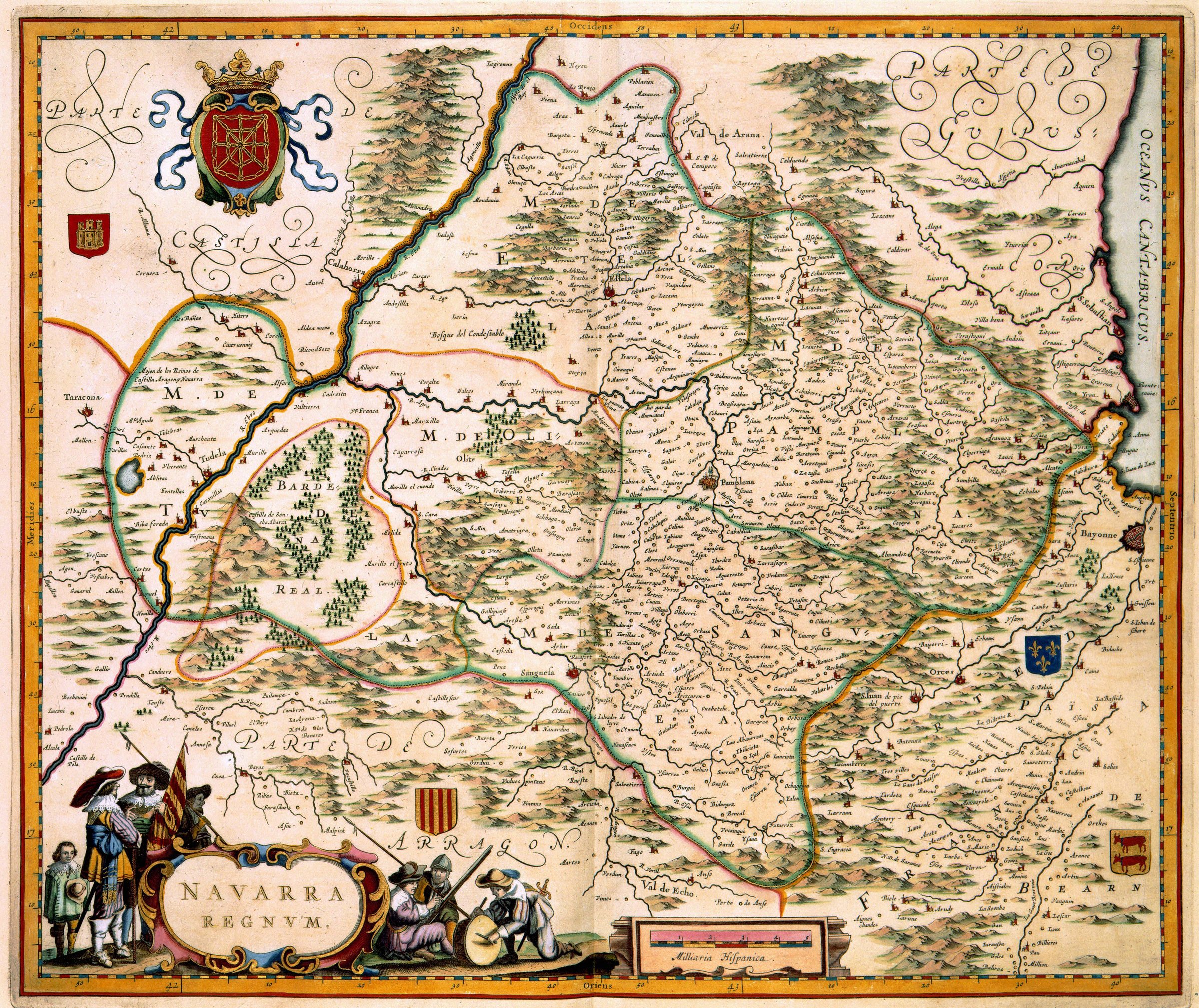
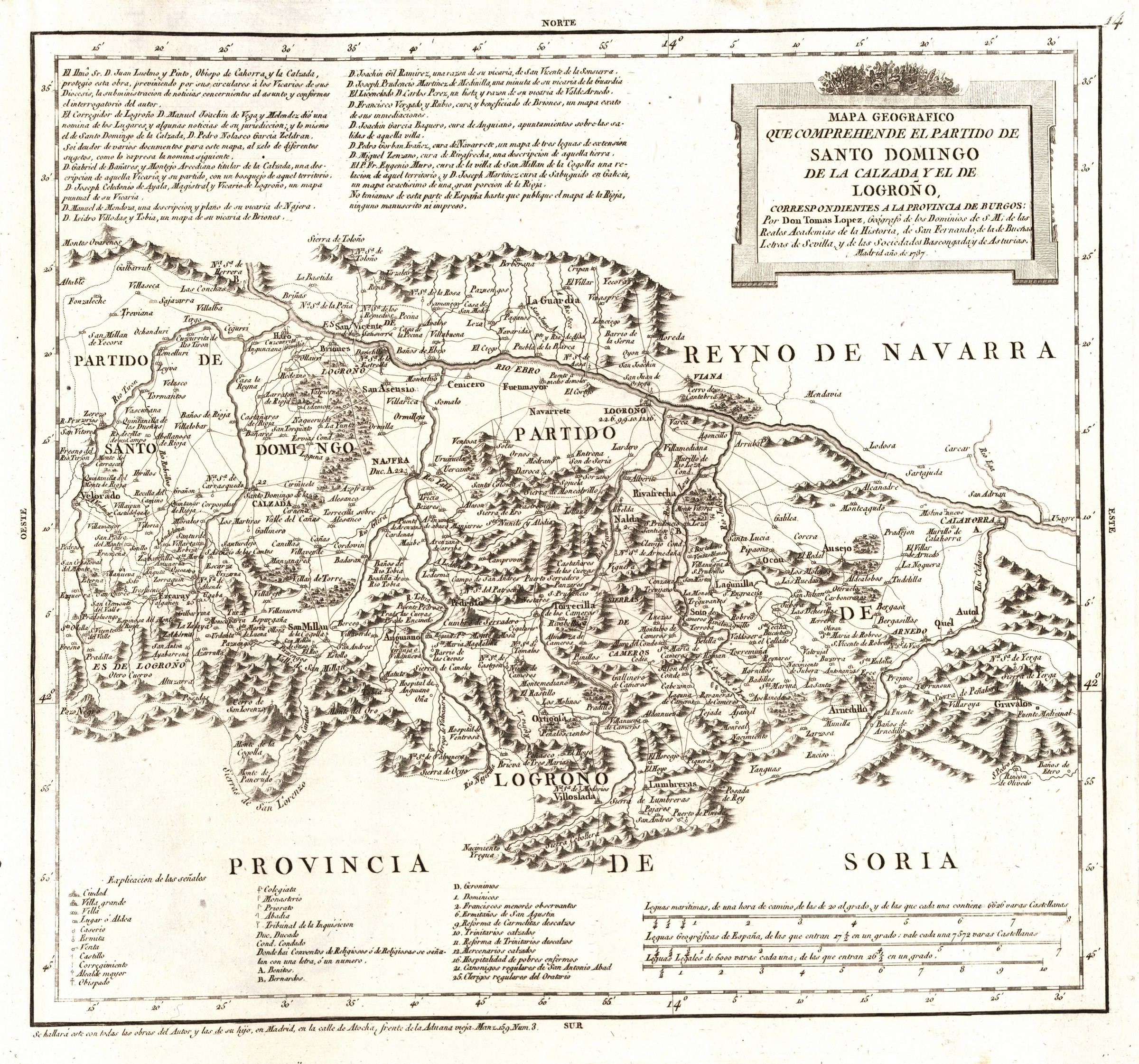
Albelda lies about ten kilometres south of Logroño, where the Río Iregua leaves the Cameros hills. The oldest pictures of it we could find under an open licence are maps: Tomás López’s map of La Rioja (1769), which marks Albelda by the river, and his map of the Logroño district (1787). The Blaeu atlas shows the neighbouring kingdom of Navarre.
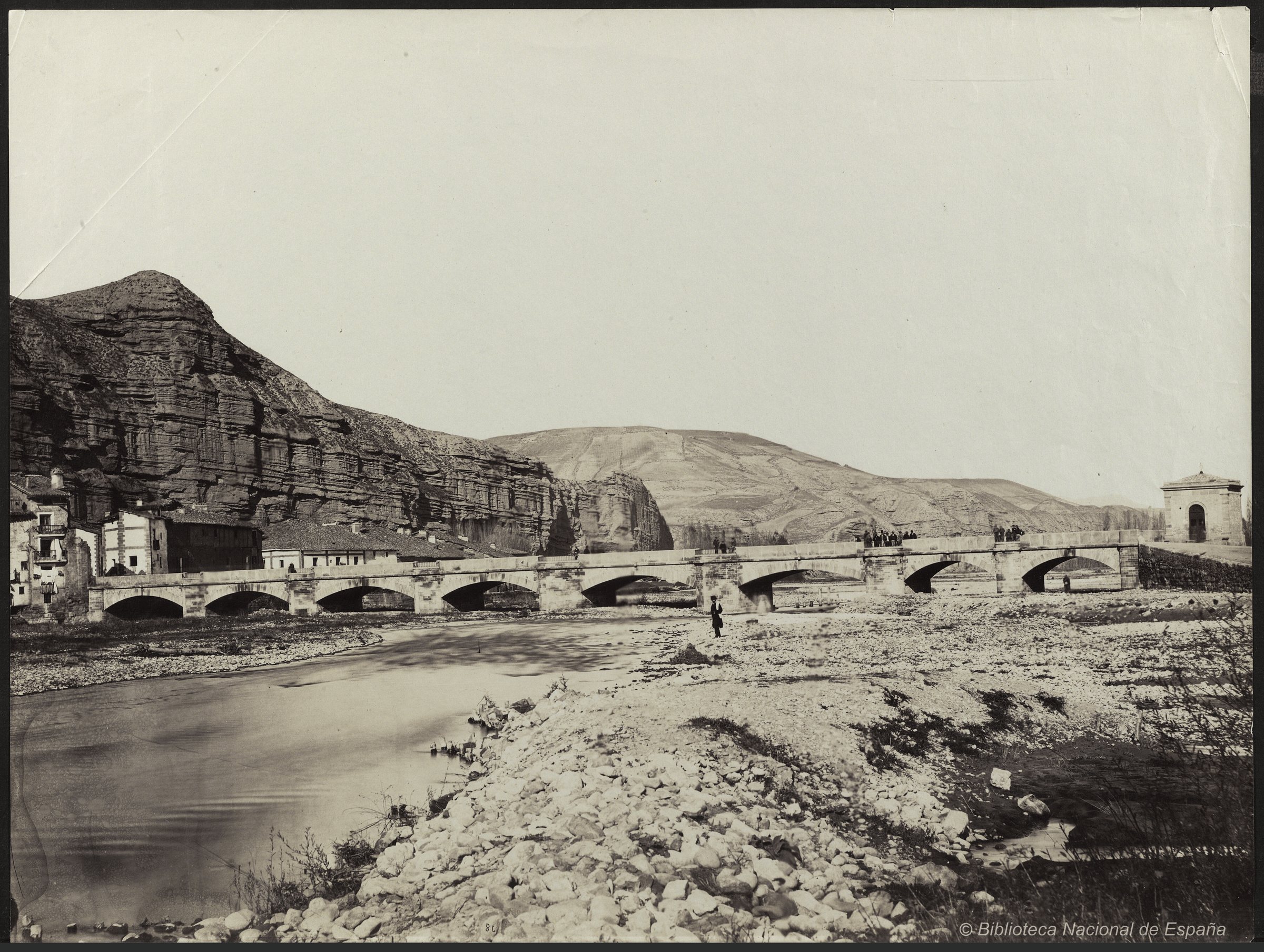
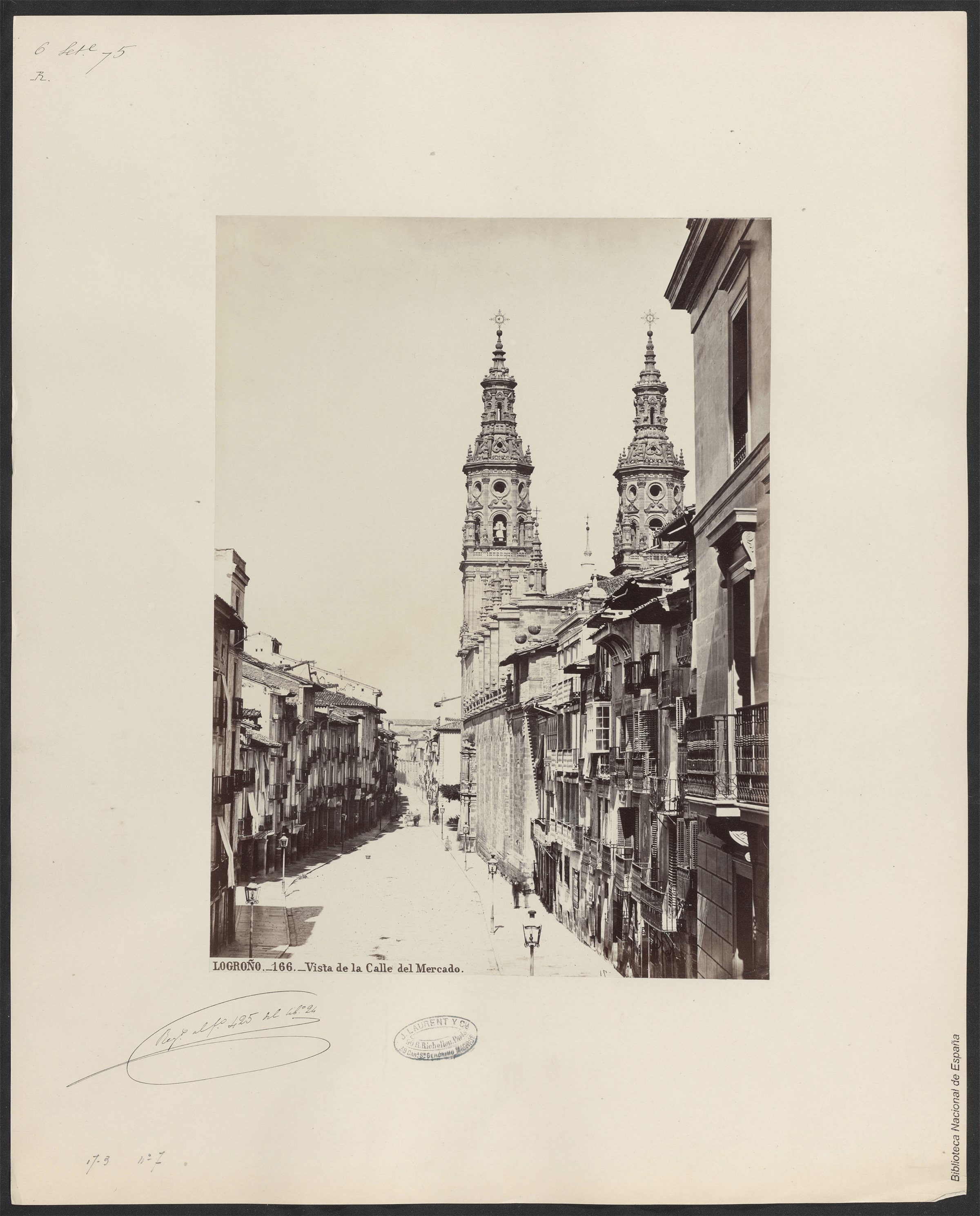
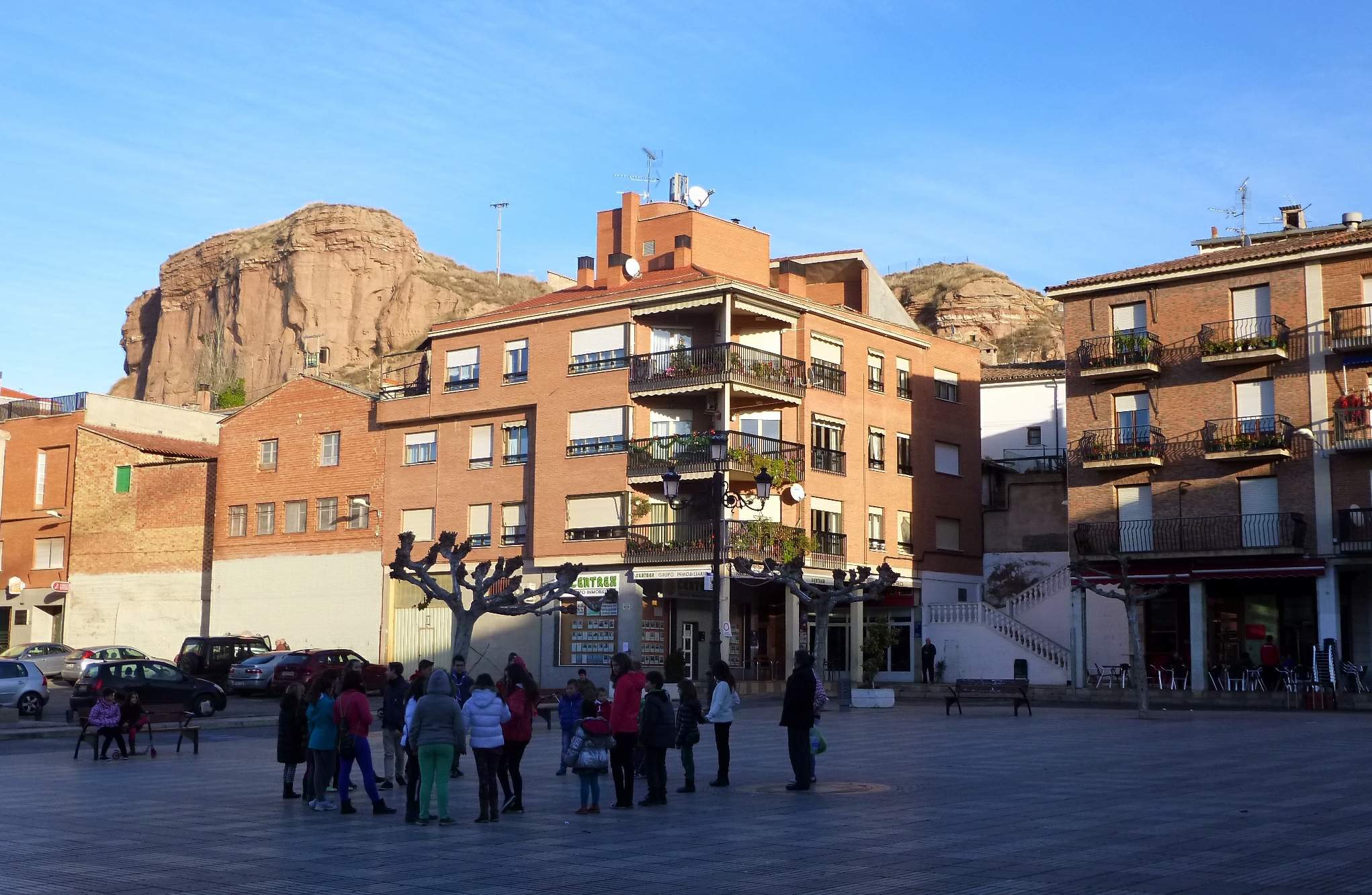
For the 19th century there are photographs of Nájera, the royal city of the kings on folio 428r, and of Logroño, whose church absorbed Albelda’s. We found no early photograph or engraving of the monastery ruins or caves themselves that we are free to reuse, so the two views of Albelda here are modern and labelled with their year.
DOCUMENTED · OLD MAPS AND PHOTOGRAPHS
The Iregua valley · La Rioja
The place: Albelda, the Iregua and the kingdom
Old maps and 19th-century photographs of Albelda and its region, oldest first, then two modern views of Albelda, labelled as modern.
Fontes · Sources
- RBME Digital, Real Biblioteca del Monasterio de El Escorial: Códice Vigilano o Albeldense; Collectio canonum Hispana, d-I-2 (1º), ff. XXII, 1r–238r, 455 × 325 mm, dated 976 (full digitisation)
- RBME Digital: Códice Vigilano o Albeldense, d-I-2 (2º), ff. 238v–429, including the Chronicon Albeldense (full digitisation)
- RBME catalogue record (onomástico): Vigila, Sarracino, García; Ambrosio de Morales, Juan Bautista Pérez, Juan Vázquez del Mármol
- RBME Digital: Códice Emilianense, d-I-1, the San Millán copy (parts 1–3: items 13263, 13265, 13267)
- Guillermo Antolín, Catálogo de los códices latinos de la Real Biblioteca del Escorial, vol. I (Madrid, 1910), pp. 368–404 (d-I-2)
- Manuel C. Díaz y Díaz, Libros y librerías en la Rioja altomedieval (Logroño: Instituto de Estudios Riojanos, 1979; 2nd ed. 1991), on the Albelda scriptorium and its books
- Soledad de Silva y Verástegui, Iconografía del siglo X en el reino de Pamplona-Nájera (Pamplona, 1984), on the miniatures
- Charles Julian Bishko, “Salvus of Albelda and Frontier Monasticism in Tenth-Century Navarre”, Speculum 23.4 (1948), pp. 559–590
- José Fernández Montaña, “El códice albeldense o vigilano, que se conserva en El Escorial”, Museo Español de Antigüedades 3 (1874), pp. 509–544
- Biblioteca Gonzalo de Berceo: Códice Albeldense o Vigilano (folio-by-folio notes after Silva y Verástegui)
- Monasterio de San Martín de Albelda: foundation 924, collegiate church 1167–80, united with Santa María la Redonda 1435
- Codex Vigilanus / Codex Albeldensis (overview)
- Albelda de Iregua: Códice Albeldense (the codex’s path via Logroño and the Count of Buendía to Philip II)
On certainty
DOCUMENTED: from the manuscript itself, the library catalogue or standard scholarship. PATH IN LOCAL SOURCES: the route from Logroño to Philip II is told in local and secondary sources; we have not seen the original documents. CONTEXT · NOT A FAMILY RECORD: the codex tells us about the place, not about our ancestors.
The folio photographs are whole pages, as the Escorial’s terms of use ask: we trimmed only the photographer’s grey backdrop around each leaf, straightened a few by less than a degree and resized them. Where the curve of an open page leaves a corner of backdrop showing, that corner is painted the dark ground of this page. Nothing on the leaf itself is changed or cut away.
The whole book RBME Digital, part 1 (ff. 1–238) · part 2 (ff. 238–429) · IIIF manifest 1 · IIIF manifest 2