The Arms, read element by element
What the shield shows, what heralds recorded, what the charges traditionally mean, and what we still cannot say.
I The blazon
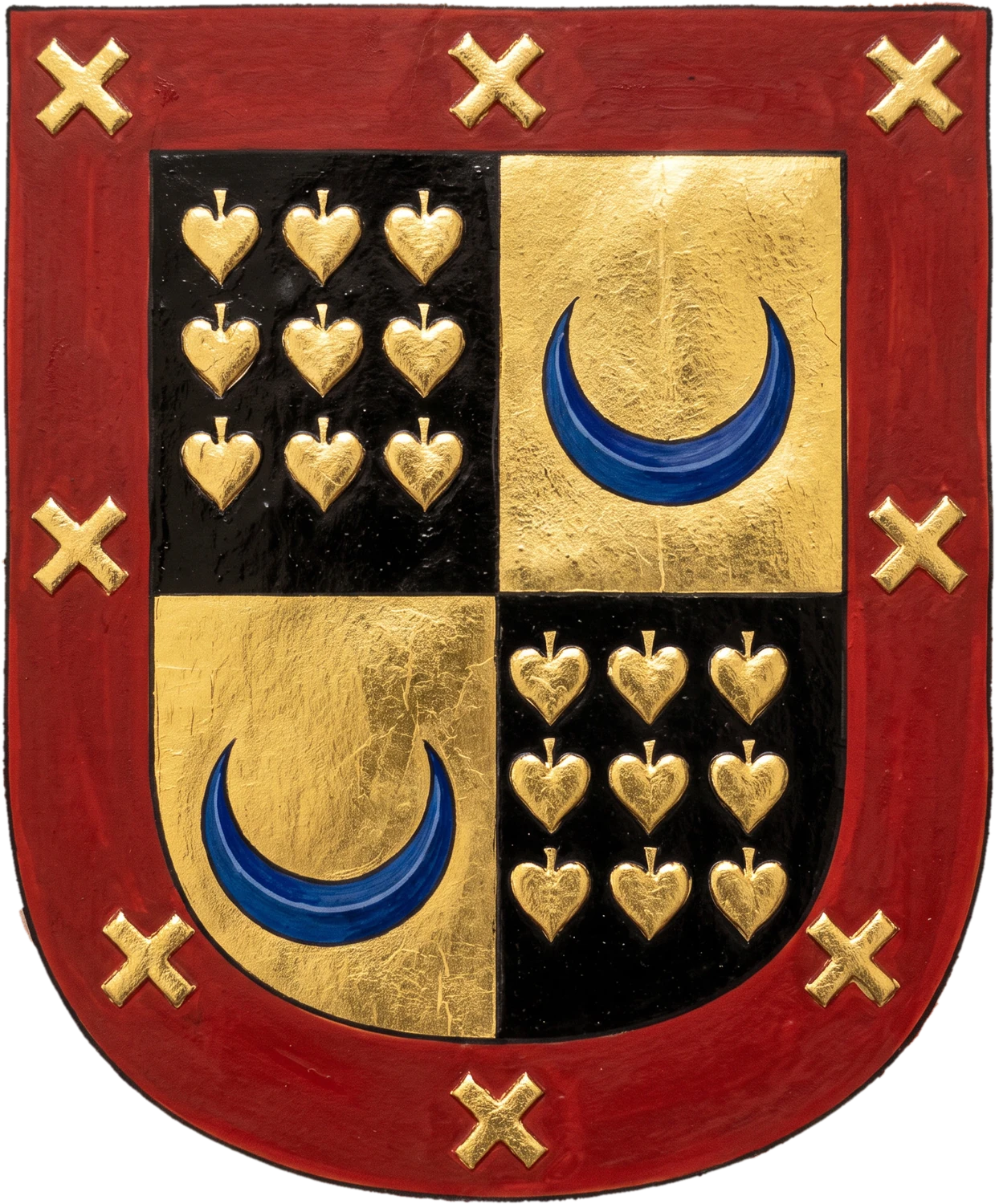
“Escudo cuarteado: 1º y 4º, en campo de sable, nueve panelas de oro, colocadas de tres en tres, y 2º y 3º, en campo de oro, un creciente de azur; bordura de gules, con ocho aspas de oro.”
In English: Quarterly: first and fourth, sable, nine panelas or, three, three and three; second and third, or, a crescent azure; all within a bordure gules charged with eight saltires or.
This is the blazon that the Blasonari armorial gives for the Albelda “of La Rioja and Valencia”, citing Pedro de Gracia Dei (d. 1530), chronicler and rey de armas (king of arms) to the Catholic Monarchs, whose Blasón general y nobleza del universo appeared in 1489. It matches the family's crest file exactly, element for element. The armorial spells the name Albelda. In Spanish, b and v sound the same, and older records spell such names both ways.
Documented · armorial recordII The tinctures
| Tincture | On this shield | Conventional reading | |
|---|---|---|---|
| Or · oroGold | The field of the 2nd and 3rd quarters; the nine panelas; the eight saltires | The noblest metal: generosity, faith, the sun. | |
| Sable · sableBlack | The field of the 1st and 4th quarters | Constancy and prudence; sometimes grief or penitence. | |
| Azure · azurBlue | The two crescents | Loyalty, justice, the sky. | |
| Gules · gulesRed | The bordure | Valour and boldness; blood shed in service. |
III The charges
Nine panelas
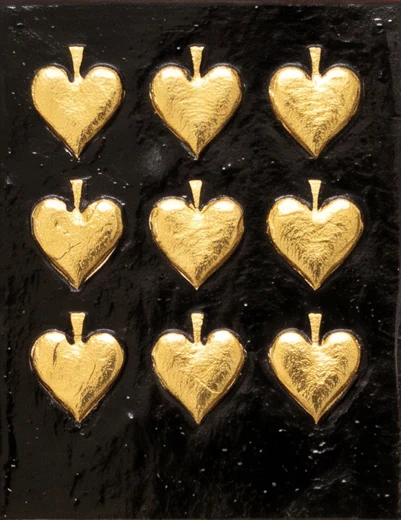
What it shows. In each black quarter: nine small gold heart-shaped leaves in three rows of three, stalks up and points down.
Traditional interpretation The panela is a native figure of Spanish, and especially northern Spanish, heraldry: a heart-shaped leaf. Its origin is disputed. One legend ties it to the Guevara and a battle in the Arrato hills of Álava, where dusty poplar leaves lay scattered on a river running red. Menéndez Pidal de Navascués read it as a linden leaf. Neither reading is recorded for these arms.
The crescent
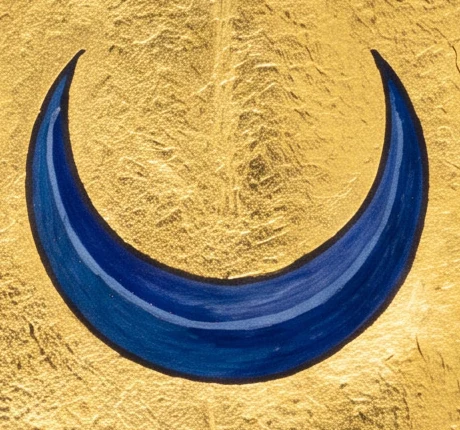
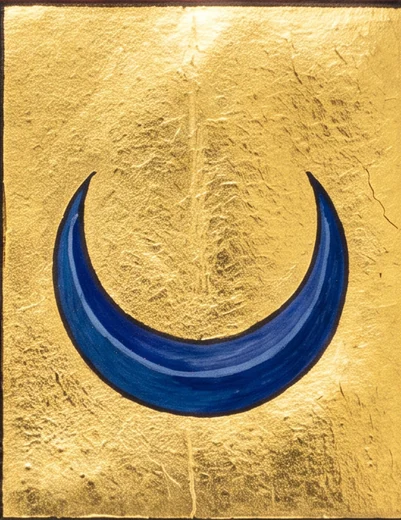
What it shows. In each gold quarter: one blue crescent moon, horns pointing up (the default position, so the blazon does not need to say so).
Traditional interpretation Spanish heraldic writers often read the crescent as a memory of war against the Moors. In English heraldry a crescent can also mark a second son, a usage that does not apply to Spanish arms. For a name that comes from Arabic, a crescent beside Christian crosses is a striking pairing, but that is our observation, not a recorded intention.
Eight saltires
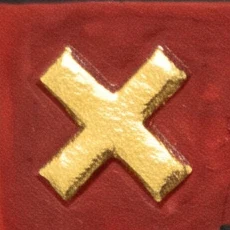
What it shows. A red border around the whole shield, carrying eight gold X-shaped crosses: three across the top, one at each side, one on each lower flank, and one at the base.
Traditional interpretation The aspa or sotuer is St Andrew's cross. Spanish tradition, as recorded in heraldic handbooks, connects gold saltires with the battle of Baeza, won on St Andrew's day in 1227, and reads the saltire as a knight's standard. A bordure of gold saltires on red is common in Castilian arms.
Quartering & shape
What it shows. A shield with a flat top, straight sides and a rounded base: the classic Spanish shield (escudo cuadrilongo redondeado en punta). The field is divided into four quarters, repeated diagonally: black, gold / gold, black.
Traditional interpretation Quartering usually joins two lineages or two sets of arms on one shield, but it can also be a single design from the start. Nothing recorded tells us which is true here. Every charge obeys the rule of tincture (metal on colour, colour on metal): gold on black, blue on gold, gold on red. That is a mark of well-made arms.
IV The history of the grant
No grant has been found. We have no record of who first bore these arms, when, or whether a sovereign ever granted them. We will not invent one.
General context. In medieval Castile, arms were not reserved to grantees. Families usually assumed their arms, and heralds such as Gracia Dei later recorded what lineages bore. The later certificaciones de armas issued by the cronistas reyes de armas are attestations, not royal grants. The most we can say about these arms is that heralds recorded them for Albeldas of La Rioja and Valencia by around 1500.
Arms follow a lineage, not a surname. The same armorials record other, quite different arms under Albelda: for the Albelda of Carcaixent, azure a bend or between two castles (or towers) argent; for an Aragonese branch, or an almond tree vert within a bordure gules charged with fleurs-de-lis or. Sharing a surname does not prove descent from anyone who bore these arms.
Not the town's arms. Albelda de Iregua has its own arms, based on a 14th-century council seal (a battlement between two six-pointed stars, with the legend SIGILUM CONCILII ALBAIDENSIS). The town adopted them by Decreto 13/1984 of 5 April.
Leads, not facts. Places to look for a grant or a proof of nobility: the hidalguía lawsuits of the Real Chancillería de Valladolid (Sala de Hijosdalgo), and the military-order files in the Archivo Histórico Nacional. Blasonari also mentions an Order of Alcántara file for Pedro Antonio Medrano y Albelda of Logroño (1705), which gives a different Albelda arms. Blasonari's lineage narrative (knights with Jaime I, and so on) cites no primary sources, so we do not repeat it here as fact.
Open · no grant documentedSources
- Blasonari, “Apellido Albelda”: blazon for the Albelda of La Rioja and Valencia “según Gracia Dei”, plus the other recorded Albelda arms
- MCN Biografías, “Gracia Dei, Pedro (¿–1530)”: chronicler and rey de armas of the Catholic Monarchs; Blasón general y nobleza del universo (1489)
- “Pedro de Gracia Dei: un bosquejo biográfico”, Estudios Románicos (Univ. de Murcia, 2020)
- Wikipedia (es), “Panela (heráldica)”: the heart-shaped leaf of Spanish heraldry; Guevara legend; Menéndez Pidal de Navascués on linden leaves
- Wikipedia (es), “Sotuer”: the aspa / St Andrew's cross; Spanish tradition linking it to the battle of Baeza, St Andrew's day 1227
- Wikipedia (en), “Crescent (heraldry)” and “Tincture (heraldry)”: conventional usages
- Albelda de Iregua town council page on its arms: 14th-c. council seal; Decreto 13/1984 of 5 April
- Family crest file used in the live tree (crest key alvelda): arms/alvelda-provided.jpg, 205×246 px